

Introduction
If you’ve ever searched “best pizza near me” or “plumber in Chicago,” you’ve already seen local search in action. But if you’re a business owner or marketer trying to grow online, you might be wondering: what is the difference between local SEO vs traditional SEO, and which one should I choose?
This is one of the most common questions in digital marketing today. And honestly, the answer depends entirely on your business type, your goals, and the audience you want to reach.
In this guide, we’ll break everything down in simple, clear language. You’ll learn how both strategies work, what makes them different, and how to choose the right path for your business in 2026. Whether you run a local bakery, a law firm, or an e-commerce store, this article will help you make a smart and informed decision.
Let’s dive in.
What Is Traditional SEO and How Does It Work
Traditional SEO — sometimes called organic SEO or broad SEO — is the process of optimizing your website so it ranks higher on search engines like Google for general search terms. These terms are not tied to a specific location.
For example, if someone searches “how to bake sourdough bread” or “best CRM software,” they’re doing a broad search. They’re not looking for a business near them — they want information or a product that could come from anywhere in the world.
Traditional SEO focuses on things like:
- Keyword research for broad, high-volume terms
- Content creation that answers common questions
- Backlink building to grow your website’s authority
- Technical SEO like page speed, mobile optimization, and structured data
- On-page SEO such as title tags, meta descriptions, and headings
This type of SEO is perfect for businesses that serve a national or global audience — like online stores, SaaS companies, news websites, bloggers, and digital service providers.
The competition in traditional SEO is often very high because you’re competing with websites from all over the world. But if done right, it can bring massive organic traffic that grows over time.
According to Moz’s Beginner’s Guide to SEO, traditional SEO involves building a strong foundation across your entire website to improve visibility in non-location-based search results.
What Is Local SEO and Why Is It Different
Local SEO is about making your business visible to people who are searching for services or products in a specific geographic area. It’s hyper-focused on location.
Think about searches like:
- “dentist near me”
- “coffee shop in Brooklyn”
- “car repair Austin TX”
These searches have strong local intent. The person is looking for a business nearby — not someone halfway across the country.
Local SEO includes tactics like:
- Google Business Profile (GBP) optimization (formerly Google My Business)
- Getting listed in local directories like Yelp, Apple Maps, and Bing Places
- Earning reviews from local customers
- Building local citations (mentions of your business name, address, and phone number)
- Creating location-specific content on your website
The biggest difference is that local SEO also targets what Google calls the “Local Pack” — the map results that appear at the top of Google when someone searches for a nearby service.
When comparing local SEO vs traditional SEO, the key difference is geography. Local SEO targets a city, neighborhood, or region. Traditional SEO targets the internet as a whole.
The Role of Google Business Profile in 2026
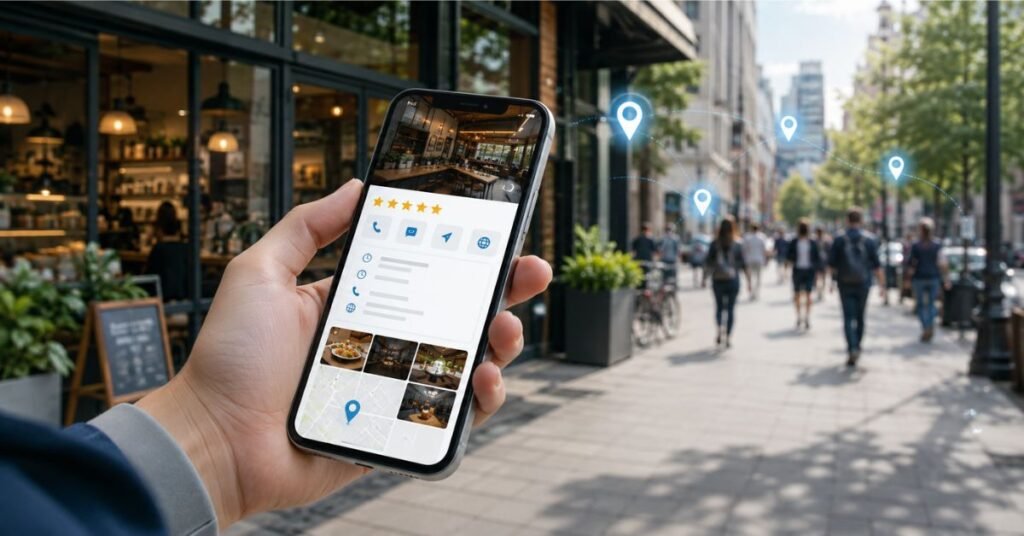
Google Business Profile (GBP) is one of the most powerful tools for any business that serves local customers. In 2026, it has become even more essential as Google continues to prioritize local results in mobile searches.
A well-optimized GBP listing helps you appear in:
- The Google Map Pack (top 3 local results)
- Google Maps directly
- Voice search results on mobile and smart devices
To make your GBP listing work hard for you, focus on:
- Filling out every section completely (name, address, phone, hours, website, services)
- Adding high-quality photos regularly
- Responding to every review — good and bad
- Using Google Posts to share updates and promotions
- Selecting the correct primary and secondary business categories
According to Google’s official support page, businesses with complete and accurate profiles are twice as likely to be considered reputable by users.
If your business has a physical location or serves customers in a specific area, ignoring your GBP listing is a serious mistake. It’s often the first thing a potential customer sees before they even visit your website.
Key Ranking Factors: Local Search vs. Broad Search
Understanding what Google looks at when ranking websites is crucial. The ranking factors for local and broad search are similar in some ways but very different in others.
Traditional SEO Ranking Factors:
| Factor | Importance |
|---|---|
| Domain authority | Very High |
| Quality backlinks | Very High |
| Content depth and quality | Very High |
| Page speed and Core Web Vitals | High |
| Keyword relevance | High |
| User engagement signals | Medium |
Local SEO Ranking Factors:
| Factor | Importance |
|---|---|
| Google Business Profile optimization | Very High |
| Proximity to the searcher | Very High |
| Online reviews and star ratings | Very High |
| Local citations (NAP consistency) | High |
| Local backlinks | High |
| On-page location signals | Medium |
As you can see, proximity and reviews play a huge role in local rankings — factors that simply don’t exist in traditional SEO. A business with a 4.8-star rating and 200 reviews will almost always outrank a competitor with just 10 reviews, even if the competitor has a better website.
Which Businesses Benefit Most From Each Strategy
Not every business needs the same SEO approach. Here’s a simple breakdown to help you decide where to focus your energy.
Best for Traditional/Broad SEO:
- E-commerce stores (selling nationally or globally)
- SaaS companies and software businesses
- Bloggers, news outlets, and content publishers
- Online education platforms
- Digital agencies and remote service providers
Best for Local SEO:
- Restaurants, cafes, and bakeries
- Medical practices and dental offices
- Law firms and accounting offices
- Plumbers, electricians, and contractors
- Gyms, salons, and spas
- Real estate agents
- Auto repair shops
Businesses that need BOTH:
- Multi-location franchises (e.g., a dental chain with 10 offices)
- Regional service businesses that also publish helpful content
- Law firms with offices in multiple cities
The smartest move is to figure out how your customers search. If they’re typing location-based queries, you need local signals. If they’re searching for general information or products, you need broader content and authority.
How Content Strategy Differs Between the Two Approaches
Content is the backbone of both strategies, but what you create — and why — looks very different.
In traditional SEO,
content is about answering broad questions, creating pillar pages, and building topical authority. A software company might write a 3,000-word guide on “how to improve team productivity” to attract readers from all over the world.
In local SEO,
content is written with geography in mind. A plumber in Dallas might write blog posts like “5 Common Plumbing Problems in Dallas Homes” or create a landing page titled “Emergency Plumber in North Dallas.” These location-specific pages signal to Google that the business is relevant to searchers in that area.
Some content strategies that work great for local businesses include:
- Writing about local events or community news
- Creating neighborhood-specific service pages
- Sharing customer success stories from local clients
- Building FAQ pages that answer location-specific questions
Both approaches value high-quality, helpful content. The key difference is in how you target and frame that content. One aims wide, and the other aims close to home.
Backlink Building: Similarities and Differences

Backlinks — links from other websites pointing to yours — are a major ranking signal in both types of SEO. But the type of links you need depends on your strategy.
For traditional SEO,
you need links from authoritative websites with high domain authority. Think industry publications, major news sites, educational blogs, and well-known directories. The goal is to build your website’s overall authority in the eyes of Google.
For local SEO,
it’s more about relevance and location. A link from your local Chamber of Commerce, a regional newspaper, a local blogger, or a neighborhood business directory carries far more weight than a link from a huge national site that has no connection to your area.
Great local link-building strategies include:
- Sponsoring local events or charities
- Partnering with nearby non-competing businesses
- Getting featured in local news articles
- Joining your city’s business association
According to Search Engine Land, local link relevance is one of the top three factors Google considers when ranking businesses in the local pack. A few quality, locally-relevant links can outperform dozens of generic ones.
How Voice Search and AI Are Changing Things in 2026
Voice search has changed how people find businesses, especially on mobile. By 2026, more than half of all local searches are initiated by voice through tools like Google Assistant, Siri, and Amazon Alexa.
Voice searches tend to be:
- Longer and more conversational
- Locally focused (e.g., “Where is the nearest pharmacy open right now?”)
- Question-based
This shift benefits local businesses that have strong Google Business Profiles and clear, structured information on their websites. It also means that if you’re optimizing for local intent, you should structure your content to answer natural language questions.
AI tools like Google’s Search Generative Experience (SGE) are also changing how both local and broad results are presented. Featured snippets, answer boxes, and AI-generated summaries are now common. To show up in these spots, your content needs to be clear, well-organized, and trustworthy.
Writing short, direct answers to common questions — like we’ve done throughout this article — is one of the best ways to appear in featured snippets for both types of SEO.
Measuring Success: Metrics That Matter for Each Strategy
How do you know if your SEO is working? The answer depends on which type you’re using.
Traditional SEO Success Metrics:
- Organic traffic growth (overall visits from search)
- Keyword rankings for broad terms
- Domain authority improvements
- Backlinks earned over time
- Bounce rate and time on page
- Conversion rate from organic traffic
Local SEO Success Metrics:
- Google Business Profile views and clicks
- Phone calls and direction requests from GBP
- Rankings in the Local Pack (map results)
- Review count and average star rating
- Local keyword rankings (e.g., “dentist in Miami”)
- Website visits from location-specific pages
It’s important to track the right metrics for your strategy. A local coffee shop doesn’t need to worry about its domain authority as much as it needs to monitor how many people are clicking “call” from its Google Business Profile on a Friday night.
Tools like Google Analytics 4, Google Search Console, and BrightLocal can help you track both sets of metrics easily and clearly.
How to Choose the Right SEO Strategy for Your Business
Now that you understand both approaches, let’s make the decision simple.
Ask yourself these questions:
- Does my business serve people in a specific city, town, or region?
- Do customers visit my physical location, or do I visit them at their homes?
- Are my best customers searching for services “near me”?
- Do I run an online-only business or sell products nationwide?
If you answered “yes” to the first three, local SEO should be your priority.
If you run an online-only business or serve people across the country, traditional (organic) SEO is your main focus.
If both apply — say, you have a physical location but also sell products online — then a blended strategy is your best bet.
Understanding local SEO vs traditional SEO isn’t about picking a winner. It’s about matching your strategy to your business model and your customer’s search behavior.
When you align your SEO efforts with how your real customers actually search, you stop wasting time and start getting results.
Visual Comparison: Quick Summary Tables
Side-by-Side Feature Comparison
| Feature | Traditional SEO | Local SEO |
|---|---|---|
| Target audience | Global/national | City/region-specific |
| Google tool used | Search Console | Google Business Profile |
| Map Pack ranking | No | Yes |
| Review management | Not required | Essential |
| Best for | Online businesses | Brick-and-mortar businesses |
| Content type | Broad and educational | Location-specific |
| Link type needed | High-authority sites | Local/relevant sites |
| Timeline for results | 6–12 months | 3–6 months (local pack) |
Cost and Effort Comparison
| Factor | Traditional SEO | Local SEO |
|---|---|---|
| Monthly budget needed | $1,000–$10,000+ | $300–$3,000 |
| Time to see results | Longer (6–12 months) | Faster (3–6 months) |
| Ongoing effort required | High (content, links) | Medium (reviews, GBP) |
| Competition level | Very high | Moderate to high |
| Best ROI for | E-commerce, SaaS | Service businesses |
FAQs About Local SEO and Traditional SEO
Can I do both local SEO and traditional SEO at the same time
Yes, absolutely. Many businesses benefit from a blended approach, especially if they have a physical location and also publish helpful online content.
How long does it take to see results from local SEO
Most businesses start seeing improvements in their Google Business Profile rankings within 3–6 months with consistent effort.
Is Google Business Profile free to use
Yes, Google Business Profile is completely free. It’s one of the best free tools available for local businesses.
Do online reviews really affect my Google ranking
Yes. Reviews are a major local ranking signal. More positive reviews (especially recent ones) help your business rank higher in local map results.
What is the main difference in keyword targeting between local and broad SEO
Local SEO targets keywords with location modifiers like “near me” or city names, while traditional SEO targets broader terms without geographic restrictions.
Conclusion

Understanding local SEO vs traditional SEO is one of the smartest moves any business owner or marketer can make. Once you know which strategy fits your business model, you stop guessing and start making decisions that actually grow your brand.
For local businesses — plumbers, dentists, restaurants, salons — local search optimization is non-negotiable. It’s the fastest way to connect with nearby customers who are ready to buy right now.
For online businesses, content creators, and national brands, traditional organic SEO builds long-term authority and sustainable traffic.
And for those in between? A well-planned combination of both strategies is the way to go.
The most important thing is to start. Every day you wait is a day your competitors are getting ahead in search results.