
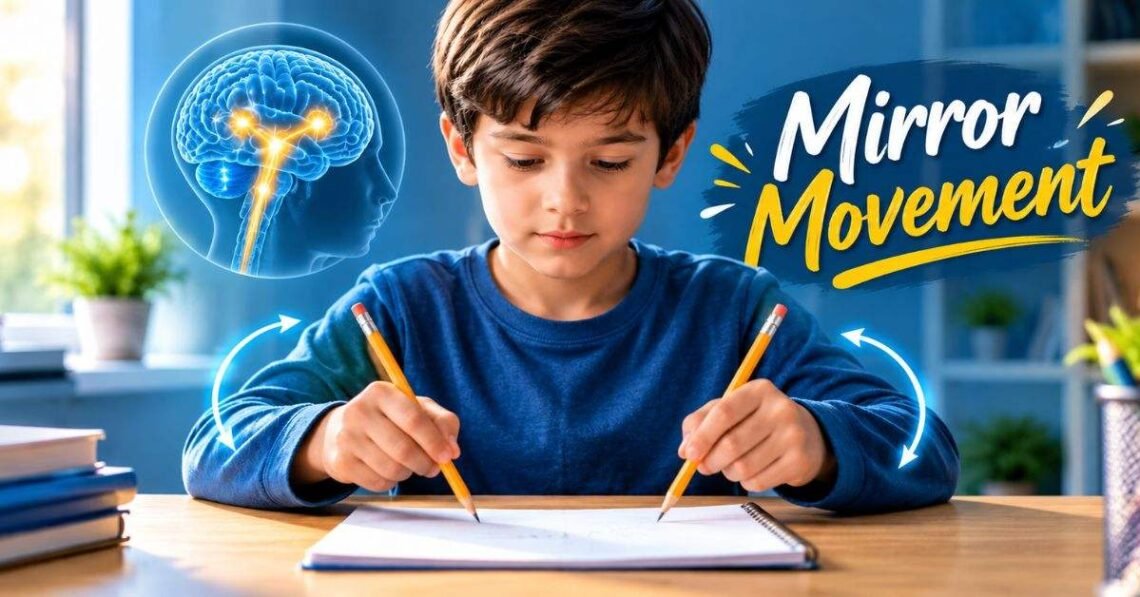
Imagine you pick up a pencil with your right hand, and your left hand twitches in the same way without you wanting it to. This is a mirror movement, and it can feel confusing, tiring, or even embarrassing. Many parents and adults search for answers when they first notice it. The good news is that help exists.
Small children often show a little of this copying as their brain grows, and it usually fades in early childhood. When it stays past that age, or starts later in life, doctors take a closer look.
In this guide, you will learn what causes involuntary matching movements, how doctors check for them, and which treatments may help in 2026. We use simple words and short steps. You will also find tables, a quick-answer box, and FAQs. This article is for learning only and does not replace advice from a doctor. Read on to find out what you can do today and when to ask for help.
What Are Involuntary Matching Hand Movements
A mirror movement is an unplanned action on one side of the body that copies a planned action on the other side. For example, when you squeeze a ball with your right hand, your left hand squeezes a little too. You did not ask it to. It simply happens.
Doctors also call this mirroring or synkinesis. It most often shows up in the fingers, hands, and forearms, because these parts need fine control. In rare cases, it can reach the arms, face, or feet.
There are two main types. The first is called physiological. It is normal in babies and young children because the brain is still learning to keep each side separate. It usually fades by about age 10. The second type is called pathological. It lasts beyond childhood or begins later because of a gene change or a brain problem.
Quick answer: Mirrored movement happens when one hand copies the other without intention. In young kids, it is often normal. In teens and adults, it should be checked by a doctor.
Why the Brain Causes Copying on the Other Side
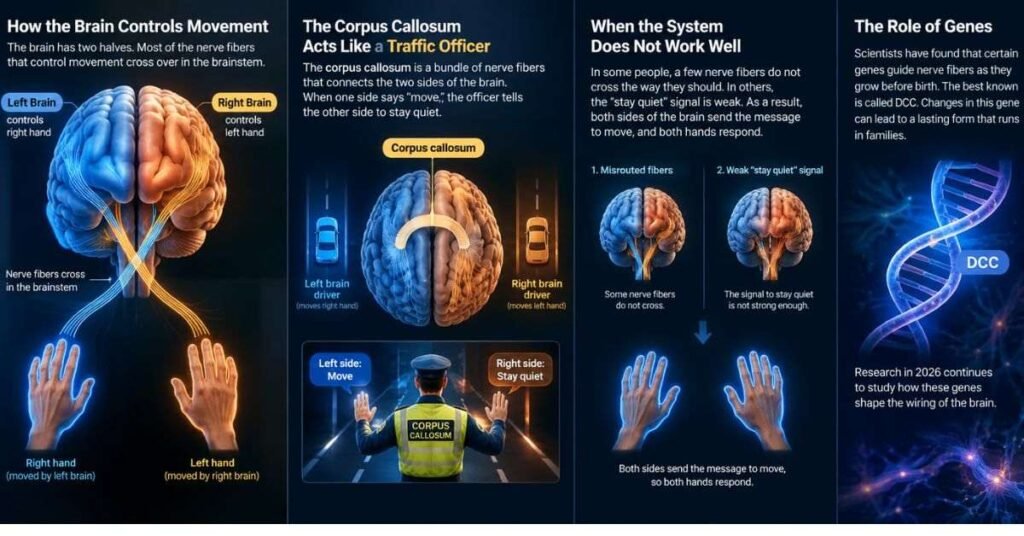
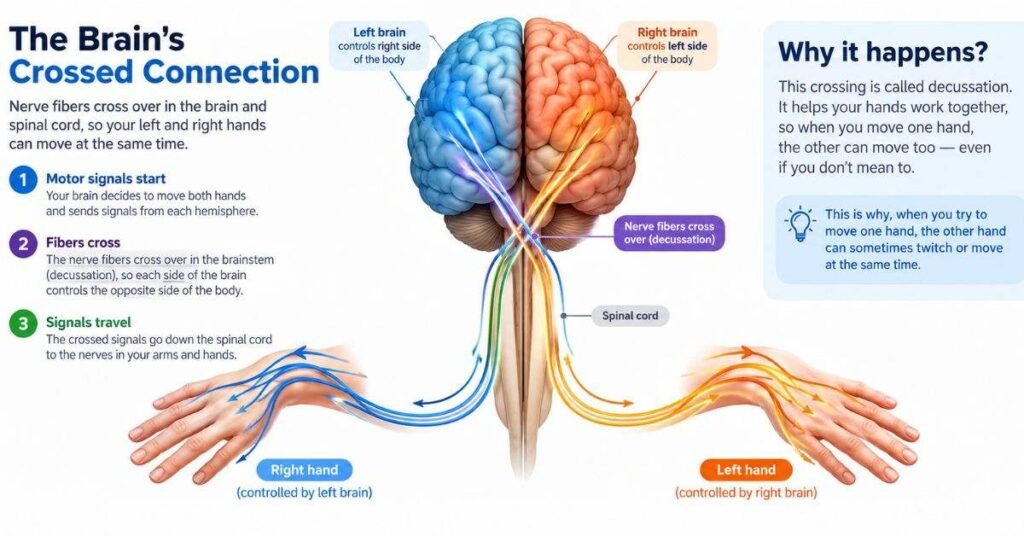
To understand treatment, it helps to know a little about the brain. The brain has two halves. Most of the nerve fibers that control movement cross over in the brainstem. This means the left side of your brain moves your right hand, and the right side moves your left hand.
Think of it like two drivers on two separate roads. Each driver should stay in their own lane. A bundle of fibers called the corpus callosum acts like a traffic officer. When one side of the brain says “move,” the officer tells the other side to stay quiet.
Sometimes this system does not work well. In some people, a few nerve fibers do not cross the way they should. In others, the “stay quiet” signal is weak. As a result, both sides of the brain send the message to move, and both hands respond.
Scientists have found that certain genes guide nerve fibers as they grow before birth. The best known is called DCC. Changes in this gene can lead to a lasting form that runs in families. Research in 2026 continues to study how these genes shape the wiring of the brain.
Common Causes and Risk Factors
Not every case has the same cause. Knowing the cause helps doctors choose the right care. Here are the most common ones.
Genetic causes. Some people are born with the condition because of a family gene change. Doctors call this the congenital form. It can appear in several family members, often with no other health problems.
Developmental conditions. Some birth conditions affect how the brain or spine forms. Examples include Klippel-Feil syndrome, Kallmann syndrome, and problems with the corpus callosum.
Brain injury or illness. A stroke, head injury, or cerebral palsy can change how the two sides of the brain talk to each other. In these cases, the copying may appear after the injury.
Movement disorders. Parkinson’s disease can cause matching movements, especially early on, and often on one side first. If you want to read more, see our guide on early signs of Parkinson’s disease.
Risk factors include a family history of the problem, certain birth conditions, and past brain injury. Many people have no clear risk factor at all, and that is okay. It does not mean anyone did something wrong.
Signs and Symptoms to Watch For
The main sign is easy to see. One hand moves, and the other hand moves along with it. But the effects can reach far beyond that, so let us look at what daily life may feel like.
Common signs include:
- The resting hand opens, closes, or taps when the working hand moves
- Trouble using both hands for different jobs, such as holding paper while writing
- Hand or forearm tiredness, cramps, or mild pain after long use
- Messy handwriting or slow typing
- Trouble with buttons, zippers, shoelaces, or cutting food
- Difficulty playing sports or musical instruments
- Feeling shy or upset about the copying in public
Children may be told they are “fidgeting” when they cannot control it. This can hurt their confidence. Adults may avoid jobs or hobbies that need careful hand skills.
The signs can be mild or strong. Some people barely notice them. Others find that tasks take twice as long. Symptoms often get worse when a person is tired, nervous, or trying hard to do a difficult task.
If the copying began suddenly in an adult, or comes with weakness, numbness, or speech trouble, seek medical help right away.
How Doctors Diagnose the Problem
A diagnosis starts with a simple talk and a careful check. The doctor will ask when it began, whether family members have it, and what daily tasks feel hard. They will also ask about past injuries, illnesses, and medicines.
Next comes a physical exam. The doctor may ask you to open and close one fist, tap your fingers, or touch each finger to your thumb while they watch the other hand. They look at how strong, how long, and how often the copying happens. When a mirror movement is clear and lasts past childhood, the doctor will usually order more tests.
Tests that may be used:
- MRI scan: Takes pictures of the brain and spine to look for structure problems.
- Transcranial magnetic stimulation (TMS): Uses a gentle magnetic pulse to see how brain signals travel to the hands.
- Genetic testing: Checks for known gene changes in people with a family history.
- Nerve and muscle tests: Help rule out other problems.
A pediatrician or family doctor often starts the process. A neurologist, who is a brain and nerve specialist, may then take over. For trusted background reading, visit the National Institute of Neurological Disorders and Stroke.
Treatment Options at a Glance
Here is the honest truth. There is no single cure for lasting mirroring, especially the inherited type. But treatment can still make life much easier. The goals are to reduce the copying, protect the hands from strain, and help you stay independent.
Care plans usually have three parts.
1. Treat the cause. If another condition is behind the problem, such as Parkinson’s disease or the effects of a stroke, treating it may help. A doctor will guide this step.
2. Build skills with therapy. Occupational therapy and physical therapy are the main tools. They teach the brain new ways to control each hand on its own. Most people start here.
3. Use extra help when needed. This can include tools that make tasks easier, medical options for pain or stiffness, and support at school or work.
Treatment works best when it is personal. A child with mild copying may only need games and exercises. An adult with painful, strong copying may need a team of doctors. Be patient, because progress often takes weeks or months. Small gains, like writing a full page without hand fatigue, are real wins worth celebrating.
Visual Guide: Tables and Charts at a Glance
Tables make the key facts easier to see. Use these as a quick reference.
Normal vs. Concerning Signs
| Feature | Usually Normal | Worth a Doctor Visit |
|---|---|---|
| Age | Under 8 to 10 years | Past age 10, or starts in adulthood |
| Strength | Light, short twitches | Strong, steady copying |
| Pain | None | Cramps, aches, or fatigue |
| Daily life | No problems | Trouble writing, eating, or working |
| Other signs | None | Weakness, numbness, or tremor |
Treatment Options Compared
| Option | What It Does | Best For | Strength of Evidence |
|---|---|---|---|
| Occupational therapy | Trains each hand to work alone | Most children and adults | Moderate; widely used |
| Physical therapy | Improves strength and balance | People with other movement issues | Moderate |
| Treating the cause | Targets the root problem | Stroke, Parkinson’s, injury | Strong for the cause itself |
| Botulinum toxin | Relaxes overworked muscles | Painful, strong cases | Limited; case reports |
| Brain stimulation (TMS, tDCS) | May calm extra brain signals | Research settings only | Early; still being tested |
| Assistive tools | Makes tasks easier | Everyone | Practical and safe |
Typical Age Pattern
| Age Group | What to Expect |
|---|---|
| Babies and toddlers | Copying is common and normal |
| Ages 5 to 8 | Copying slowly fades |
| Ages 9 to 10 | Most children no longer show it |
| Teens and adults | Persistent copying should be checked |
Therapy and Home Exercises That Can Help
Therapy is the heart of care. An occupational therapist can design a plan that fits your age, goals, and hand skills. Many people notice better control after steady practice. If you want ideas to try, check our post on simple hand therapy exercises.
Common therapy methods include:
- Bimanual training: Practicing tasks that need both hands to do different jobs, like holding a bowl while stirring.
- One-hand-at-a-time practice: Moving one hand slowly while the other rests flat on the table or holds a soft ball.
- Slow, relaxed movement: Fast or forceful effort often makes copying stronger, so slow practice teaches control.
- Games and apps: Fun tasks like building blocks, puzzles, and piano keys keep children motivated.
- Biofeedback: Sensors show muscle activity on a screen, which helps people learn to relax the resting hand.
Safety tips: practice for short sessions of about 10 minutes, rest when your hands feel tired, and stop if you feel pain. Do not push too hard. Regular, gentle practice works better than long, tiring sessions. When a mirror movement shows up less often during practice, that is a sign the training is working. Keep a small notebook to track your progress.
Medical and Advanced Options
Some people need more than therapy. A doctor may suggest extra options, but it is important to know what is proven and what is still being studied.
Medicines. No pill directly stops the copying. However, if the cause is Parkinson’s disease, medicines such as levodopa may improve overall movement. Your doctor will decide what fits.
Botulinum toxin injections. In some cases of painful muscle overuse, a specialist may inject this medicine into targeted muscles to relax them. Evidence comes mostly from small reports, so it is used carefully.
Brain stimulation. Methods like TMS and tDCS send gentle signals to the brain. Researchers are testing whether they can calm the extra signals. As of 2026, they are mainly used in studies and clinics, not as standard care.
Surgery. Surgery is not a usual treatment for this problem.
Genetic counseling. If the condition runs in your family, a genetic counselor can explain how it passes on and what it means for future children. This service gives knowledge and peace of mind.
Always ask about benefits, risks, and costs. A good doctor will explain things in plain words and respect your choices. For more on rare conditions, visit the NIH Genetic and Rare Diseases Information Center.
Everyday Tips, Support, and When to Get Help
Daily habits can make a big difference. Small changes at home, school, and work reduce stress on the hands.
For children:
- Tell teachers about the condition so they do not mistake it for bad behavior.
- Ask for extra time on writing tasks or the option to type.
- Use pencil grips, slant boards, and easy-grip scissors.
For adults:
- Choose an ergonomic mouse and keyboard.
- Take short breaks every 30 minutes.
- Use voice typing on busy days.
For everyone:
- Sleep well and manage stress, since tiredness can make copying stronger.
- Keep hobbies you love, and adjust them if needed.
- Join a support group, online or in person, to share tips.
See a doctor if: the copying begins suddenly in an adult, grows stronger over time, causes pain, or comes with weakness, shaking, or trouble speaking. Seek care for children if a mirror movement continues beyond age 10 or interferes with school.
Looking ahead, research in 2026 is exploring new genes, brain imaging, and safer brain stimulation. Many people with this condition live full, active lives, and the outlook is hopeful.
Frequently Asked Questions
Is a mirror movement always a sign of a serious disease
No. It is normal in young children and often harmless in mild cases. Only a doctor can tell if it needs treatment.
At what age should mirroring go away
Most children outgrow it by about age 10. If it continues, ask a doctor to check.
Can involuntary matching movements be cured
There is no known cure for the inherited type. Therapy and daily tools can reduce symptoms and make tasks easier.
Does it cause pain
Not usually, but strong copying can tire the hands and forearms. Rest and therapy often help.
Which doctor should I see first
Start with your family doctor or pediatrician. They may send you to a neurologist or an occupational therapist.
Conclusion
Living with a mirror movement can be frustrating, but you are not alone, and you have real options. Remember the key points. Copying is normal in young children and often fades by age 10. When it lasts longer, a doctor can find the cause with simple exams and tests. Therapy, home exercises, helpful tools, and treatment of any related condition can make daily life smoother. Newer options are still being studied, so stay curious and ask questions.
Now it is time to take action. If you or your child shows signs of this problem, book a visit with a doctor this week. Write down your questions, note when the copying happens, and bring that list to the appointment. Start gentle hand exercises, share this guide with someone who needs it, and visit trusted sites like MedlinePlus for more learning. Small steps today can lead to better control, more comfort, and greater confidence tomorrow.