
Introduction
Your sewer pipe works hard every day. Each time you flush a toilet, take a shower, or run the dishwasher, used water leaves your home through one big underground pipe. You never see it, so you rarely think about it. But when it breaks, you notice fast. Water backs up, bad smells fill the house, and the yard turns soggy.
Many homeowners feel scared when a plumber says the word “replace.” The good news is that you have more choices today than ever before. Sewer line replacement no longer always means a trench across your whole yard. New tools, such as pipe cameras and no-dig methods, make the job faster, cleaner, and often cheaper.
In this guide, you will learn the warning signs of a failing pipe, what causes damage, how plumbers find the problem, and what the work costs in 2026. You will also see simple tables, a step-by-step look at the job, and tips for hiring a trusted pro. Everything is written in plain words, so you can make a smart choice with confidence.
What Does It Mean to Replace a Main Drain Pipe
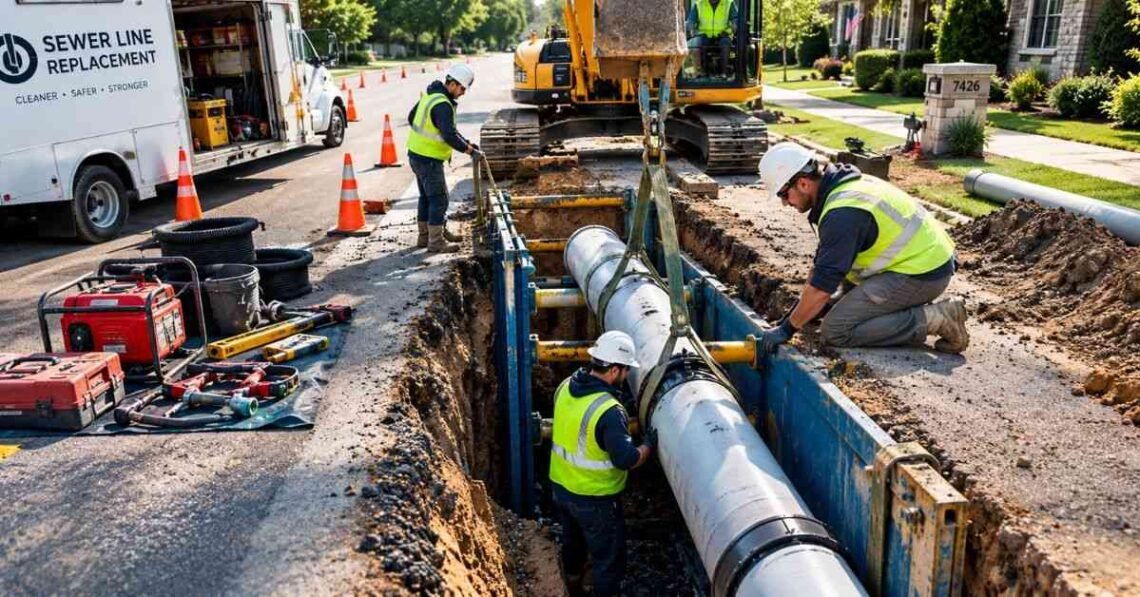
Sewer line replacement means taking out a damaged underground drain pipe and putting in a new one. This pipe is also called the main line or the lateral line. It carries waste water from your house to the city sewer or to your septic tank.
Your home has one main pipe that connects all the smaller drains inside. If this pipe cracks, collapses, or clogs again and again, the whole house feels the problem. Sinks drain slowly, toilets gurgle, and water can even come up through floor drains.
The pipe is usually buried three to six feet deep. That is why people cannot see damage with their own eyes. Plumbers use cameras and special tools to look inside.
Old pipes made of clay, cast iron, or a tar-paper material called Orangeburg often fail first. Newer pipes are made of PVC or HDPE plastic. These can last 80 to 100 years or even longer.
It also helps to know who owns what. In many towns, you own the pipe from your house to the property line, and sometimes all the way to the city main. Check your local rules or call your city office. Knowing this early can save you money and stress later.
Warning Signs Your Sewer Pipe Is Failing
Your home will usually give you clues before a big break. Learning these signs helps you act early, when fixes are smaller and cheaper.
Here are the most common warning signs:
- Slow drains in many places. One slow sink is normal. Slow drains in the whole house point to a main pipe problem.
- Gurgling sounds. Trapped air makes odd noises in toilets and tubs.
- Bad smells. A rotten-egg or sewage smell inside or outside the home is a red flag.
- Wet or sunken spots in the yard. A leaking pipe can soften the soil and make the grass look extra green.
- Mold or damp walls. Hidden leaks near the foundation can cause this.
- Pests. Rats, roaches, and flies can enter through cracks in a broken pipe.
- Backups. Water coming up in a tub or floor drain is a serious sign.
If you see more than one of these signs, do not wait. Small cracks grow with time. Ask a licensed plumber to run a camera through the line. If the pipe is badly damaged, the plumber may talk to you about sewer line replacement as the best long-term fix.
Common Causes of Sewer Pipe Damage
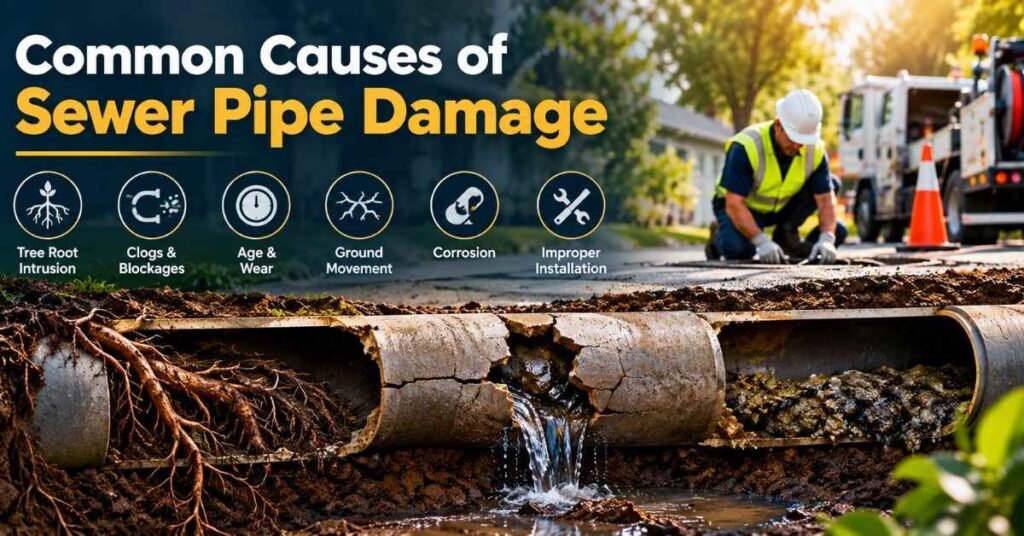
Pipes do not break for no reason. Knowing the cause can help you protect the new pipe once it is in the ground.
Tree roots are the top cause. Roots look for water and food. They sneak into tiny cracks and grow into thick mats that block the flow. Over time, they can crush the pipe.
Age is the next big one. Clay pipes can last 50 to 60 years, and cast iron often lasts 50 to 75 years. After that, rust and cracks are common.
Shifting ground also hurts. Heavy rain, drought, frost, and earth movement can bend or break pipes. In dry or flood-prone areas, this happens more often.
Poor flushing habits clog pipes. Wipes, even those labeled “flushable,” do not break down well. Grease, paper towels, and feminine products are also trouble makers.
Bad past work can cause low spots called “bellies.” Water and waste collect in these dips and cause repeated clogs.
Heavy loads such as large trucks, new driveways, or building work above the pipe can crush older lines.
The U.S. Environmental Protection Agency explains how healthy water systems work on its WaterSense page, which can help you understand how your home connects to larger water systems.
How Plumbers Find the Problem
Good plumbers do not guess. They look inside your pipe first. The main tool is a sewer camera inspection. A thin cable with a small waterproof camera goes into the pipe through a cleanout. The camera sends live video to a screen.
The video shows cracks, roots, breaks, sags, and buildup. Many plumbers also use a locator tool. It finds the exact spot of the damage from above ground, so they dig only where needed.
A typical inspection takes 30 to 60 minutes. In 2026, most plumbers charge about $100 to $500 for it, and the price can be higher in large cities. Many companies lower or waive this fee if you hire them for the repair.
Always ask for a copy of the video and a short written report. This is your proof. It lets you compare the plan with a second opinion if you want one.
Some plumbers also use a hydro-jetting tool, which blasts the pipe with high-pressure water, before the camera goes in. This clears grease and roots so the camera can see clearly.
If a plumber says you need major work but will not show you any video, be careful. A trusted pro is happy to show you what they found.
Repair or Replace: Which Is Better
Not every broken pipe needs a full new line. Sometimes a smaller fix is enough. The right choice depends on the damage.
Spot repair works when one short part of the pipe is damaged and the rest is healthy. A plumber digs a small hole, cuts out the bad piece, and adds a new section. This is the cheapest option.
Pipe lining fits pipes with small cracks or light root damage. A resin-soaked tube goes inside the old pipe and hardens into a new pipe within the old one.
Full replacement is best when the pipe is collapsed, badly cracked, or made of failing materials like Orangeburg. If the camera shows damage in many spots, patching again and again costs more over time. At that point, sewer line replacement is often the smarter use of your money.
Here is a simple rule of thumb. If the pipe is more than 50 years old and has more than one problem, plan for a new one. If the pipe is fairly new with a single flaw, a repair may be enough.
Ask your plumber to explain the choice in plain words and to give you both prices.
Digging vs. Trenchless Methods
There are two main ways to put in a new pipe. Each has good points.
Traditional trench method. Workers dig a long trench along the old pipe, remove it, and lay a new one. It is simple and works almost anywhere. It lets the crew fix bad slopes and bellies. The downside is the mess. Lawns, patios, and driveways can be torn up.
Trenchless methods. These need only two small access holes, one at each end of the pipe. There are two common types:
- Pipe bursting. A cone-shaped tool breaks the old pipe apart while pulling a new pipe in behind it.
- Cured-in-place lining. A flexible tube is pulled into the old pipe and hardened with heat, light, or steam.
Trenchless work is usually faster and protects your yard, trees, and landscaping. It often takes one or two days instead of several. It is not right for every case, though. Pipes that have fully collapsed or have major slope problems may still need a trench.
Ask your plumber which method fits your yard, pipe, and budget. A good contractor will explain why, not just pick the most expensive choice.
What Does It Cost in 2026
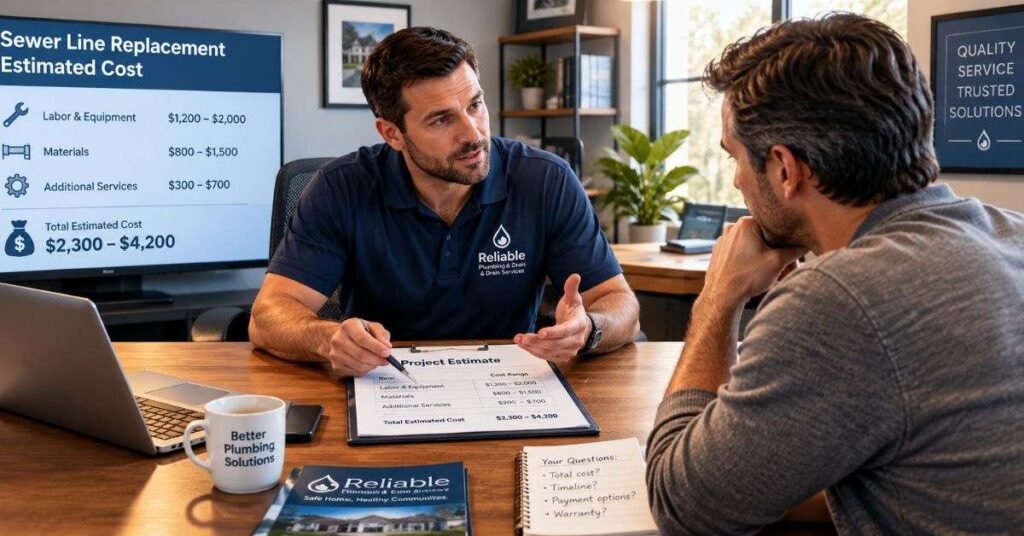
Price is the biggest question for most families. Costs depend on pipe length, depth, soil type, method, and where you live. In 2026, most homeowners can expect the following ranges, though prices vary by area and can change with material costs.
A typical full job often falls between $3,000 and $15,000, with an average near $6,000 to $9,000. Long pipes, deep lines, or hard rock can push the total higher. Simple spot repairs may cost $1,000 to $4,000.
Several things change the final bill:
- Length of the pipe. More feet means more cost.
- Depth. Deeper pipes need more digging.
- Obstacles. Trees, driveways, and buildings make work harder.
- Permits and inspection fees. These vary by city.
- Yard repair. Trench jobs may need new grass, soil, or concrete.
When you compare quotes for sewer line replacement, make sure each one lists the same work. A low quote may leave out yard repair or permits.
Some homeowners’ insurance plans do not cover wear and age. Others offer a low-cost add-on for service lines. Call your insurance company and ask. Also check whether your city has a repair loan or help program for older homes.
Quick Visual Guide: Tables to Help You Decide
Tables make big choices easier. Use these two as a quick guide, and remember that real numbers vary by home.
How Long Do Common Pipe Types Last
| Pipe Material | Typical Lifespan | Common Problems |
|---|---|---|
| Clay | 50–60 years | Cracks, root entry |
| Cast iron | 50–75 years | Rust, flaking inside |
| Orangeburg (fiber) | 30–50 years | Collapse, bending |
| PVC plastic | 80–100+ years | Few; may shift if poorly set |
| HDPE plastic | 50–100 years | Very few |
Trench vs. Trenchless at a Glance
| Feature | Traditional Trench | Trenchless |
|---|---|---|
| Typical time | 3–7 days | 1–3 days |
| Yard damage | High | Low |
| Typical cost range (2026) | $3,000–$12,000 | $4,000–$15,000 |
| Best for | Collapsed or sagging pipes | Pipes still in a straight line |
| Cleanup | More | Less |
Quick decision chart:
- Small crack, healthy pipe → spot repair or lining
- Many cracks, old pipe → full replacement
- Pipe still straight, yard has trees or patio → trenchless
- Pipe collapsed or has deep sags → trench
Print this section and take it with you when you talk to plumbers.
Step-by-Step: What Happens on Replacement Day
Knowing the steps helps you feel calm and ready. Here is how most jobs go.
- Inspection and plan. The plumber checks the camera video and marks the pipe path.
- Call 811. Before any digging, the crew must request utility marking. This free call keeps gas, power, and water lines safe.
- Permit. Most cities require one for sewer line replacement, and the work may need to pass an inspection.
- Water shut-off notice. You may need to avoid using water for several hours, so plan showers and laundry ahead.
- Access holes or trench. The crew digs to reach the pipe.
- Old pipe removal or bursting. The damaged pipe is taken out or broken apart.
- New pipe install. Workers lay the new pipe with the right slope so waste flows downhill.
- Testing. The team runs water and often uses a camera to confirm the new line is clear and tight.
- City inspection. An inspector checks the work.
- Backfill and cleanup. The holes are filled, the soil is packed, and the yard is tidied.
Most homes are back to normal water use the same day or the next day. Ask the crew to show you the final video as proof the new pipe is working well.
How to Choose a Trusted Plumber and Care for Your New Pipe
A strong job starts with the right team. Look for these signs of a trusted pro:
- A valid state license and insurance. Ask to see both.
- Experience. Ask how many sewer jobs they have done and whether they do trenchless work.
- Written quotes. Get at least three, and compare them item by item.
- A clear warranty. Many good companies offer 10 years or more on parts and labor.
- Good reviews. Read feedback on several sites, not just one.
Be careful with anyone who asks for full payment up front or pressures you to sign right away. A fair contractor gives you time to think.
After the new pipe is in, a few habits will keep it healthy:
- Flush only toilet paper and human waste.
- Pour grease into a can, not down the sink.
- Avoid planting thick-rooted trees near the pipe path.
- Schedule a camera check every few years, especially in older neighborhoods.
For more on staying safe around water in your home, see the CDC Healthy Water page. You can also read our guides on drain cleaning basics, how to spot a hidden leak, and choosing a local plumber for more help.
Frequently Asked Questions
How long does a new sewer pipe last
A new PVC or HDPE pipe can last 80 to 100 years or more when installed correctly.
How long does the job take
Trenchless jobs often take one to three days, while trench jobs can take three to seven days.
Can I replace the pipe myself
This is not a good do-it-yourself job, because it needs permits, deep digging, safe tools, and proper slope.
Does homeowners insurance pay for it
Most standard plans do not cover age or wear, but some offer add-on coverage, so ask your insurer.
Can tree roots really break a sewer pipe
Yes, roots grow into small cracks and can block or crush the pipe over time.
Conclusion
Your main drain pipe is one of the most important parts of your home, even though it sits out of sight. Warning signs like slow drains, bad smells, and soggy yard spots should never be ignored. A quick camera check can show you what is really going on and help you pick the right fix, whether that is a small repair, pipe lining, or a full new pipe.
Remember the key points. Old clay, cast iron, and Orangeburg pipes fail more often. Trenchless methods can save your yard and time. Costs in 2026 range widely, so always get three written quotes and ask what each one includes. When the work is needed, sewer line replacement protects your home, your health, and your wallet for decades.
Do not wait for a backup to ruin your week. If your drains have been acting strange, book a camera inspection with a licensed local plumber today. Ask questions, review the video, and choose the plan that fits your home. A little action now can save you from a big, messy, and costly emergency later.