

Introduction
Waking up to a cold shower is never fun. Maybe your tank is leaking, or the water is only lukewarm. Either way, your first question is probably, “How much will this cost me?”
This guide gives you clear answers. In 2026, the typical water heater repair cost runs from about $200 to $700. Small fixes can cost less than $200. Bigger problems can cost more than $1,000.
We will cover the signs of trouble, the most common problems, and what each fix costs. You will also see two easy price charts, plus tips to help you decide between fixing and replacing. We also share ways to lower your bill and how to pick a trustworthy plumber.
Everything is written in plain words. The prices are national averages based on common industry ranges, so your local price may differ. Always ask for a written quote before work begins. Let’s get started.
Water Heater Repair Cost in 2026: The Short Answer
Most homeowners spend between $200 and $700 to fix a water heater. Many people land near $450. That is the middle of the range for a standard tank unit.
Here is the quick breakdown:
- Small repairs: $100 to $250. Examples are a drain valve or a simple flush.
- Medium repairs: $250 to $500. Examples are a new thermostat or heating element.
- Large repairs: $500 to $1,000 or more. Examples are a gas control valve or a tankless part.
Labor is a big piece of every bill. Plumbers in the U.S. often charge $75 to $200 per hour. Many also charge a service call fee of $75 to $150 just to visit and check the problem. Some plumbers waive that fee if you hire them for the repair.
Parts are usually the smaller piece. A heating element may cost only $20 to $50 by itself. The rest of the bill pays for the skill, tools, and time needed to install it safely. Prices have also crept up over the last few years because of higher parts and labor costs, so expect 2026 quotes to be a little higher than older numbers you may see online.
Signs Your Water Heater Needs Repair
Catching trouble early can save you money. A tiny issue can turn into a big one if you wait. Watch for these warning signs.
No hot water or not enough hot water. This often points to a bad heating element, a broken thermostat, or a pilot light problem on a gas unit.
Water that is too hot. A broken thermostat can send the temperature too high. This can burn skin, so fix it fast. Experts often suggest setting your heater to 120°F for safety.
Strange noises. Popping, rumbling, or banging sounds usually mean sediment is stuck at the bottom of the tank. Sediment is a layer of minerals from your water.
Rusty or smelly water. Brown water may mean rust inside the tank. A rotten egg smell often means bacteria are growing in the tank. A worn anode rod can be the cause.
Water around the heater. Puddles can come from a loose fitting, a bad valve, or a cracked tank. A cracked tank usually cannot be fixed.
Old age. Most tank heaters last 8 to 12 years. If yours is older, repairs may only buy you a little time.
If you see any of these signs, call a licensed pro. Do not ignore them.
Common Water Heater Problems and What They Cost to Fix
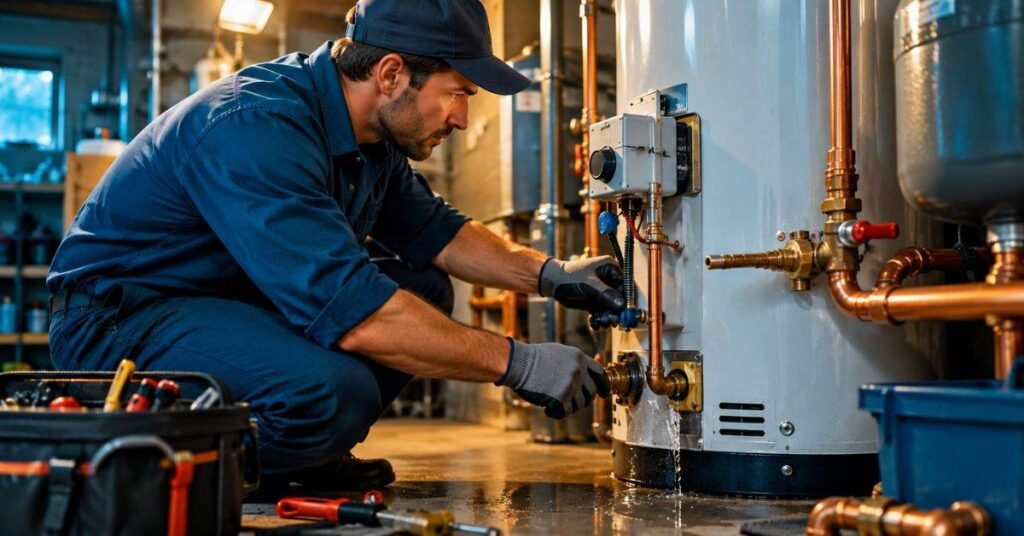
Each problem has its own price tag. This list shows what most homeowners can expect in 2026. These are estimates for a standard tank heater and include parts and labor.
Thermostat replacement: $150 to $350. The thermostat controls the water temperature. When it fails, water may be too cold or too hot.
Heating element replacement (electric): $200 to $450. Electric heaters have one or two elements. They wear out over time, especially with hard water.
Anode rod replacement: $150 to $400. This rod fights rust inside the tank. Changing it on time can add years to your heater’s life.
Pressure relief valve: $150 to $350. This safety part lets out extra pressure. It must work properly.
Thermocouple or igniter (gas): $150 to $400. These parts keep the flame lit. If they break, you get no heat.
Drain valve: $100 to $250. A leaky or stuck valve is a simple fix.
Gas control valve: $300 to $700. This is one of the pricier gas repairs.
Tank flush: $100 to $250. Flushing removes sediment and helps the heater work better.
Leaking tank: usually replacement. If the tank itself leaks, repair is rarely possible.
What Changes the Price of a Repair
Two homes can have the same problem and very different bills. Here is why.
Type of heater. Electric heaters are often cheaper to fix than gas ones. Tankless units cost the most because the parts are more complex.
Location. Prices are higher in big cities and in states with high labor costs. A plumber in a small town may charge less than one in a major metro area.
Where the heater sits. A heater in an open basement is easy to reach. One tucked in a tight attic or closet takes more time, and time costs money.
Time of day. Night, weekend, and holiday calls often cost 1.5 to 2 times the normal rate. That is why a midnight emergency can raise your water heater repair cost quickly.
Age and brand. Parts for older or rare models can be hard to find. Common brands usually have cheaper, easier-to-get parts.
Warranty. Many heaters come with a parts warranty of 6 to 10 years. If yours is still covered, you may only pay for labor. Check your paperwork or the label on the tank.
Code updates. Sometimes a plumber must add a new part, like an expansion tank, to meet local rules. That adds $150 to $400.
Electric vs. Gas vs. Tankless: How Repairs Differ
Your heater type affects both the problem and the price.
Electric tank heaters are simple. They use heating elements and thermostats. Most repairs here are quick and cost $150 to $450. Because the parts are easy to find, plumbers can often finish in one visit.
Gas tank heaters burn fuel to make heat. They have more moving parts, like burners, pilot lights, and gas valves. Repairs often cost $150 to $700. Gas work also needs extra care because of the risk of leaks. If you ever smell gas, leave your home right away and call your gas company or 911 from outside.
Tankless heaters heat water as it flows. They save space and can last 20 years or more. But repairs often run $200 to $1,000 or higher, and many need a trained technician. Mineral buildup is a common issue, so yearly descaling at $150 to $300 is smart.
Heat pump water heaters are a newer option. They use less energy, which can lower your bills. Repairs are a bit more technical, and costs often range from $300 to $800.
The U.S. Department of Energy offers helpful details on each type at Energy.gov’s water heating page. If you want to compare tank sizes and fuel types, see our guide on choosing the right water heater.
Price Charts at a Glance

Here are two simple charts. They put the water heater repair cost for each common problem and each heater type in one place. These are 2026 estimates and can vary by location.
Cost by Repair Type
| Repair | Low Price | High Price | Time Needed |
|---|---|---|---|
| Tank flush | $100 | $250 | 1 hour |
| Drain valve | $100 | $250 | 1 hour |
| Thermostat | $150 | $350 | 1 to 2 hours |
| Pressure relief valve | $150 | $350 | 1 hour |
| Anode rod | $150 | $400 | 1 to 2 hours |
| Igniter or thermocouple | $150 | $400 | 1 to 2 hours |
| Heating element | $200 | $450 | 1 to 2 hours |
| Gas control valve | $300 | $700 | 2 to 3 hours |
Cost by Heater Type
| Heater Type | Typical Repair Range | Average Lifespan | Repair Difficulty |
|---|---|---|---|
| Electric tank | $150 to $450 | 10 to 15 years | Easy |
| Gas tank | $150 to $700 | 8 to 12 years | Medium |
| Tankless | $200 to $1,000+ | 15 to 20 years | Hard |
| Heat pump | $300 to $800 | 10 to 15 years | Medium to Hard |
Use these charts as a starting point. Then compare them to the quotes you get.
Repair or Replace: How to Decide
This is the biggest question homeowners face. Fixing may be cheaper today, but it is not always the smartest move. Here is a simple way to decide.
Use the 50% rule. If the repair will cost more than half the price of a new heater, replacement is usually wiser. A typical new tank heater costs $1,200 to $3,500 installed. A tankless unit often runs $2,500 to $6,000.
Check the age. If your tank is under 8 years old, repair often makes sense. If it is over 10 to 12 years old, a repair may only be a short-term fix.
Look at the tank. A leaking tank means replacement. Rust on the outside is also a bad sign.
Count the repairs. If you have fixed the same heater two or three times in two years, a new one may save money. A single water heater repair cost looks small, but several bills add up fast.
Think about energy savings. New models can be much more efficient. ENERGY STAR-rated models can lower your energy use and bills. Learn more at ENERGY STAR’s water heater page.
Need more details on new units? Read our water heater replacement guide before you decide.
Can You Fix It Yourself? Safety First
Some small jobs are fine for a careful homeowner. Others are risky and should be left to a licensed pro.
Jobs that are often safe:
- Flushing the tank to remove sediment (turn off power or gas first).
- Checking the temperature setting.
- Relighting a pilot light by following the label on the heater.
- Testing the pressure relief valve by lifting the lever briefly.
Jobs to leave to a pro:
- Anything with gas lines or gas valves.
- Replacing heating elements or wiring.
- Replacing a pressure relief valve.
- Fixing a leaking tank.
- Any repair on a tankless unit.
Water heaters can be dangerous. Hot water can scald you. Electric parts can shock you. Gas can cause fires or carbon monoxide problems. A broken pressure relief valve can even make a tank burst.
The U.S. Consumer Product Safety Commission shares safety tips at CPSC.gov. It also recommends working carbon monoxide alarms near gas appliances.
A DIY mistake can also void your warranty. A wrong fix can cost far more than calling a pro in the first place. When in doubt, call a licensed plumber.
Smart Ways to Lower Your Repair Bill
You cannot control every price, but you can keep your costs down. Try these tips.
Flush your tank once a year. This clears sediment that wears out parts. It costs little and prevents big problems.
Replace the anode rod on time. Check it every 3 to 5 years. It is cheaper than replacing a rusted tank.
Lower the temperature. Setting the thermostat to 120°F reduces strain on the heater and saves energy.
Get at least three quotes. Prices can differ by hundreds of dollars. Ask each plumber for a written estimate that lists parts and labor.
Avoid emergency hours. If the problem is small and safe, book a normal weekday visit. After-hours rates can be much higher.
Check your warranty and home insurance. A parts warranty may cover the broken piece. Some home warranty plans also cover repairs.
Use a water softener if you have hard water. Hard water causes mineral buildup. Softer water means fewer repairs, and your heater may last longer.
Schedule yearly checkups. A plumber’s tune-up often costs $75 to $150. It can find small issues before they turn into pricey ones.
Saving money is about care. A little work each year can lower your repair bill for years.
How to Choose a Trusted Plumber
A good plumber saves you stress and money. A bad one can leave you with a second problem. Here is how to pick the right one.
Check the license. Most states require plumbers to be licensed. You can often look up a license on your state’s website. Ask for proof of insurance too.
Read reviews. Look at Google, Yelp, and the Better Business Bureau. Pay attention to how the company handles complaints.
Ask about experience. Ask if they have fixed your type and brand of heater before. Gas, electric, and tankless units all need different skills.
Get a written quote. The quote should list the parts, labor, taxes, and any extra fees. Be careful of anyone who gives only a vague price over the phone.
Ask about warranties. Good plumbers back their work. Many offer 30 days to one year on labor, and parts may carry a manufacturer warranty.
Watch for red flags. Be careful if a plumber pressures you to decide right away, asks for full payment upfront, or refuses to give a written estimate.
Ask questions. A trustworthy pro will explain the problem in simple words. They should be happy to show you the broken part.
Take your time. A little research now helps you avoid trouble later. Our home maintenance checklist can also help you track service dates.
Frequently Asked Questions
How much does a plumber charge to fix a water heater
Most plumbers charge $75 to $200 per hour, and total bills usually land between $200 and $700.
Is it cheaper to repair or replace a water heater
Repair is cheaper at first, but replacing is wiser if the heater is over 10 to 12 years old or the fix costs half a new unit.
Why is my water heater not making hot water
The cause is often a bad heating element, a broken thermostat, a tripped breaker, or a pilot light that went out.
How long does a water heater repair take
Most repairs take one to three hours, though tankless or gas valve jobs can take longer.
How often should I service my water heater
Flush the tank once a year and have a pro inspect it every one to two years.
Conclusion
A broken water heater is stressful, but it does not have to be confusing. Most repairs cost between $200 and $700, and many are simple fixes. Your final water heater repair cost depends on the heater type, the part that failed, your location, and how fast you need help.
Remember the key points. Watch for early warning signs like strange noises, rusty water, and puddles. Use the price charts to know what is fair. If your heater is old or the fix costs more than half a new one, replacing it may save you money. Keep up with yearly flushes and checkups to make your heater last longer.


