
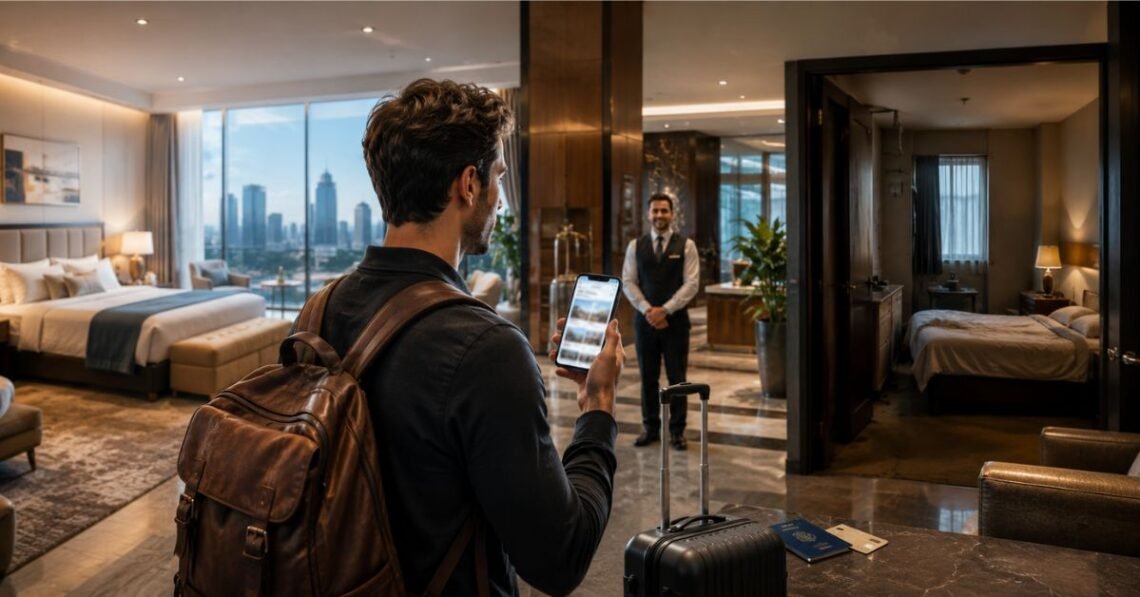
Last year, I booked what looked like a perfect hotel online. Great photos, decent price, solid reviews. But when I arrived, the room was tiny, the AC barely worked, and the “city view” was basically a parking lot.
Sound familiar?
Most travelers book hotels the same way they always have — scroll, compare prices, pick the cheapest option, and hope for the best. But there are smarter ways to do it. These travel tweaks hotels insiders actually use can completely change how you experience your stay — from the moment you book to the second you check out.
This guide covers everything. Real tips. Honest advice. No fluff.
Stop Booking Hotels the Obvious Way
Most people go straight to Booking.com or Expedia, pick a hotel, and done. Nothing wrong with that — but you’re leaving a lot on the table.
Here’s what actually works better:
First, use those platforms to research. Look at photos, read reviews, note the hotel name. Then go directly to the hotel’s own website and book there.
Why? Hotels almost always offer better rates for direct bookings. They also give direct bookers perks that third-party platforms don’t — free breakfast, room upgrades, late checkout, or flexible cancellation.
One simple travel tweak for hotels: call the front desk directly after booking. Introduce yourself, mention a special occasion if there is one, and politely ask if any upgrades are available. It works more often than you’d think.
Also check if the hotel has a loyalty program. Even free memberships often unlock member-only rates that beat everything you find online.
Timing Your Booking Actually Matters
There’s a real science to when you book — and most travelers get this wrong.
For budget hotels and motels, booking last minute (24 to 48 hours before) often gets you the lowest price. Hotels hate empty rooms and will drop rates significantly.
For luxury or boutique hotels, book 3 to 6 weeks in advance. These properties fill up fast and rarely discount last minute.
Best days to book:
| Day | Why It Works |
|---|---|
| Tuesday | Hotels reset pricing, rates often drop |
| Wednesday | Midweek lull, good availability |
| Sunday Evening | Last push to fill weekend gaps |
Also, arriving on a Sunday or Monday almost always gets you a better room. Weekend guests have checked out, staff is relaxed, and upgrades are more available.
Avoid booking during local events, holidays, or peak season without checking first. A simple Google search — “events in [city] during [your dates]” — can save you from paying triple the normal rate.
How to Read Hotel Reviews Like a Pro
Anyone can read reviews. Reading them smartly is a different skill.
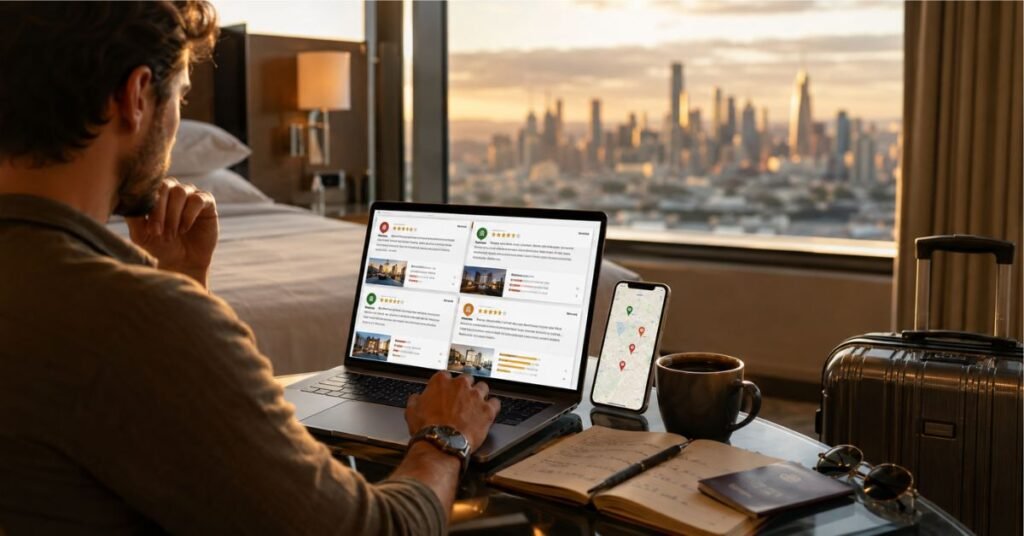
Here’s the honest truth: don’t trust overall star ratings blindly. A hotel with 4.2 stars might have 200 reviews saying the beds are incredible and 50 saying the noise is unbearable. Which matters more depends on you.
What to actually look for:
- Filter reviews by “most recent” not “most helpful”
- Read the 3-star reviews — they’re usually the most honest
- Look for patterns, not one-off complaints
- Search for keywords like “noise,” “cleanliness,” “staff,” and “wifi”
One underrated travel tweak for hotels: check reviews on Google Maps separately from Booking.com or TripAdvisor. Different audiences leave reviews on different platforms, and the feedback often varies a lot.
Also pay attention to how the hotel responds to negative reviews. A hotel that responds professionally and tries to fix problems is a hotel that actually cares about guests.
Room Selection Is More Important Than You Think
Most people pick a room category — standard, deluxe, suite — without thinking much beyond price. But the specific room you end up in within that category can make or break your stay.
Smart room selection tips:
- Request a room away from elevators and ice machines (noise)
- Ask for a higher floor for better views and less street noise
- Request a corner room — they’re often larger with extra windows
- Avoid rooms near the pool if you want quiet mornings
- Ask specifically if your room has been recently renovated
When you arrive, don’t be afraid to ask to see the room before you commit. Most hotels will allow this, especially if it’s not fully booked. If something isn’t right — smell, noise, size — politely ask for a different room.
This is one of those travel tweaks for hotels that feels awkward the first time but becomes second nature once you realize how often it works.
The Check-In Process Has Hidden Opportunities
Check-in is not just a formality. It’s actually one of the best moments to improve your entire stay.
Arrive with a friendly attitude. Front desk staff deal with difficult guests all day. Being genuinely pleasant — not fake, just human — makes a real difference.
What to do at check-in:
- Greet staff by name if their badge is visible
- Mention if it’s a special occasion (birthday, anniversary, honeymoon)
- Ask casually if any complimentary upgrades are available
- Confirm all the amenities you were promised when booking
- Ask about quiet hours, breakfast times, and any current hotel offers
Hotels often have better rooms sitting empty that they’ll assign to friendly, loyal, or direct-booking guests first. You don’t need to beg or demand — just ask with a smile.
Also, if you’re checking in late, call ahead. Let the hotel know your arrival time so they don’t release your room and don’t end up with a worse option because you showed up at midnight unannounced.
Save Money Without Sacrificing Comfort
Budget travel doesn’t mean uncomfortable travel. It just means being smarter about where your money goes.
Cost-saving travel tweaks for hotel stays:
| Tip | How Much You Can Save |
|---|---|
| Book direct vs third party | 10% to 15% |
| Use hotel loyalty points | Free nights possible |
| Travel shoulder season | Up to 40% cheaper |
| Request free breakfast at booking | $15 to $30 per day |
| Skip minibar, use nearby store | $20 to $50 per stay |
| Use hotel shuttle instead of taxi | $20 to $60 per trip |
One thing most travelers overlook: hotel restaurants are almost always overpriced. Walk two blocks in any direction and you’ll find better food for half the price. Same goes for hotel laundry services — find a local laundromat if you need it.
Ask the front desk for a local discount card. Many hotels partner with nearby restaurants, attractions, and transport services to offer guest discounts. These are rarely advertised but almost always available if you ask.
Amenities You’re Probably Not Using
Hotels offer a surprising number of amenities that most guests never touch.
Commonly missed hotel amenities:
- Complimentary shoe shine service
- Free local newspaper or magazine
- Bicycle rentals or city maps at the concierge
- Free use of fitness equipment or pool (even at budget hotels)
- Free coffee or tea in the lobby (not just in the room)
- Luggage storage before check-in and after checkout
- Free local calls from room phone
- Complimentary toiletries (ask for extras if needed)
Before you pay for anything extra, ask what’s already included. You might be surprised. Many mid-range hotels now include things like streaming service access on room TVs, in-room tablets with city guides, and free high-speed wifi that actually works.
Also ask about late checkout. It’s not always free, but many hotels will give you an extra hour or two at no charge, especially during off-peak periods. This small travel tweak for hotels can save you from awkward hours sitting in a lobby with your bags.
Staying Safe and Comfortable in Any Hotel
Safety and comfort aren’t just about price. Here are practical tips that work at every level.
Safety basics:
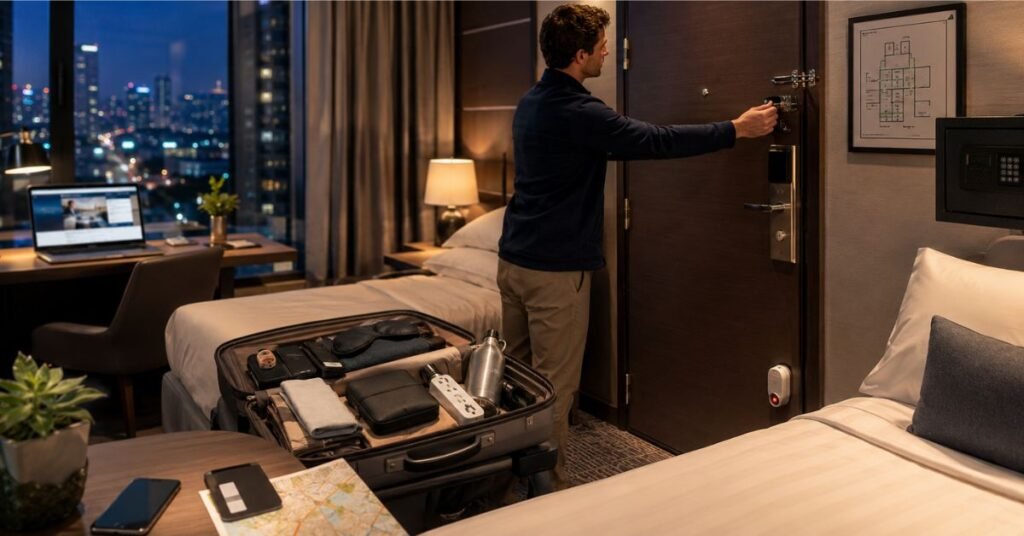
- Always check where emergency exits are on your floor
- Use the door’s deadbolt and chain lock every night
- Don’t open the door to unexpected knocks — call the front desk first
- Keep valuables in the in-room safe or front desk safe
- Don’t announce your room number out loud in public areas
Comfort tips:
- Bring a small power strip if you need multiple charging ports
- Pack a thin sleep mask and earplugs for light and noise
- Request extra pillows and blankets at check-in
- Ask for a room far from construction if the hotel is renovating
- Use the “Do Not Disturb” sign strategically — not all day if you want housekeeping
One underrated tip: bring a small portable door alarm. They cost under $15 online and give extra peace of mind, especially in budget properties or unfamiliar destinations.
How to Handle Problems Like a Pro
Things go wrong. Rooms aren’t ready, noise keeps you up, heating doesn’t work. How you handle it determines whether you have a miserable stay or a resolved one.
The right way to complain:
- Stay calm and be specific about the problem
- Go to the front desk in person rather than calling
- Ask for a solution, not just to vent
- Give them a reasonable chance to fix it
- If unresolved, ask to speak with the duty manager
Hotels genuinely want to fix problems. A guest who complains constructively and stays is more valuable to them than one who leaves a bad review and never returns.
Document issues with photos if needed — not to threaten, but to be specific. “The shower leaks” is vague. “Water pools here and soaks the bathmat within 10 minutes” gets fixed faster.
Most hotels will offer compensation for genuine problems — a room change, a meal credit, a discount on your stay. But only if you actually tell them there’s a problem. Suffering silently and then leaving a bad review helps nobody.
The Day You Check Out Matters Too
Checkout is where most travelers rush and leave value behind.
Smart checkout habits:
- Review your bill carefully before paying — errors are common
- Ask about late checkout the evening before, not morning of
- Use luggage storage if your flight is later in the day
- Return your key cards (some hotels charge for missing ones)
- Take photos of the room before leaving to protect against false damage claims
- Leave a honest review — good hotels deserve recognition
One final travel tweak for hotels worth mentioning: keep a record of your booking confirmation, loyalty points earned, and any promises made at check-in. If something was promised and not delivered, you have documentation to follow up.
Also, if you had a genuinely great stay, ask for the name of the staff member who helped you most and mention them in your review. It matters more than you think for their career and it makes a real difference to real people.
Quick Comparison: Smart Traveler vs Average Traveler
| Situation | Average Traveler | Smart Traveler |
|---|---|---|
| Booking | Uses cheapest option found | Books direct after research |
| Check-in | Accepts whatever room given | Asks for upgrade politely |
| Problems | Complains online after leaving | Resolves it during stay |
| Amenities | Uses room only | Explores everything included |
| Checkout | Rushes out | Reviews bill, uses storage |
| Reviews | Reads star rating only | Reads patterns in recent reviews |
FAQs About Travel Tweaks for Hotels
Is it really possible to get a free hotel upgrade
Yes, it happens regularly. Book direct, be friendly at check-in, mention a special occasion, and simply ask. The worst answer is no.
What’s the best time to book a hotel for the lowest price
For budget hotels, 24 to 48 hours before works well. For nicer properties, 3 to 6 weeks ahead is usually the sweet spot.
Should I always use loyalty programs
Yes, even free tiers are worth it. Points add up and member rates often beat public prices without any extra cost.
How do I handle a hotel that doesn’t match its photos
Document the differences with photos, speak to the manager calmly, and request a room change or rate adjustment. If unresolved, contact your booking platform.
Are hotel amenities really free to use
Most standard amenities like the gym, pool, and wifi are included. Always confirm at check-in what’s free and what has an extra charge.
Conclusion
A great hotel stay rarely happens by accident. It happens because someone made a few smart decisions — booked at the right time, asked the right questions, and knew what to look for.
These travel tweaks for hotels are not complicated or expensive. They’re just practical habits that experienced travelers have figured out over time. Now you have them too.
Start with one or two on your next trip. Book direct. Ask about upgrades. Read reviews smarter. Handle problems calmly. Use what’s already included.
You don’t need to spend more to stay better. You just need to travel a little smarter.