

Introduction
Most people think of teeth and the rest of the body as two separate things. You go to a doctor for your health, and you go to a dentist for your teeth. But that idea is outdated. Modern research shows a strong link between health and dentistry — what happens in your mouth can affect your heart, your lungs, your blood sugar, and even your pregnancy. Gum disease has been connected to heart problems. Poor oral hygiene can make diabetes harder to control. Bad breath can be an early sign of a bigger health issue that has nothing to do with what you ate for lunch.
This guide breaks down the real, science-backed connection between oral care and overall wellness, in plain language. You won’t find confusing medical jargon here — just clear, practical information you can use starting today. Whether you’re trying to understand why your dentist keeps asking about your medical history, or you simply want fewer cavities and fresher breath, this article covers everything you need to know in 2026, including simple daily habits, common conditions, and when to see a professional.
Why Health and Dentistry Are Connected
In short: Your mouth is the entry point to your body, so bacteria and inflammation there can travel elsewhere and affect organs like your heart and lungs.
Your mouth is full of bacteria — most of it harmless, but some of it not. When you skip brushing or flossing, harmful bacteria build up and can enter your bloodstream through inflamed or bleeding gums. Once inside the body, this bacteria can contribute to inflammation in other areas, including the arteries near the heart.
Doctors and dentists now often work together because of this link. For example, a person with diabetes is more likely to develop gum disease, and gum disease, in turn, can make blood sugar harder to control. It becomes a two-way street. This is why many physicians now ask patients about their last dental visit, and why dentists ask about chronic conditions like diabetes, heart disease, or pregnancy before starting treatment.
Taking care of your teeth isn’t just about a nice smile. It’s part of protecting your whole body from unnecessary strain and infection.
Common Oral Health Problems People Ignore
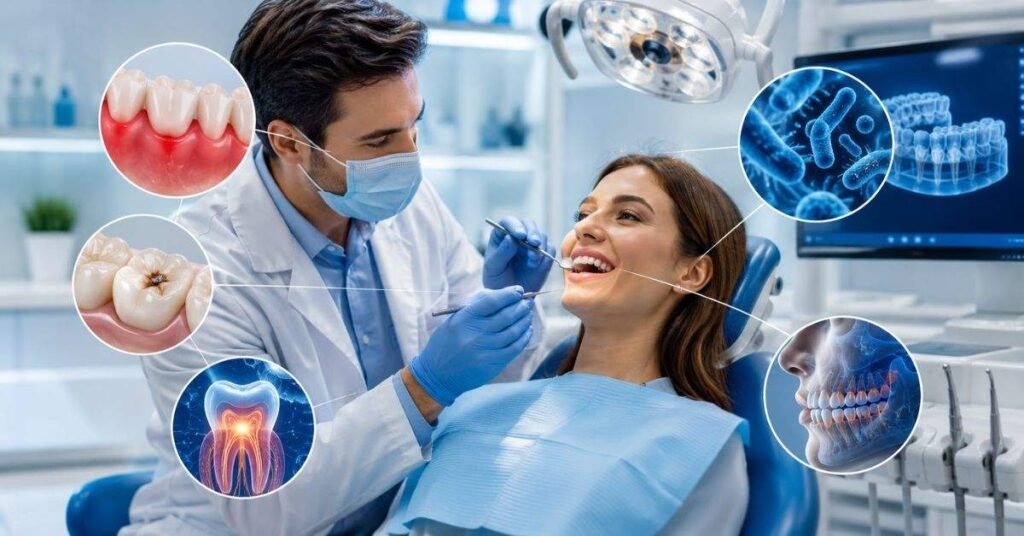
Many oral issues start small and quiet, which is exactly why people ignore them until they become painful or expensive to fix.
Gum disease (gingivitis and periodontitis)
Starts with red, swollen, or bleeding gums. Left untreated, it can lead to tooth loss.
Cavities:
Small holes in teeth caused by acid from bacteria. They don’t hurt at first, which is why regular checkups matter.
Tooth sensitivity:
Sharp pain when eating something hot, cold, or sweet — often a sign of worn enamel or a small crack.
Bad breath (halitosis)
Usually caused by bacteria, but sometimes linked to digestive issues or dry mouth.
Teeth grinding (bruxism)
Often happens during sleep due to stress, and can wear down teeth over time.
None of these problems fix themselves. The earlier they’re caught, the cheaper and less painful the treatment usually is. This is one of the simplest truths in dentistry: small problems today prevent big problems tomorrow.
Daily Habits That Protect Your Teeth and Your Body
Good oral care doesn’t require expensive products. It requires consistency. Here are the habits that make the biggest difference:
Brush twice a day using a fluoride toothpaste, for at least two minutes each time.
Floss daily to remove food particles and plaque between teeth where a brush can’t reach.
Limit sugary snacks and drinks, since sugar feeds the bacteria that cause cavities.
Drink enough water, which helps wash away food debris and keeps your mouth from drying out.
Avoid tobacco products, which are linked to gum disease, tooth loss, and oral cancer.
Replace your toothbrush every 3 months, or sooner if the bristles look worn.
These habits aren’t just about avoiding cavities. A clean mouth reduces the overall bacterial load your immune system has to deal with, which supports better general health over time.
How Oral Health Affects Heart Health
In short: Chronic gum inflammation is associated with a higher risk of heart disease, though it doesn’t cause it directly in every case.
Several long-term studies have found that people with gum disease are more likely to also have cardiovascular problems. The leading theory is that inflammation is the shared factor. When gums are chronically inflamed, the body produces inflammatory markers that can also affect blood vessels elsewhere, potentially contributing to plaque buildup in arteries.
This doesn’t mean everyone with a cavity will develop heart disease. But it does mean oral hygiene is one more tool — alongside diet, exercise, and regular checkups — for protecting your heart. According to information published by the Centers for Disease Control and Prevention, maintaining good oral hygiene is considered part of a broader strategy for reducing chronic disease risk.
If you already have a heart condition, it’s worth mentioning this to your dentist, since some dental procedures may require extra precautions.
Oral Health During Pregnancy
Pregnancy causes hormonal changes that can make gums more sensitive and prone to swelling or bleeding, a condition often called “pregnancy gingivitis.” Left unmanaged, gum disease during pregnancy has been linked in some studies to premature birth and low birth weight, although more research is still being done to fully confirm the relationship.
Dentists generally recommend that pregnant women:
- Continue regular brushing and flossing without skipping days.
- Attend a dental checkup during pregnancy, ideally in the second trimester.
- Mention pregnancy to the dental office before any X-rays or procedures.
- Rinse with water after vomiting from morning sickness to protect enamel from stomach acid.
Good prenatal oral hygiene is a simple, low-cost way to support a healthier pregnancy, and it’s one area where health and dentistry clearly overlap in everyday life.
Children’s Dental Health: Building Habits Early

Kids who develop good dental habits early tend to keep them for life. Baby teeth may fall out, but decay in baby teeth can still cause pain, infection, and problems with how permanent teeth grow in.
Here’s a simple age-based guide:
| Age Group | Recommended Dental Care |
|---|---|
| 0–1 year | First dental visit by age 1, or within 6 months of first tooth |
| 1–3 years | Brush twice daily with a rice-grain amount of fluoride toothpaste |
| 3–6 years | Supervised brushing, pea-sized toothpaste, first flossing lessons |
| 6–12 years | Independent brushing, dental sealants for molars, regular checkups |
| 12+ years | Orthodontic evaluation if needed, continued twice-yearly checkups |
Encouraging kids to see brushing as a normal, non-scary part of the day — rather than a punishment or chore — makes a huge difference in long-term compliance.
Diet and Its Role in Oral and Overall Wellness
What you eat shapes both your teeth and your general health, since the same sugary and acidic foods that cause cavities also contribute to issues like obesity and type 2 diabetes.
Foods that support oral health:
- Leafy greens (calcium and folic acid)
- Cheese and dairy (helps neutralize acid in the mouth)
- Crunchy fruits and vegetables like apples and carrots (natural teeth cleaners)
- Water (rinses away food particles and bacteria)
Foods that harm oral health:
- Sticky candies and sweets
- Carbonated soft drinks
- Excessive citrus (acid can erode enamel)
- Starchy snacks like chips, which break down into sugar
A diet built around whole foods rather than processed sugar naturally protects both your smile and your overall metabolic health.
Comparing At-Home Dental Care vs. Professional Dental Care
Many people wonder how much they can manage at home versus what truly needs a professional. The table below breaks it down simply.
| Task | At-Home Care | Professional Care |
|---|---|---|
| Removing plaque | Partially, with brushing/flossing | Fully, with scaling tools |
| Detecting cavities early | Difficult without training | X-rays and visual exams |
| Teeth whitening | Mild results with OTC products | Stronger, faster, safer results |
| Treating gum disease | Can slow progress | Required for real treatment |
| Fixing cracked or broken teeth | Not possible | Required |
At-home care is the foundation, but it can’t replace professional checkups. Most dentists recommend a checkup and cleaning every six months, even if nothing seems wrong, because many problems are silent until they’re advanced.
When to See a Dentist Immediately
Some symptoms shouldn’t wait for a routine appointment. See a dentist as soon as possible if you notice:
- Severe or persistent tooth pain
- Swelling in the face, jaw, or gums
- A tooth that has become loose or fallen out due to injury
- Bleeding that won’t stop
- A sore or ulcer in the mouth that hasn’t healed after two weeks
- Signs of infection, such as fever along with dental pain
Delaying care for these symptoms can lead to more serious infections that may require emergency treatment, and in rare but serious cases, untreated dental infections can spread and become dangerous. Trusting your body’s warning signs is always safer than waiting it out.
The Future of Health and Dentistry: What’s Changing in 2026
Dental care continues to evolve alongside general healthcare. Some of the current trends include:
- Tele-dentistry, allowing basic consultations and follow-ups from home.
- AI-assisted diagnostics, helping dentists spot cavities and bone loss earlier from X-rays.
- Integrated care models, where dental clinics and general health providers share patient records for better coordinated treatment.
- Preventive-first approaches, with insurance and clinics increasingly focusing on early checkups rather than costly late-stage treatment.
These changes reflect a bigger shift: dentistry is no longer treated as separate from the rest of medicine. It’s increasingly viewed as one connected part of total-body health.
FAQs
Can bad teeth really affect my heart
Yes, chronic gum inflammation has been linked to a higher risk of heart disease in multiple studies, though it’s one of several contributing factors.
How often should I visit the dentist
Most people should have a checkup and cleaning every six months, though your dentist may recommend more frequent visits for certain conditions.
Is flossing really necessary if I brush well
Yes, flossing removes plaque and food between teeth that a toothbrush simply cannot reach.
Can poor oral health affect diabetes
Yes, gum disease can make blood sugar harder to control, and uncontrolled diabetes can also worsen gum disease.
Are electric toothbrushes better than manual ones
Studies generally show electric toothbrushes remove slightly more plaque, but proper technique matters more than the tool itself.
Conclusion
The connection between health and dentistry is stronger than most people realize. A healthy mouth isn’t just about a confident smile — it plays a real role in protecting your heart, managing conditions like diabetes, supporting a healthy pregnancy, and reducing your risk of infection. The good news is that protecting this connection doesn’t require anything complicated. Brushing twice a day, flossing daily, eating a balanced diet, and visiting your dentist regularly are simple, low-cost habits with a real impact on your long-term wellbeing.
If it’s been more than six months since your last checkup, consider that your sign to book one. Small, consistent care today can prevent painful and expensive problems tomorrow — for your teeth and for your whole body.