

Jeans are one of the most common items in almost every closet. But have you ever picked up a pair and wondered exactly how heavy they are? Maybe you are packing a suitcase, mailing a gift, or just curious about the fabric on your legs. Whatever the reason, how much do jeans weigh is a question with a clear and simple answer, even though the number changes a little depending on the jeans.
In general, most adult jeans weigh somewhere between 1 and 2 pounds (450 to 900 grams) when dry. Lighter styles can weigh less than a pound, while thick, heavy-duty denim can weigh close to 2.5 pounds. The exact number depends on the fabric thickness, the size of the jeans, the cut, and any extra hardware like buttons, rivets, or zippers.
This guide breaks everything down in plain, easy words. You will learn the average weight by type, size, and gender, how denim thickness is measured, why wet jeans weigh more, and how this all matters for shipping, travel, and everyday comfort. We checked information from denim makers, shipping experts, and fabric guides so this article is accurate, current, and genuinely useful — not just another page repeating the same old numbers.
How Much Do Jeans Weigh on Average
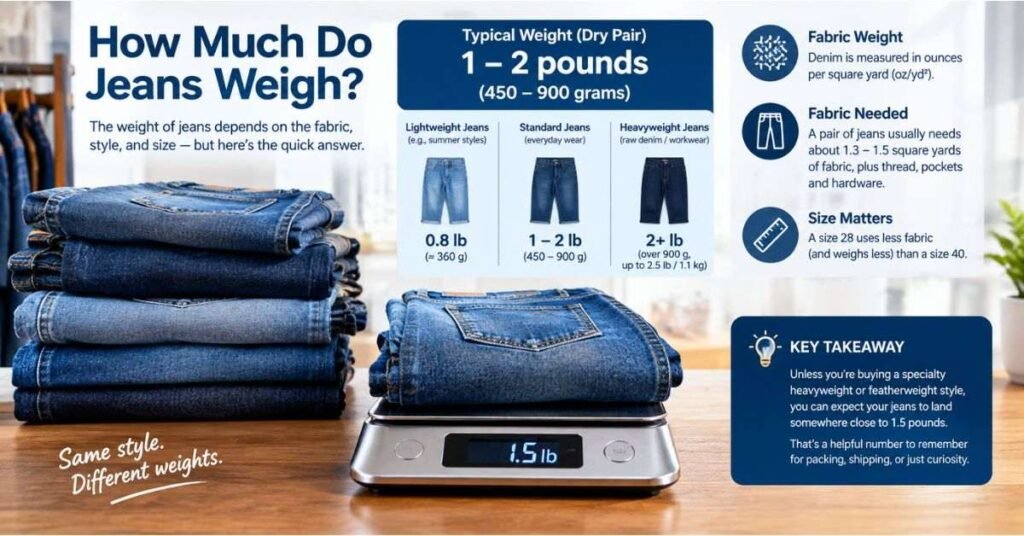
If you only want the short answer, here it is: a typical dry pair of adult jeans weighs between 1 pound and 2 pounds (roughly 450 to 900 grams). This is the range most people can expect for standard, everyday denim jeans in a normal adult size.
Some jeans fall outside that range. Very light, stretchy skinny jeans made for summer can weigh as little as 0.8 pounds (around 360 grams). On the other end, thick raw denim or workwear jeans built for heavy-duty use can weigh over 2 pounds, and some extreme heavyweight styles even reach 2.5 pounds (roughly 1.1 kilograms).
Why such a wide range? Jeans are not all made the same way. A pair made from thin, soft denim will always weigh less than a pair made from stiff, rugged denim, even if both are the same size. Size also matters — a size 28 pair of jeans naturally uses less fabric than a size 40 pair, so it weighs less.
Here is a quick way to think about it: denim fabric itself is measured in ounces per square yard, and a finished pair of jeans usually needs about 1.3 to 1.5 square yards of fabric, plus thread, pockets, and hardware. That math is what leads to the final weight you feel when you pick up a pair.
For most shoppers, the takeaway is simple. Unless you are buying a specialty heavyweight or featherweight style, you can expect your jeans to land somewhere close to 1.5 pounds. That is a helpful number to remember for packing, shipping, or just general curiosity.
Why Does Denim Weight Vary So Much
Denim is not one single fabric. It is a family of cotton (or cotton-blend) fabrics woven in different thicknesses, and that thickness is the biggest reason jean weight changes from pair to pair.
Fabric weight is measured in ounces per square yard, often written as “oz” on a clothing tag or product page. A tag that says “12oz denim” is telling you how much one square yard of that fabric weighs — not how much the finished jeans weigh. This is one of the most misunderstood facts about denim, and it trips up a lot of shoppers.
A few other things change the final weight of a pair of jeans:
- Weave style. Tighter, denser weaves feel heavier and last longer.
- Stretch content. Stretch denim usually has added elastane, which can make it lighter and more flexible than 100% cotton denim.
- Wash and finish. Some washes add coatings or treatments that add a small amount of weight.
- Hardware. Metal buttons, rivets, and zippers add extra grams that most people never notice.
- Pocket linings and stitching. Extra pockets, patches, and thick thread all add a little mass.
None of these factors change the fabric dramatically on their own, but together they explain why two jeans that look almost identical can weigh noticeably different amounts on a scale.
Denim Weight Categories: Lightweight, Midweight, and Heavyweight
Denim is usually grouped into three broad categories based on fabric weight in ounces per square yard. Knowing these categories makes it much easier to guess how heavy a pair of jeans will feel before you even try them on.
| Denim Category | Fabric Weight (oz/sq yd) | Typical Jean Weight | Best For |
|---|---|---|---|
| Lightweight | 5–10 oz | 0.8–1.3 lbs (360–600 g) | Hot weather, travel, casual everyday wear |
| Midweight | 11–14 oz | 1.3–1.8 lbs (600–820 g) | Year-round wear, most popular category |
| Heavyweight | 15–20+ oz | 1.9–2.5 lbs (860–1,130 g) | Workwear, raw denim, cold climates |
Midweight denim is the most common choice for everyday jeans because it balances comfort, durability, and breathability. If you are not sure what you are buying, most mainstream jeans brands fall into this middle category.
Lightweight denim is popular for warm climates and travel because it is soft, breathable, and easy to fold into a suitcase. Heavyweight denim, sometimes called raw or selvedge denim, is favored by people who want jeans that mold to their body shape over time and last for many years with proper care.
Men’s vs Women’s Jeans: Is There a Real Weight Difference
Men’s and women’s jeans are often built from similar denim fabric, but the finished garments can weigh differently because of fit, cut, and the amount of fabric used.
| Jean Type | Typical Weight Range | Notes |
|---|---|---|
| Men’s standard jeans | 1.4–1.9 lbs (650–860 g) | Straighter cuts often use more fabric |
| Women’s standard jeans | 0.8–1.6 lbs (360–730 g) | Skinny and slim cuts are common and use less fabric |
| Men’s relaxed/workwear jeans | 1.9–2.5 lbs (860–1,130 g) | Extra fabric and reinforced stitching add weight |
| Women’s wide-leg or straight jeans | 1.2–1.8 lbs (550–820 g) | Closer to midweight men’s jeans |
The gap between men’s and women’s jeans mostly comes down to style choices rather than a strict rule. A pair of women’s wide-leg jeans in heavyweight denim can easily weigh more than a pair of men’s skinny jeans in lightweight denim. Fit matters just as much as gender labeling.
What Affects How Much Your Jeans Weigh
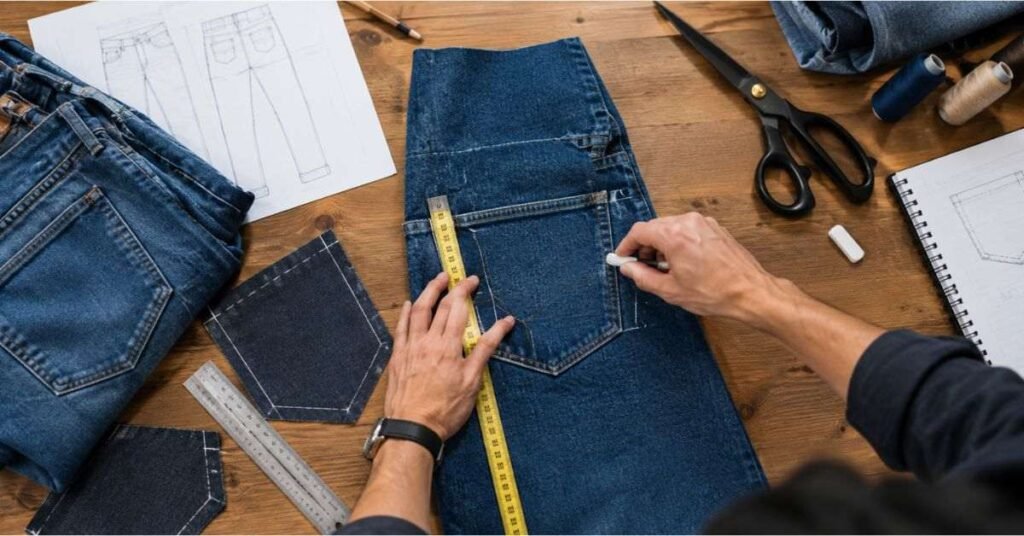
Beyond fabric thickness, several practical factors change the number you would see on a scale. Understanding them helps explain why “how much do jeans weigh” never has one single fixed answer.
Size and length. Larger waist sizes and longer inseams need more fabric, which directly increases weight. A size 42 pair will almost always weigh more than a size 28 pair in the same style.
Cut and fit. Skinny and slim-fit jeans use less denim than relaxed, bootcut, or wide-leg styles, simply because there is less fabric per leg.
Hardware and details. Rivets, thick zippers, extra pockets, patches, and embroidery all add small amounts of weight. Premium jeans with metal hardware can weigh noticeably more than basic budget styles.
Moisture. Wet denim can weigh 30 to 50 percent more than dry denim, which matters a lot if you are doing laundry math or packing damp clothes.
Age and wear. Old, worn-out jeans can actually weigh slightly less over time as fibers thin out, while jeans with visible repairs or patches usually weigh a bit more.
Put together, these factors explain why one brand’s “size medium” jeans can feel noticeably heavier or lighter than another brand’s jeans in the exact same size label.
How to Weigh Your Jeans at Home
If the averages above still leave you wondering exactly how much do jeans weigh in your own closet, weighing your own jeans is easy and only takes a minute.
Use a kitchen or postal scale. A regular bathroom scale is not precise enough for something this light, so a kitchen scale or small postal scale works best.
Make sure the jeans are completely dry. Any dampness will throw off the reading, sometimes by several ounces.
Remove any belts or accessories. Weigh just the jeans by themselves for an accurate number.
Check the label if you cannot weigh them. Some brands print an estimated weight or the denim ounce rating on the inside tag.
Compare against the averages above. If your jeans fall within 1 to 2 pounds, that is completely normal for a standard adult pair.
This simple check is especially useful before shipping jeans, since even a small weight difference can change your postage cost.
Why Jeans Weight Matters for Shipping and Travel

Knowing the weight of your jeans is more useful than it sounds. If you sell clothing online, ship a gift, or pack a suitcase, this small detail can save you money and hassle.
For online sellers, shipping carriers price packages based on actual weight and sometimes dimensional weight. According to the United States Postal Service, package pricing is based on weight bands, and even a few extra ounces can push a package into a more expensive rate tier. Knowing that a typical pair of jeans weighs around 1.5 pounds helps sellers estimate shipping costs accurately before printing a label.
For travelers, airline baggage limits are strict, and denim is one of the heavier items you can pack. Bringing two or three pairs of heavyweight jeans can eat up several pounds of your luggage allowance fast. Packing at least one lightweight pair instead of multiple heavyweight pairs is a simple way to save space and weight in a suitcase.
If you are curious about packing smart for a trip, our denim care guide explains how to fold and store jeans without adding bulk.
Wet Jeans vs Dry Jeans: The Washing Machine Factor
Wet denim behaves very differently from dry denim, and this matters more than most people realize. Denim fibers absorb water easily, which is why a pair of jeans fresh out of the washing machine can feel shockingly heavy compared to how it feels dry.
On average, wet jeans weigh 30 to 50 percent more than their dry weight. A pair that weighs 1.5 pounds dry could weigh over 2 pounds when soaked. This matters for two practical reasons: washing machine load limits and drying time.
Overloading a washing machine with several wet pairs of heavy jeans can strain the motor and cause uneven washing. It also explains why jeans take so long to air dry compared to lighter fabrics like cotton t-shirts. The dense weave that makes denim durable also makes it slower to release trapped water.
If you wash jeans regularly, it helps to check your washing machine’s maximum load weight and count jeans as being roughly one and a half times heavier than they feel dry. This small adjustment can prevent machine damage and help your jeans last longer overall.
How Jeans Weight Affects Comfort and Durability
A common myth is that heavier jeans are automatically more durable, but that is only partly true. Heavier denim does tend to resist general wear and tear better because there is simply more fabric to break down. However, fit, stitching quality, and how the jeans are cared for matter just as much as raw fabric weight.
Lightweight jeans are more breathable and comfortable in warm weather, but they can wear out faster with heavy daily use, especially at stress points like the knees and seat. Heavyweight jeans hold up well to rough activity and tend to keep their shape longer, but they can feel stiff, hot, and less comfortable for all-day wear in warm climates.
For most people, midweight denim in the 11 to 14 ounce range offers the best mix of comfort, structure, and durability. It is breathable enough for most weather, sturdy enough for daily wear, and rarely feels overly heavy or overly thin.
If fit and comfort are your main concern rather than just weight, our jeans size guide can help you choose the right cut for your body type before you focus on fabric weight at all.
Sustainable Denim and the Weight Question

Denim production uses a significant amount of water, cotton, and energy, and heavier jeans generally require more raw material to produce. This connects directly to sustainability, since more fabric per pair usually means a larger environmental footprint during manufacturing.
Textile waste is a growing concern worldwide. Data from the U.S. Environmental Protection Agency shows that clothing and textiles make up a large share of municipal solid waste each year, and denim, being a heavy and durable fabric, takes a long time to break down in landfills.
Choosing well-made, mid-to-heavyweight jeans that last for years is often more sustainable than buying several lightweight pairs that wear out quickly and get thrown away. Brands are also experimenting with recycled cotton and lighter blended fabrics that reduce material use without sacrificing strength. If sustainability matters to you, our sustainable fashion guide covers how to choose denim that lasts longer and creates less waste over time.
Quick Reference: Jeans Weight by Common Style
To make this even easier to scan, here is a simple visual summary that answers how much do jeans weigh across the most common styles, combining everything above into one place.
| Style | Approximate Weight | Fabric Weight |
|---|---|---|
| Summer/skinny lightweight jeans | 0.8–1.3 lbs | 5–10 oz |
| Standard everyday jeans | 1.3–1.8 lbs | 11–14 oz |
| Bootcut or wide-leg jeans | 1.5–2.0 lbs | 12–15 oz |
| Raw or selvedge heavyweight jeans | 1.9–2.5 lbs | 15–20 oz |
| Workwear/reinforced jeans | 2.0–2.5+ lbs | 16–20+ oz |
This table is a handy reference the next time you are shopping online and want a rough idea of what to expect before the jeans even arrive.
Frequently Asked Questions
How much do jeans weigh on average
Most dry adult jeans weigh between 1 and 2 pounds (450 to 900 grams), depending on fabric thickness and size.
Does denim weight in ounces mean the weight of the whole jeans
No. It refers to one square yard of fabric, not the finished garment, which is usually heavier overall.
Do wet jeans really weigh more than dry jeans
Yes, wet denim can weigh 30 to 50 percent more than dry denim because the fibers absorb a lot of water.
Are men’s jeans always heavier than women’s jeans
Not always. It depends more on the cut and fabric weight than on gender, since fit varies widely in both categories.
What is the best denim weight for everyday wear
Midweight denim, around 11 to 14 ounces, offers the best balance of comfort, durability, and breathability for most people.
Final Thoughts
Jeans might seem like a simple wardrobe basic, but their weight tells an interesting story about fabric, craftsmanship, and even sustainability. As you have seen, a typical pair lands between 1 and 2 pounds, with lighter summer styles and heavier workwear denim sitting outside that range. Fabric thickness, size, cut, hardware, and even moisture all play a role in the final number on the scale.
Whether you are packing a suitcase, calculating shipping costs, doing laundry, or simply satisfying your curiosity, now you have a clear and reliable picture of what to expect. The next time someone asks how much do jeans weigh, you will be able to explain it with real numbers instead of guesswork.
If you found this guide helpful, take a moment to weigh your own favorite pair and see where it falls on the scale. And if you are shopping for new denim soon, use the categories and tables above to pick a weight that matches your climate, activity level, and comfort preferences.