By the Editorial Team | Last updated: October 2026 | Reading time: about 10 minutes
Summer at work can feel like a battle. You want to look sharp, but the heat makes a stiff shirt and heavy pants feel like a trap. Many people sweat through their clothes before the first meeting even starts. The good news is that you do not have to pick between comfort and a polished look.
This guide shows you how to build business casual outfits for hot weather using simple rules, smart fabrics, and easy color choices. It covers both men’s and women’s styles, so you can find ideas that fit you. You will learn which materials keep you cool, which shoes are safe for the office, how to handle wrinkles, and how to stay comfortable when the air conditioner is too cold.
The tips here follow current 2026 workwear trends, such as relaxed tailoring, light neutral colors, and cooling fabrics. They also follow basic heat-safety advice from health agencies. Read the full guide, or jump to the charts and checklists if you are short on time. By the end, you will know exactly what to wear on even the hottest day.
What Does Business Casual Mean When It Is Hot
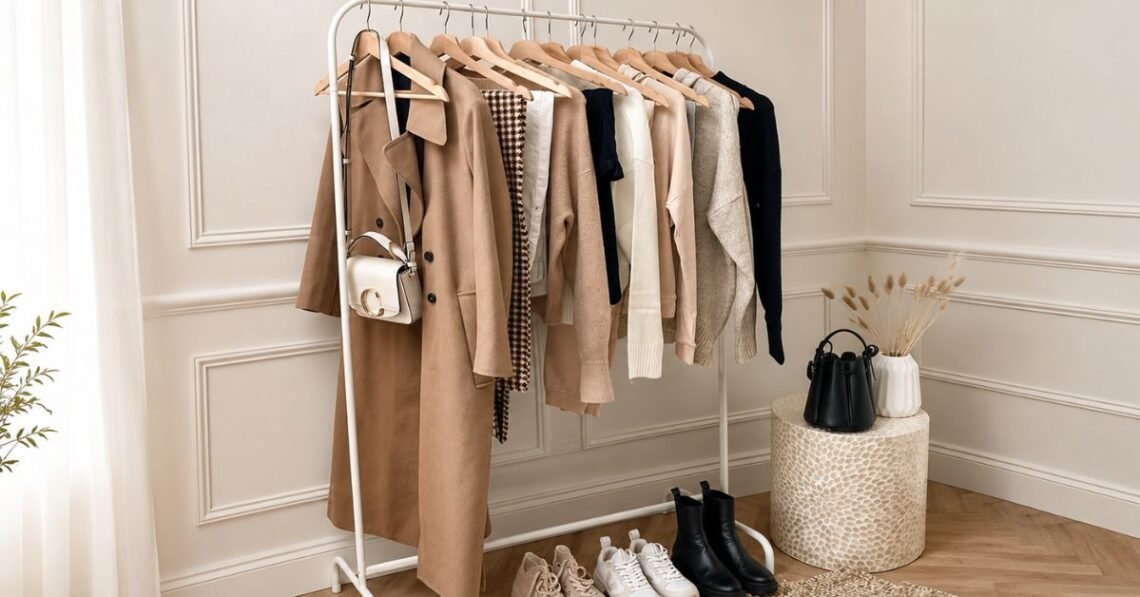
Business casual sits between a full suit and weekend clothes. In summer, it means neat, clean, and covered, but made from light materials. You look professional without wearing heavy layers.
Here is a quick definition: summer business casual is a work style that uses breathable fabrics, light colors, and tidy shapes so you stay cool and still look polished.
A few rules apply almost everywhere. Clothes should be clean, pressed, and the right size. Shirts should have a collar or a neat neckline. Pants, skirts, and dresses should be work-ready, not beachwear. Shoes should look finished, not worn out.
Dress codes change from office to office. A bank may expect more formal pieces than a design studio. If you are unsure, check your employee handbook or look at what your manager wears. It is always easier to dress down a polished look than to dress up a casual one.
Heat changes the rules in one important way. Comfort is now part of looking professional. Someone who is sweaty and tired does not look sharp. Choosing smart pieces helps you focus, feel calm, and make a good first impression all day.
The Best Fabrics to Keep You Cool
Fabric matters more than any other choice. The right material lets air move and sweat dry fast, while the wrong one traps heat. When you plan business casual outfits for hot weather, start with the cloth before you think about color or style.
Here are the top picks:
- Linen: Very airy and quick to dry. It wrinkles easily, so a linen-cotton blend is a smart choice.
- Cotton: Soft and easy to care for. Poplin and chambray are thin and crisp.
- Seersucker: Has a puckered texture that lifts off the skin so air can flow.
- Lyocell (often sold as Tencel): Smooth, light, and gentle on the skin.
- Tropical wool: A thin wool that feels surprisingly cool.
- Performance blends: Made to pull sweat away from the body.
Avoid thick polyester, heavy rayon, and tight knits. They hold heat and odor. Always check the label before you buy. You can also hold the cloth up to a light. If a little light comes through, air can pass through it too.
Heat is not only a style problem. It can be a real health risk. The CDC shares heat safety advice at cdc.gov, including tips on wearing light, loose clothes.
Smart Color Choices for Summer Offices
Color changes how hot you feel and how neat you look. Light colors reflect sunlight, while dark colors soak it up. That is why pale shades are a smart base for a summer work wardrobe.
Good base colors include white, cream, beige, stone, light gray, and pale blue. They mix easily, so you can build many looks from a few pieces. Soft earth tones such as sage green, sand, and terracotta have been popular in recent seasons and still look fresh in 2026. A muted blue or a warm butter yellow can add a little fun without looking loud.
Think about sweat marks, too. Light gray and light blue show wet spots the most. White, cream, and small patterns hide them better. A fine stripe or a soft print can also help a shirt look lively.
Try the two-color rule. Pick one light neutral and one softer accent, then keep everything else simple. For example, wear stone pants, a white top, and a sage blazer.
You can learn more in our guide to choosing a simple work color palette.
Tops That Look Neat and Feel Light
A good top does most of the work in an outfit. In hot weather, it should be light, loose enough to let air in, and neat enough for a meeting.
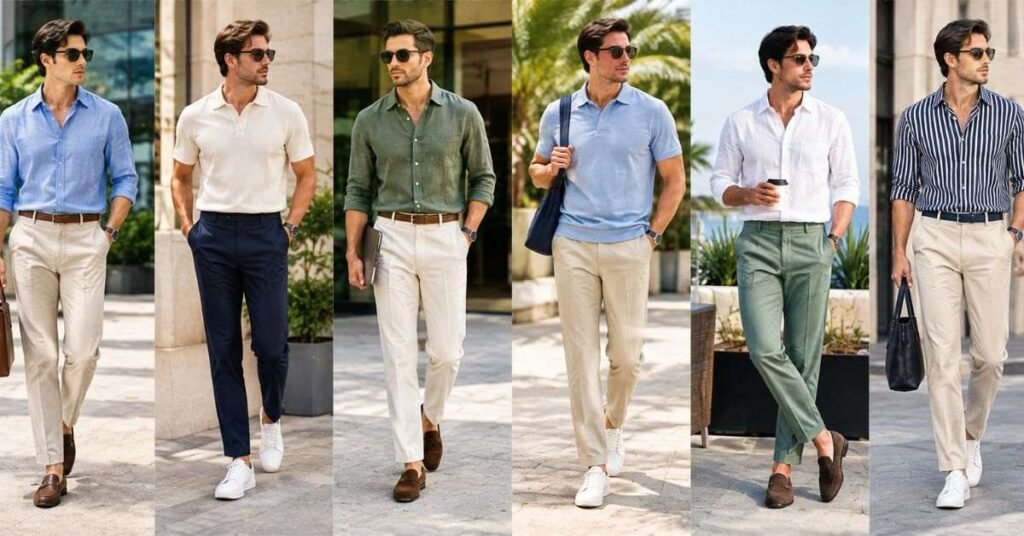
For men, strong choices include short-sleeve button-down shirts, thin cotton or linen shirts with the sleeves rolled once or twice, and plain polos in a smooth fabric. Choose a polo with a firm collar, because a floppy collar looks tired. Camp-collar shirts work in relaxed offices.
For women, good options include sleeveless shells, soft blouses in lyocell or cotton, short-sleeve knit tops, and linen-blend shirts. Pick a clean neckline and avoid anything see-through.
A few extra tips help everyone:
- Wear a thin, moisture-wicking undershirt if your top is light in color.
- Skip large logos and graphics.
- Choose sleeves that end neatly at the elbow or upper arm.
- Check the fit across the shoulders. A shirt that is too tight traps heat, and one that is too big looks messy.
Bottoms: Pants, Skirts, and Dresses
Pants, skirts, and dresses are where many people struggle, so keep this part simple. The goal for business casual outfits for hot weather is airy cloth, a clean shape, and a length that feels work-ready.
For pants, chinos in a light twill are a safe pick. Linen-blend trousers feel even cooler. Wide-leg and straight-leg cuts let air move around your legs better than skinny styles. Look for a flat front and a soft waistband that does not dig in.
Tailored shorts can work in relaxed offices. Keep them near the knee, in a plain color, and well pressed. Ask your manager or check the handbook before you try them.
For skirts and dresses, midi lengths are very popular and feel breezy. A shirt dress with a belt looks neat and takes one minute to put on. A simple jumpsuit in linen or lyocell also works well. Check that the fabric is not see-through by holding it up to a window.
Half-lined or unlined pieces are cooler than fully lined ones. If you need a lining, pick a thin one that breathes.
Shoes and Socks That Pass the Office Test
Shoes are the part of your outfit that people notice last, but your feet notice first. Hot, sweaty feet can ruin a long day.
Safe choices include leather or suede loafers, clean leather or canvas sneakers in a plain color, ballet flats, low block heels, and lightweight derby shoes. Look for soft, breathable materials such as unlined leather, canvas, or woven leather. Thin soles are lighter, but make sure there is enough support for walking.
Open shoes need care. Flip-flops and beach sandals are not suitable for most offices. Some workplaces allow neat, closed-heel sandals, but many do not, so check your dress code first.
Here are some sock tips:
- Use no-show liner socks with loafers and sneakers to keep sweat away.
- Choose thin cotton or moisture-wicking blends.
- Skip heavy sports socks.
Foot care counts too. Rotate your shoes so each pair can dry for a day. Use breathable insoles and a light foot powder if you sweat a lot. If you walk far on your commute, wear comfy sneakers and swap to office shoes at your desk.
Quick Visual Guide: Fabric and Weekly Outfit Charts
Sometimes a chart says more than a paragraph. These two charts show business casual outfits for hot weather at a glance. Use the first one to pick fabrics and the second one to plan your week.
Fabric Cooling Guide
| Fabric | Cooling Level | Wrinkles | Best For |
|---|---|---|---|
| Linen | Very high | High | Trousers, shirts, blazers |
| Cotton poplin | High | Medium | Shirts, blouses |
| Seersucker | High | Low | Blazers, trousers |
| Lyocell | High | Low | Blouses, dresses |
| Tropical wool | Medium to high | Low | Trousers, blazers |
| Thin polyester blend | Low to medium | Low | Only if labeled moisture-wicking |
Five-Day Outfit Planner
| Day | Men | Women |
|---|---|---|
| Monday | Light blue cotton shirt, stone chinos, brown loafers | Cream blouse, navy wide-leg pants, flats |
| Tuesday | Navy polo, light gray trousers, clean leather sneakers | Sage shirt dress, belt, low block heels |
| Wednesday | White linen-blend shirt, tan trousers, unlined blazer | Sleeveless shell, midi skirt, loafers |
| Thursday | Short-sleeve patterned shirt, navy chinos, loafers | Lyocell blouse, ankle pants, pointed flats |
| Friday | Smooth polo, light chinos, dress sneakers | Knit top, linen pants, clean sneakers |
Tip: Save these charts on your phone so you can check them while you get dressed.
Layers, Blazers, and Cold Offices
Here is a funny truth about summer work life: you can be too hot outside and too cold inside. Many offices blast the air conditioner, so layers matter.
Keep one light layer at your desk. A thin cardigan, a cotton overshirt, or a shawl is easy to add and remove. An unlined or half-lined blazer in linen, cotton, or seersucker is another great choice. It adds a polished look to meetings but does not weigh you down.
Choose blazers that skim the body. Look at the shoulders first, because they are the hardest part to change later. If the sleeves are a little long, a tailor can fix them for a small fee.
Plan for the trip to work as well. Many people feel hot on a train, bus, or long walk. Try this easy plan:
- Carry your blazer over your arm during the commute.
- Pack a spare shirt or blouse on very hot days.
- Use a small hand fan, a cooling towel, or blotting papers for your face and neck.
- Wear antiperspirant, not only deodorant, if sweat is a concern.
These small habits help you arrive fresh instead of flushed.
Easy Outfit Formulas for Every Workday
Outfit formulas save time. Instead of guessing each morning, pick one pattern and swap the pieces. Here are four easy formulas that work as business casual outfits for hot weather in most offices.
- The Classic: a light button-down or blouse, chinos or tailored trousers, and loafers or flats.
- The Relaxed Friday: a smooth polo or knit top, light linen-blend pants, and clean leather sneakers.
- The One-and-Done: a belted shirt dress or jumpsuit with flats and a thin cardigan in your bag.
- The Meeting Day: a crisp shirt or shell top, matching light pants or a midi skirt, an unlined blazer, and polished shoes.
Mix colors the same way each time. Start with a light neutral, add one soft accent, and finish with a brown, tan, white, or navy shoe.
A small closet makes this even easier. With six tops, three bottoms, two dresses, one blazer, and two pairs of shoes, you can build more than a dozen looks. Our capsule wardrobe for work guide shows you how.
Rotate your pieces through the week so nothing gets worn twice before it is washed.
Care, Fit, and Mistakes to Avoid
Even great clothes look bad if they are wrinkled or too tight. A little care keeps your outfits sharp.
Try these care tips:
- Hang linen and cotton right after washing.
- Steam or press your clothes in the morning. A quick steam fixes most creases.
- Wash in cold water and air dry when you can to protect thin fabrics.
- Wash sweaty clothes soon so odor does not set in.
For fit, aim for clothes that skim your body. They should not be tight or baggy. If a favorite piece is a little off, a tailor can fix it for less than the cost of a new one. See our simple tailoring tips to learn what is worth fixing.
Common mistakes include:
- Wearing fabric that turns see-through in daylight.
- Choosing dark, heavy clothes that trap heat.
- Wearing beach shoes, graphic tees, or torn denim to work.
- Ignoring the office dress code.
Also check the forecast. The National Weather Service shares heat tips at weather.gov, and OSHA explains workplace heat safety at osha.gov. Drink water often, and take shade breaks if you work outside.
Frequently Asked Questions
What are the best business casual outfits for hot weather
A breathable shirt or blouse, light chinos or linen-blend pants, and closed, comfortable shoes work best for most offices.
Can I wear shorts to a summer office
Only if your dress code allows it. If it does, choose tailored, knee-length shorts in a plain color.
Are sneakers okay for work in summer
Yes, in many offices, if they are clean, plain, and made of leather or canvas.
How do I stop sweat marks from showing
Choose white, cream, or patterned tops, wear a moisture-wicking undershirt, and use antiperspirant.
What is the coolest color to wear
White and other light shades are coolest because they reflect more sunlight than dark colors.
Conclusion
Dressing well in the heat is not about spending more money. It is about making smart choices: light fabrics, pale colors, neat shapes, and shoes that let your feet breathe. When you follow these simple rules, you stay cool and look professional at the same time.
Remember the key ideas from this guide. Choose linen, cotton, seersucker, or lyocell. Wear light neutrals with one soft accent. Keep your fit clean, not tight. Pack a light layer for cold offices. Steam your clothes and avoid common mistakes.
Now it is your turn. Open your closet today and check the labels. Pick three pieces that pass the light test and build one outfit from the weekly planner above. Then add one new breathable item each month. Save this page and share it with a coworker who struggles in the heat.
With a few thoughtful pieces, business casual outfits for hot weather can feel easy, fresh, and even fun. Start with tomorrow’s outfit, and enjoy a cooler, more confident workday.