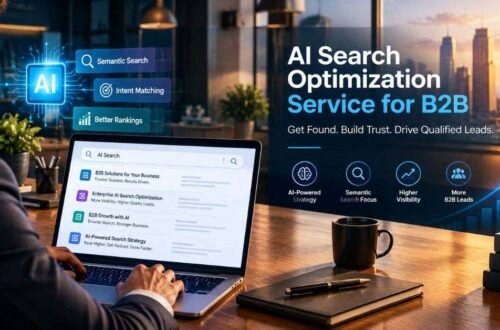

Search has changed. A few years ago, typing the right keywords into a search box was the only way to find what you needed. Today, search engines and AI tools understand what you mean, not just what you type. This shift is powered by a technology called AI semantic search, and it’s quietly changing how people find information, how businesses build websites, and how content gets ranked online.
If you’ve ever asked a chatbot a question in plain, everyday language and gotten a smart, accurate answer, you’ve already experienced this technology in action. It’s behind smarter product searches on shopping sites, better customer support bots, and even the AI summaries you now see at the top of search results.
In this guide, we’ll break down what this technology is, how it works, why it matters in 2026, and what it means for anyone who creates content or runs a website. Everything here is explained in plain, simple words, no confusing tech jargon.
What Is AI Semantic Search
AI semantic search is a way of searching that focuses on the meaning behind a question instead of just matching exact words. Traditional search engines look for pages containing the same words you typed. If you misspelled a word or used a different phrase, the old system might miss the perfect result.
This newer approach works differently. It reads your question the way a human would, understands the intent behind it, and then finds content that matches that meaning, even if the exact words are different.
For example, if you search “places to eat that won’t break the bank,” a keyword-based system might struggle because it doesn’t see the words “cheap” or “restaurants.” A meaning-based system understands you’re looking for affordable dining options and shows you exactly that, without needing the exact phrase.
This technology relies on artificial intelligence models that turn words into numbers, called embeddings, and then compare those numbers to find content with similar meaning. It sounds technical, but the result is simple: better, more human-like answers.
How Does Semantic Search Actually Work
Behind the scenes, this process happens in a few clear steps. First, the system reads your question and turns it into a mathematical representation called a vector or embedding. Think of it as a fingerprint made of numbers that captures the meaning of your words.
Next, the system compares that fingerprint to millions of other fingerprints already stored for articles, products, or documents. It looks for the closest matches, not the exact word matches, but the ones with the most similar meaning.
Finally, it ranks the results based on how closely they match your intent and shows you the most helpful ones first. According to the Stanford NLP textbook on speech and language processing, these vector representations typically capture meaning by placing similar words and ideas close together in space, so “doctor” and “physician” end up near each other even though they’re spelled completely differently.
This is why modern search tools can understand typos, slang, questions asked in full sentences, and even complex, multi-part queries. The system isn’t reading words one at a time; it’s reading the whole idea at once.
Semantic Search vs. Keyword Search: The Real Difference

It helps to see the two approaches side by side. Neither one is useless, in fact, most modern search systems in 2026 use both together. This combined approach is often called hybrid search.
| Feature | Keyword Search | Meaning-Based (Semantic) Search |
|---|---|---|
| What it matches | Exact words or phrases | The intent and meaning behind a query |
| Handles typos/synonyms | Poorly | Very well |
| Best for | Product codes, IDs, exact names | Natural questions, everyday language |
| Speed | Very fast | Slightly slower, but improving fast |
| Understands context | No | Yes |
Keyword search is still useful for finding exact product numbers or specific names. But for anything conversational, meaning-based search wins almost every time. That’s why most search engines, apps, and AI assistants now blend both methods instead of picking just one.
Why This Technology Matters More in 2026
A few years ago, this kind of search felt like a nice extra feature. In 2026, it’s become the standard, not the exception. People now talk to search engines the way they talk to a friend, asking full questions instead of typing short keyword strings.
AI Semantic Search has become essential because user behavior has changed. People expect a search bar, a chatbot, or a voice assistant to understand a rambling, natural question and still give a useful answer. Businesses that don’t optimize for this kind of understanding risk becoming invisible, even if their content is technically accurate and well-written.
This shift also connects closely with the rise of AI-generated answer boxes and AI chat assistants that summarize information instead of just linking to it. These tools rely heavily on meaning-based retrieval to decide which sources are trustworthy and relevant enough to quote or cite.
For website owners, this means writing content that clearly answers real questions, using natural language, and organizing information so both humans and AI systems can easily understand the topic, the intent, and the context behind every page.
Real-World Examples You Use Every Day
This technology isn’t some far-off concept, it’s already part of daily life for most internet users. Online stores use it so shoppers can describe what they want in plain language and still find the right product, even without knowing the exact brand or model name.
Customer support chatbots use it to understand a frustrated customer’s message, even when it’s written poorly or contains spelling mistakes, and still connect them to the right help article. Streaming services use similar technology to recommend shows based on mood or theme rather than just genre tags.
Search engines use it to answer complex questions in one response instead of forcing users to click through several pages. Even email and note-taking apps now let you search your own notes by describing what you remember, instead of needing the exact word you originally typed.
Workplace tools have adopted this too. Employees can search internal documents, shared drives, and knowledge bases using casual questions like “what’s our refund policy,” and the system finds the right document even if it never uses the word “refund” directly. This has made internal company search dramatically more useful than the old-style keyword-only tools.
The Engine Behind It: Embeddings, Vectors, and AI Models
To understand why this technology works so well, it helps to know a little about what happens under the hood. Every piece of text, a sentence, a paragraph, or a whole article, gets converted into a long list of numbers by an AI model. This list is called an embedding.
These embeddings are stored in a special kind of database called a vector database, built specifically to compare millions of these number-lists quickly. When you type a question, it also becomes an embedding, and the system finds the stored embeddings that sit closest to it in meaning.
AI Semantic Search depends entirely on how good these embeddings are. Better AI models create embeddings that capture meaning more accurately, which leads to smarter, more relevant results. This is also why search quality has improved so much recently, the underlying AI models have simply gotten better at understanding language, including tone, context, and even implied meaning.
The National Institute of Standards and Technology has long studied how machines process and analyze human language, and this ongoing research continues to shape how accurately these systems understand real-world text.
Quick Comparison: How Search Has Evolved
Here’s a simple timeline showing how search technology has progressed, useful for understanding where things stand today.
| Stage | Approach | Main Goal |
|---|---|---|
| Early search (1990s–2000s) | Exact keyword matching | Find pages containing the same words |
| Improved keyword search | Synonyms and basic ranking rules | Slightly better matching, still word-based |
| Meaning-based search | Embeddings and vector comparison | Understand intent, not just words |
| Hybrid search (today) | Keyword + meaning combined | Best of both speed and understanding |
| AI-assisted answers (2026) | Retrieval plus generative AI | Give direct answers, not just links |
This progression shows a clear pattern: search keeps moving closer to how humans naturally think and ask questions, rather than forcing humans to think like machines.
Key Benefits for Businesses and Everyday Users

The advantages of this technology go well beyond convenience. For everyday users, it means faster answers, fewer wasted searches, and results that actually match what they were hoping to find, even when they don’t phrase things perfectly.
For businesses, the benefits are even bigger. Better search on a website leads to happier visitors, lower bounce rates, and more completed purchases or sign-ups. Customer support teams save time because AI Semantic Search can automatically match customer questions to the right help articles, reducing repeat tickets.
Content creators also benefit because well-structured, clearly written content has a better chance of being understood and surfaced by these smarter systems. This rewards writing that genuinely answers questions instead of stuffing pages with repeated keywords.
Companies handling large amounts of internal documents, contracts, manuals, or research papers gain a huge advantage too, since employees can find information in seconds instead of digging through folders manually.
Challenges and Limitations to Know About
No technology is perfect, and it’s worth understanding the downsides. Meaning-based systems can sometimes struggle with very specific technical terms, product codes, or rare names, since these don’t always have a clear “meaning” the way normal words do.
This kind of search also requires more computing power than simple keyword matching, which can make it more expensive to run at a large scale. Smaller websites or apps sometimes need extra tools or third-party services to add this capability affordably.
There’s also a trust and accuracy concern. Since these systems try to guess intent, they can occasionally misunderstand a question, especially if it’s vague or oddly worded. This is one reason most modern systems combine meaning-based results with traditional keyword matching, so exact terms are never lost even while intent is being understood.
Finally, smaller businesses may find it harder to compete for visibility, since larger platforms with better data and stronger AI models often produce more accurate embeddings and, therefore, better search results.
What This Means for SEO and Content Creators
Writing for search engines has changed. Instead of repeating a keyword many times, content creators now need to build genuinely helpful pages that clearly answer real questions, using natural language and organized structure.
This is where practices like entity-based writing and topical authority matter. Search systems now look at how ideas connect across a piece of content, not just isolated words. Clear headings, simple explanations, and logically organized sections (much like this guide) help both readers and AI systems understand a page faster.
Internal linking still matters a great deal here too. Linking to related resources, such as a deeper guide on vector databases and how they store meaning, or an explainer on hybrid search techniques, helps establish topic relationships that these systems can recognize and trust.
Google’s own developer documentation on search continues to emphasize helpful, people-first content as the foundation of good rankings, a principle that lines up perfectly with how meaning-based retrieval systems already work.
Frequently Asked Questions
What is AI Semantic Search in simple words
It’s a way for computers to understand the meaning behind your question instead of just matching the exact words you typed.
Is semantic search the same as AI Overviews or chatbot answers
Not exactly. It’s the retrieval technology that helps power those answers, but the AI Overview or chatbot response is the final result built using it.
Does this replace regular keyword search completely
No. Most systems in 2026 use both together, since keyword matching is still better for exact codes, names, and identifiers.
Do small businesses need this technology
Not always as a standalone system, but understanding how it works helps small businesses write content that ranks better in modern search results.
Is this technology only used by big tech companies
No, it’s now available through affordable tools and platforms that many small and mid-sized businesses already use for their websites and apps.
Conclusion
Search has moved far beyond simply matching words on a page. Today, it’s about understanding people, their questions, their intent, and the context behind what they’re really asking. AI Semantic Search sits at the center of this shift, helping tools understand human language the way people actually speak and think, not the way old-fashioned search boxes expected them to type.
Whether you’re a business owner trying to improve your website, a content creator wanting your work to be found, or simply someone curious about how modern search works, understanding this technology gives you a real advantage. It’s no longer optional knowledge, it’s quickly becoming a basic part of how the internet works.
If you’re building or improving a website in 2026, now is the time to focus on clear, helpful, well-organized content that genuinely answers real questions. Start reviewing your own site’s content today, and see how small, intent-focused improvements can make a real difference in how easily people (and AI) find you.