

Starting a business is exciting, but getting people to notice it is a different challenge altogether. Every year, thousands of founders launch great products that nobody ever hears about — not because the idea was weak, but because the marketing plan was missing or unclear. If you are searching for practical startup digital marketing tips, you are in the right place.
This guide breaks down what actually works in 2026, without confusing jargon or empty buzzwords. You will learn how artificial intelligence is changing the way small businesses reach customers, why search engines behave differently than they did two years ago, and which low-cost strategies still bring real results. Every section is written in plain language so a first-time founder, a student, or a small shop owner can follow along and take action right away.
Whether you run a home-based online store, a local service business, or a tech startup, the ideas here fit a limited budget and a small team. Let’s get started.
Why Digital Marketing Matters More Than Ever for New Businesses
A new business without visibility is like a shop with no sign on the door — people walk right past it. This is why marketing has become the backbone of almost every successful startup launch.
Customers research products online before they ever speak to a salesperson. They check reviews, compare prices, and watch short videos. If your business is not visible in these places, you are losing customers to competitors who are. According to the U.S. Small Business Administration, a clear marketing plan helps a business connect with the right customers and track whether that connection is paying off.
There is also a cost advantage. Traditional advertising — TV, billboards, and print — is expensive and hard to measure. Digital channels let a small business with a modest budget compete with much bigger companies simply by targeting the right audience. A well-placed social post or a helpful article can reach thousands of potential customers for a fraction of the cost of a TV ad.
For founders stretching limited funds, digital marketing is often the only realistic way to grow. It lets you test small, measure results, and adjust quickly — exactly what a young business needs while it is still learning who its customers are.
Understand Your Audience Before You Spend a Single Dollar
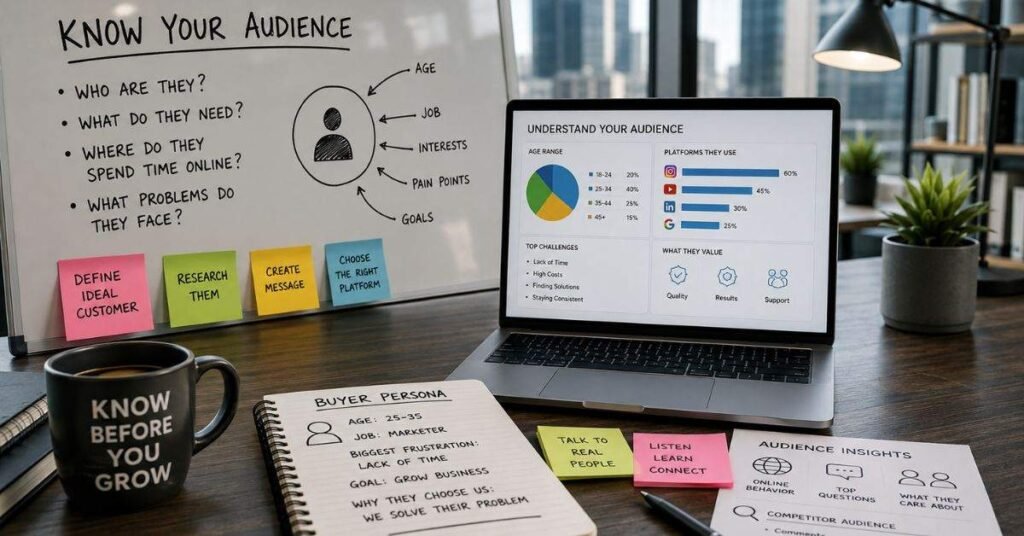
One of the most common mistakes new founders make is jumping into ads or social media without knowing who they are actually talking to. Before spending any money, understand your ideal customer.
Ask simple questions: What age group are they in? What problems do they face daily? Where do they spend time online — Instagram, YouTube, LinkedIn, or search engines? Answering these honestly saves you from wasting money on the wrong platform or message. This step alone is one of the smartest startup digital marketing tips any new founder can follow.
Create a basic customer profile, sometimes called a buyer persona: age range, job type, biggest frustration, and what would make them choose you over another option. You don’t need expensive tools — talking to five or ten potential customers directly often gives more honest insight than any paid report.
You can also study your competitors’ audiences. Look at who comments on their posts and what questions they ask. This tells you what people care about and where you can do better.
Once you know your audience, every other decision becomes easier, from picking the right platform to writing copy that connects. Skipping this step is a major reason early campaigns fail.
Build a Simple, Fast, Mobile-Friendly Website First
Before running any campaign, make sure you have a home base where interested customers can land. Your website doesn’t need to be fancy, but it must load quickly, work well on phones, and clearly explain what you offer.
More than half of all web traffic now comes from mobile devices, so a slow or broken mobile site loses visitors within seconds. Keep your homepage simple: a clear headline explaining what you do, an easy way to contact or buy, and a few trust signals like reviews.
Avoid clutter or too many pop-ups. Visitors decide within seconds whether to stay, so clarity beats creativity here. Make contact details, pricing, and call-to-action buttons easy to find.
It’s worth applying basic search engine optimization (SEO) from day one — clear page titles, unique page descriptions, and content that answers real questions your customers search for. This helps your site show up in results over time without ongoing ad spend.
If budget is tight, free or low-cost website builders get you started quickly. The goal isn’t perfection at launch — it’s a working, trustworthy page that supports every other marketing effort you make.
Use AI Tools to Work Smarter, Not Harder
Artificial intelligence has changed how small teams manage marketing in 2026. Work that once needed a whole team can now be handled by one founder with the right AI assistants.
This doesn’t mean AI should replace your judgment — think of it as a helpful assistant that saves time on repetitive tasks. AI can draft social captions, suggest email subject lines, summarize customer feedback, or generate ad variations to test.
Personalization has become a major customer expectation, and AI tools make tailored messaging affordable even for a business with just a handful of customers so far.
Stay honest and human in your communication. Don’t let AI-generated content replace your genuine voice, and always review anything before it goes public. Customers can tell when a message feels robotic, and that hurts trust rather than building it.
Used correctly, AI lets a small startup team focus on strategy and relationships while automation handles repetitive, time-consuming work.
Master the Basics of Search Engine Optimization (SEO)
Search engines remain one of the most powerful ways for people to discover a new business, but how people search has changed. More users now ask full questions, and results increasingly show AI-generated answers before website links.
This shift means content needs to be genuinely helpful, not stuffed with keywords. Write pages or guides that answer real questions your customers ask. Use natural language and clear headings so both readers and search engines understand your content quickly — one of the most overlooked startup digital marketing tips for long-term, free traffic.
Focus on a few core habits: descriptive page titles, unique page descriptions, fast loading speed, and links from other reputable sites when relevant. Local businesses should also claim and update their free business listing on maps and search, since many customers search “near me.”
Voice search is also growing through smart speakers and mobile assistants, with people phrasing searches as full questions. Writing content that naturally answers these questions helps you show up more often.
SEO is a long-term strategy, not an overnight fix. It may take a few months to show strong results, but unlike paid ads, the traffic you earn keeps working without ongoing cost.
Create Short-Form Video Content, Even With a Small Budget
Short videos are one of the most effective ways to reach new audiences, especially younger customers. Platforms built around short clips reward creativity far more than expensive production, which is good news for startups with limited resources.
You don’t need a studio. A smartphone camera, natural lighting, and a clear message are often enough. Focus on content that teaches something useful, shows your product in action, or tells a relatable story. Tutorials and customer testimonials tend to perform especially well.
Consistency matters more than perfection. A simple, honest video posted every week usually outperforms one polished video posted rarely. Pay attention to what topics get the most engagement, then create more around those themes.
Repurpose the same video across platforms with small adjustments, such as different captions or lengths, to save time while still reaching audiences everywhere — a habit found in most practical startup digital marketing tips lists for a good reason: it works.
Keep videos genuine rather than overly promotional — viewers scroll past anything that feels like a hard sales pitch. Aim to build familiarity and trust over time, which naturally leads viewers to check out your product when they’re ready to buy.
Build an Email List From Day One
Social media is useful, but you don’t fully own that audience — algorithm changes can suddenly cut your reach. An email list, on the other hand, is something you control directly, making it one of the most valuable startup digital marketing tips for long-term customer relationships.
Start collecting emails early, even before launch. Offer something useful in exchange, like a discount, a helpful guide, or early access. Keep signup simple — usually just an email address.
Once you have a list, send regular, valuable content rather than only promotions. Share tips, updates, or useful resources related to your industry. This builds trust over time, so when you do send a sales message, people pay attention.
Segment your list when possible. Not every subscriber shares the same interests, so slightly different messages to different groups usually perform better than one generic email to everyone.
Track open rates and click rates to see what your audience actually responds to. Over time, this data helps you refine messaging and get better results from every email, without paying for ad space.
Use Paid Advertising Carefully and Track Every Dollar

Paid advertising can bring fast results, but it can also drain a limited budget quickly without a clear plan. Start small, test carefully, and increase spending only once you know what works.
Begin with a small budget on one platform where your audience is most active, rather than spreading thin amounts across many channels. Write a few versions of your ad — different headlines or images — and compare performance before committing more money.
Always define your goal before launching a campaign: website visits, sales, sign-ups, or brand awareness. Each goal needs different settings and different ways of measuring success.
Modern platforms increasingly rely on automated, AI-assisted bidding to optimize spend. This works best when you give the system enough data and time to learn, rather than changing settings too often.
Finally, calculate your return on investment. If a campaign brings in more revenue than it costs, it’s working. If not, pause it and adjust the audience, message, offer, or platform before spending more — testing small before scaling is one of the safest startup digital marketing tips for protecting a limited budget.
Be Transparent and Build Real Trust With Customers
In a crowded online market, trust separates successful startups from the ones that struggle. Customers today are cautious about exaggerated claims, fake reviews, and misleading ads.
Be honest about what your product can realistically do. If you work with influencers, make sure any paid relationship is clearly disclosed — this is both a legal requirement and a smart trust-building habit. The Federal Trade Commission requires that any material connection between a brand and someone endorsing it online be clearly and honestly disclosed to the audience.
Respond to customer questions and complaints quickly and respectfully. A business that handles problems openly often earns more loyalty than one that never makes mistakes at all, because customers can see it cares.
Real testimonials, honest results, and transparent pricing all build credibility faster than polished, generic-sounding claims. Genuine photos and real stories from actual customers usually perform better than overly staged content.
Over time, trust becomes one of your strongest marketing tools. A loyal customer often brings in new customers through word of mouth, without any extra advertising cost.
Measure Results and Adjust Your Strategy Regularly
Marketing without measurement is just guessing. Every startup should track basic numbers to understand what’s working and where budget is being wasted.
Set up simple tracking on your website and social accounts to monitor visitors, clicks, and conversions — the actions you actually want people to take, like signing up or buying. Most platforms offer free analytics tools that are enough for a business just starting out.
Review your numbers regularly, such as every two weeks. Look for patterns: which content brings the most engagement, which channel drives the most sales, and which campaigns aren’t performing well enough to continue. Let these insights guide your next steps.
Avoid tracking only vanity numbers like follower counts, which don’t always reflect real growth. Focus on metrics tied to actual outcomes — inquiries, sign-ups, or completed sales.
Strategies that worked six months ago may not work as well today, since platforms and habits keep shifting. Reviewing and adjusting regularly is one of the most reliable habits for staying ahead instead of falling behind.
Quick Comparison: Marketing Channels for New Startups
| Marketing Channel | Typical Cost | Best For | Time to See Results |
|---|---|---|---|
| SEO & Blog Content | Low (mainly time) | Long-term, steady traffic | 3–6 months |
| Short-Form Video | Low to Medium | Brand awareness, younger audiences | 1–3 months |
| Email Marketing | Low | Repeat customers, loyalty | 1–2 months |
| Paid Social Ads | Medium to High | Fast traffic and testing | Days to weeks |
| Local Search Listing | Low (mostly free) | Local, service-based businesses | 1–2 months |
Sample First 90-Day Marketing Focus
| Time Period | Main Focus | Key Action |
|---|---|---|
| Days 1–30 | Foundation | Build website, define audience, set up analytics |
| Days 31–60 | Content & Trust | Publish helpful content, start email list, post short videos |
| Days 61–90 | Testing & Scaling | Run small paid ad tests, review data, repeat what works |
Frequently Asked Questions
What is the most affordable digital marketing strategy for a new startup
Organic content such as SEO articles and short-form videos usually costs the least, since they mainly require time rather than budget.
How much should a startup spend on marketing at the beginning
There’s no fixed rule, but many small businesses start with a modest monthly budget and increase spending only after seeing measurable results.
Is social media still important for startups in 2026
Yes, especially short-form video and platforms where your specific target audience is most active.
How long does it take to see results from SEO
Usually a few months, but it keeps bringing traffic long after the initial work is done.
Can one person handle digital marketing for a small startup
Yes, especially with AI tools for content drafting, scheduling, and basic analytics, though it needs consistent weekly effort.
Final Thoughts: Start Small, Stay Consistent, and Keep Learning
Digital marketing for a new business doesn’t have to be overwhelming or expensive. The most successful startups don’t always have the biggest budgets — they understand their audience clearly, stay consistent with helpful content, and pay attention to what the data tells them.
Start with the basics covered in this guide: know who you’re talking to, build a simple website, create honest content, and track your results so you can improve over time. Platforms will keep changing, but the core idea stays the same — real value and genuine trust always win in the long run. These startup digital marketing tips work because they focus on people first, not just algorithms.
If you’re just getting started, pick one or two strategies from this guide instead of trying everything at once. Master those first, measure your results, and expand from there. Small, consistent steps taken today will build the strong marketing foundation your startup needs to grow steadily through 2026 and beyond.
Ready to put these ideas into action? Choose one section above, apply it this week, and track the results before moving to the next strategy.