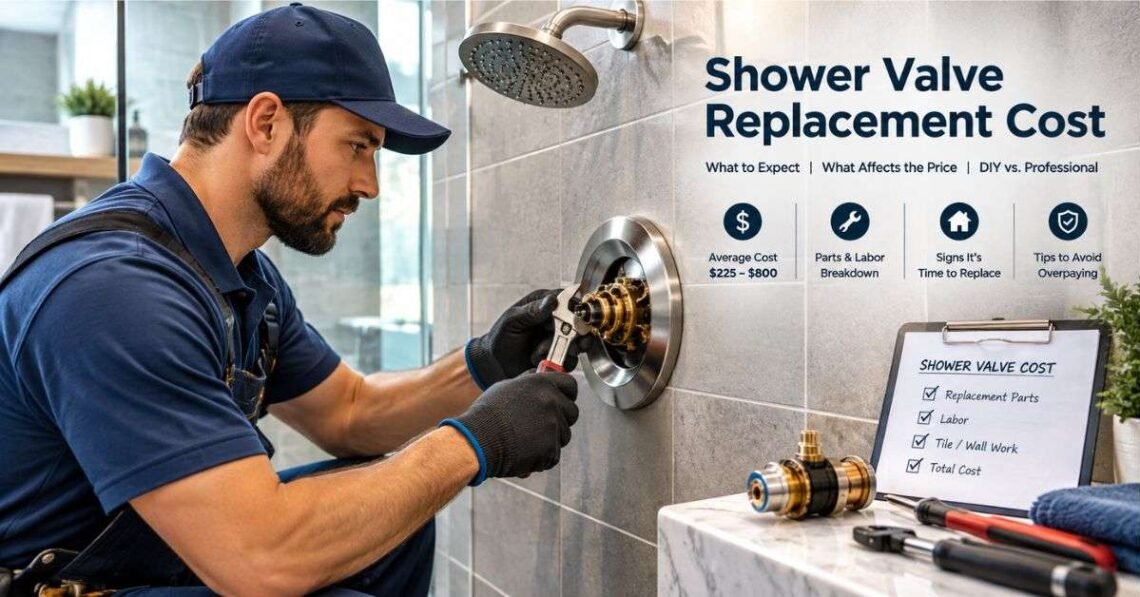
If your shower handle is stiff, your water temperature keeps jumping around, or you’ve spotted a drip behind the wall, you’re probably wondering about the shower valve replacement cost before you call anyone. That’s a smart first step. Nobody wants a surprise bill, and plumbing repairs can feel confusing when you don’t know what’s normal to pay.
The good news is that this repair is one of the more predictable plumbing jobs. Most homeowners pay somewhere between $225 and $800, depending on whether the whole valve needs to be swapped out or just a small internal part. The price can climb higher if a plumber has to cut into tile or open up a wall to reach the valve.
This guide breaks everything down in plain language. You’ll learn what drives the price up or down, how professional installation compares to a DIY fix, what warning signs to watch for, and how to avoid overpaying. We’ll also cover real numbers, two easy-to-read tables, and answers to the questions homeowners ask most often. By the end, you’ll know exactly what to expect and how to talk to a plumber with confidence.
What Is a Shower Valve and Why It Matters
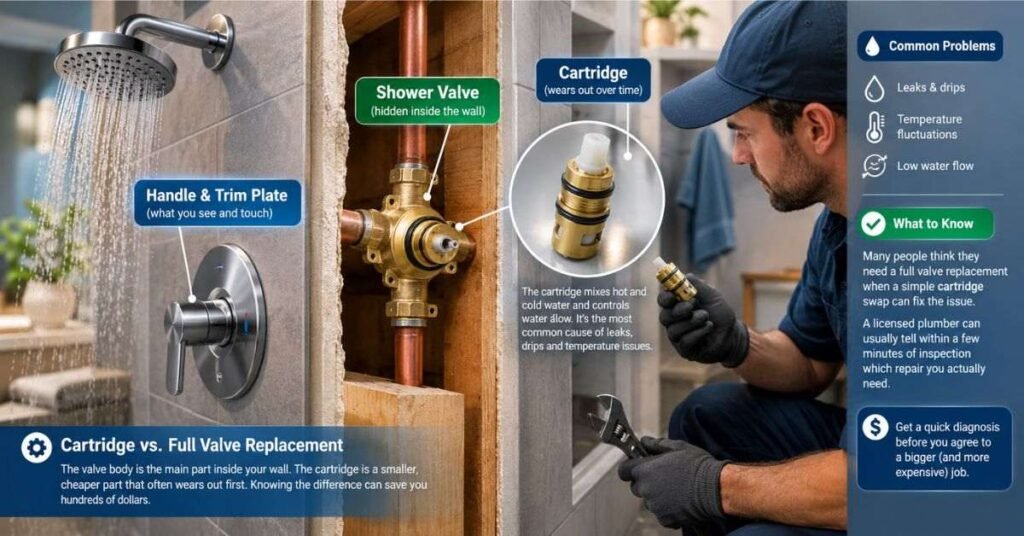
A shower valve is the part hidden inside your wall that controls both water temperature and water flow. When you turn the handle, the valve mixes hot and cold water and sends it up to the showerhead. It’s not the same as the visible handle or trim plate — those are just the parts you see and touch.
Inside the valve sits a smaller part called a cartridge (or sometimes a stem, depending on the brand). This piece wears out over time from mineral buildup, water pressure changes, and everyday use. Most leaks, drips, and temperature problems actually come from a worn cartridge, not the entire valve body.
Knowing this difference matters because it directly affects your budget. Many people assume they need a full valve replacement when a much cheaper cartridge swap would fix the problem. A licensed plumber can usually tell within a few minutes of inspection which repair your shower actually needs, so it’s worth getting that quick diagnosis before agreeing to any bigger job.
Average Shower Valve Replacement Cost in 2026
Across the country, the typical shower valve replacement cost for a full valve body runs from $225 to $575, with most homeowners landing around $350 to $400 when the valve is easy to reach. If the job also requires cutting tile, opening drywall, or upgrading to a fancier finish, totals can rise to $800 or more.
Here’s a quick overview table based on national pricing data from plumbing industry sources:
| Job Type | Typical Price Range | What’s Included |
|---|---|---|
| Cartridge replacement only | $100 – $350 | Part ($15–$85) plus labor |
| Full mixing valve replacement | $225 – $575 | New valve body, labor, basic trim |
| Diverter valve replacement | $225 – $575 | New diverter, labor |
| Thermostatic valve upgrade | $400 – $900 | Higher-end valve, labor, controls |
| Valve replacement with tile/wall access work | $700 – $1,800+ | Cutting, patching, and full labor |
These numbers include both parts and professional labor. Prices vary by region, with coastal and big-city markets often running 10% to 20% higher than smaller towns.
Cost Breakdown by Valve Type
Not all shower valves cost the same to replace, and the type of valve you have plays a big role in the final number. Here’s a second table showing how pricing typically breaks down by valve style.
| Valve Type | Parts Cost | Labor Cost | Total Installed |
|---|---|---|---|
| Pressure-balance cartridge valve | $20 – $85 | $85 – $265 | $105 – $350 |
| Standard mixing valve | $50 – $150 | $150 – $300 | $200 – $450 |
| Diverter valve (tub/shower switch) | $40 – $130 | $150 – $300 | $190 – $430 |
| Thermostatic valve with volume control | $200 – $350 | $200 – $500 | $400 – $850 |
Pressure-balance valves are the most common in homes built or renovated in the last 25 years, since building codes now require them for scald protection. Thermostatic valves cost more but offer more precise, consistent temperature control, which some families prefer, especially in homes with young children or older adults.
What Affects the Price? Key Cost Factors
Several things push the shower valve replacement cost up or down, and understanding them helps you avoid overpaying. Wall access is usually the biggest factor. If there’s an access panel behind the shower, a plumber can often finish the job without touching your tile, keeping costs low. If the valve sits behind finished tile with no panel, expect an extra $100 to $500 for cutting and repair work.
Brand also matters. Premium brands like Kohler, Moen, or Grohe may have pricier replacement parts, though their cartridges are often easier to find years later. Older or discontinued valves sometimes force a full replacement because a matching cartridge no longer exists.
Labor rates differ by city, and emergency or same-day service usually adds a surcharge. Pipe material matters too — older galvanized pipe is harder to work with than modern copper or PEX, which can add time and cost. Finally, choosing a fancier trim kit or finish, such as matte black or brushed gold, will raise the total price compared to standard chrome.
Signs You Need a Shower Valve Replacement
Certain warning signs tell you it’s time to call a plumber rather than wait it out. Inconsistent water temperature is the most common complaint — if the water suddenly turns scalding hot or ice cold without anyone touching the handle, the internal parts are likely worn out. This isn’t just annoying; it can be a genuine burn risk for children and older family members.
A handle that’s hard to turn, squeaks, or feels loose usually points to mineral buildup or corrosion inside the valve. A shower that drips constantly even when fully shut off wastes water and money over time. And if you notice water stains, soft spots, or mold on the wall near your shower, that could mean a slow leak behind the tile, which needs urgent attention to prevent structural damage.
Catching these signs early keeps repair costs lower. Waiting too long can turn a simple cartridge swap into a much bigger job involving wall repair, mold remediation, or even flooring damage.
DIY vs Hiring a Professional Plumber
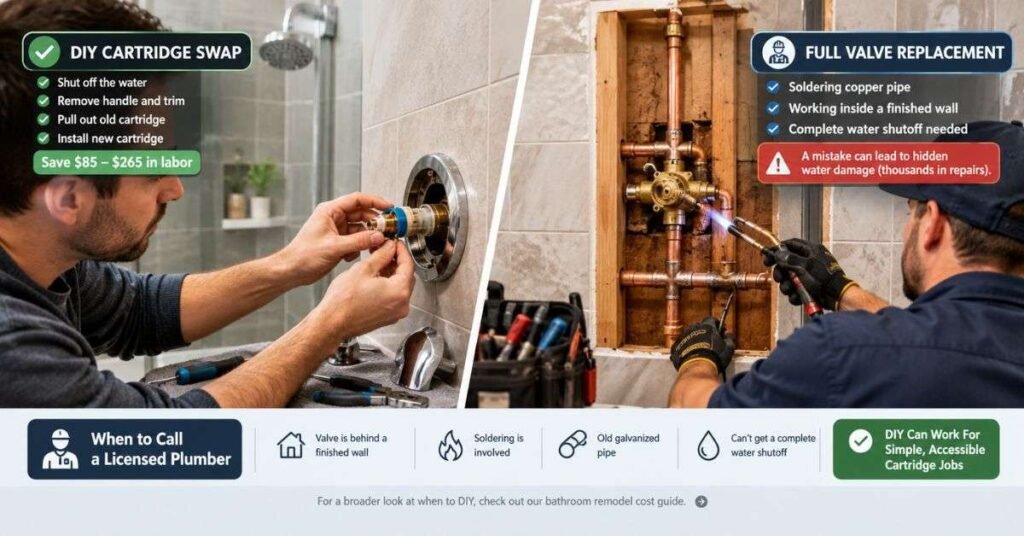
Some homeowners wonder if they can skip the labor cost entirely and do the job themselves. A cartridge swap is genuinely doable for a confident DIYer with basic tools, since it usually just involves shutting off the water, removing the handle and trim, pulling the old cartridge, and pushing in a new one. This can save $85 to $265 in labor.
However, a full valve replacement is a different story. It often involves soldering copper pipe, working inside a finished wall, and making sure water is completely shut off at the main line. A mistake here — like a bad solder joint sealed behind tile — can lead to hidden water damage that costs thousands of dollars more than the labor you tried to save.
As a rule of thumb, call a licensed plumber if the valve is buried behind a finished wall, if soldering is involved, if you’re dealing with old galvanized pipe, or if you can’t get a complete water shutoff. For simple, accessible cartridge jobs, DIY can be a smart way to lower your overall shower valve replacement cost. For a broader look at when to DIY, our bathroom remodel cost guide walks through similar decision points for other bathroom repairs.
Types of Shower Valves and Their Price Differences
There are four main types of shower valves, and knowing which one you have helps you understand your quote. Pressure-balance valves are the most common and the most affordable; they keep water temperature steady by balancing hot and cold pressure, which is why modern plumbing codes require them in new construction.
Thermostatic valves go a step further, letting you set an exact temperature using a dial, and often include separate volume control. They cost more upfront but offer better precision and comfort. Diverter valves control where water goes — to the tub spout or the showerhead — and are common in combination tub-shower setups. Transfer valves, a less common fourth type, allow water to flow to multiple outlets at once, such as a rain shower head and body sprays together, and tend to be the most expensive to install due to their complexity.
Matching the right valve type to your household’s needs, rather than just picking the cheapest option, often pays off in comfort and safety over the long run.
How to Save Money on Your Shower Valve Project
There are several practical ways to keep this project affordable without cutting corners on safety. First, always ask your plumber to check whether a cartridge replacement can solve the problem before agreeing to a full valve swap — this single question can save hundreds of dollars. Second, get at least two or three written quotes, since prices for the same job can vary significantly between companies in the same city.
Third, if your bathroom already has an access panel, mention it to the plumber, since this alone can eliminate the need for costly tile cutting. Fourth, consider scheduling the work as a standard appointment rather than an emergency call, since after-hours or same-day service usually costs more. Finally, if you’re already planning other bathroom work, bundling projects together can reduce the overall per-job labor cost, since the plumber is already on-site with tools and materials.
Being upfront about your budget with your plumber also helps — many are willing to suggest a repair-first approach if it fits your situation.
Step-by-Step: What Happens During a Professional Replacement
Understanding the process helps you know what you’re paying for. First, the plumber shuts off the water supply to the shower, either at a local stop valve or the main line. Next, they remove the handle, trim plate, and any escutcheon covering the valve, then inspect the valve body and cartridge to confirm what actually needs replacing.
If it’s a cartridge-only job, they pull the worn cartridge, clean the valve body, and install the new one, then test for leaks and even water flow before closing everything up. If a full valve swap is needed, they’ll disconnect the old valve from the pipes, install the new valve (which may involve soldering, gluing, or press-fitting depending on pipe material), then reconnect the trim and test thoroughly. For jobs requiring wall or tile access, there’s an additional step of cutting an opening, completing the plumbing work, and then patching or restoring the wall. A good plumber always tests hot and cold water balance and checks for any drips before calling the job complete.
Choosing the Right Plumber (and Getting Fair Quotes)
Picking the right professional makes a real difference in both price and quality. Always confirm the plumber is licensed and insured in your state, since this protects you if something goes wrong during the job. Ask for a written estimate that separates parts and labor, so you can see exactly what you’re paying for and compare it against other quotes.
It’s also smart to ask whether the quote includes a warranty on both the part and the labor — reputable plumbers typically offer at least a one-year guarantee. Read recent reviews focused specifically on plumbing repairs rather than general home services, and don’t be afraid to ask how many similar jobs the plumber has completed. If a quote seems unusually low, ask what it does and doesn’t include, since hidden fees for wall access or disposal can appear later. For general tips on vetting any home service provider, see our guide to hiring a licensed plumber.
Frequently Asked Questions
How much does it cost to replace a shower valve
The average shower valve replacement cost is $225 to $575 for a full valve, or $100 to $350 for a cartridge-only fix.
Can I replace a shower valve myself
A cartridge swap is doable for confident DIYers, but full valve replacement behind a finished wall is best left to a licensed plumber.
How long does a shower valve replacement take
An accessible job usually takes 1.5 to 3 hours; jobs needing tile or wall access can take a full day.
What’s the difference between fixing a cartridge and replacing the whole valve
A cartridge is a small internal part that wears out first; the valve body is the entire assembly and only needs replacing if it’s corroded or leaking internally.
Does homeowners insurance ever cover this repair
Standard wear-and-tear replacement usually isn’t covered, but sudden damage from a burst valve sometimes is — check your policy or ask your insurer directly.
Conclusion
Understanding the shower valve replacement cost ahead of time turns a stressful surprise into a manageable home repair. In most cases, you’re looking at $225 to $575 for a full valve, or a more affordable $100 to $350 if only the cartridge needs attention. Wall access, valve type, brand, and your local labor rates are the biggest factors that move the final price up or down.
The smartest move is to get a professional diagnosis before assuming you need the priciest fix. A quick inspection often reveals that a simple cartridge swap will solve the problem, saving you hundreds of dollars compared to a full valve replacement. Whatever route you choose, don’t ignore warning signs like temperature swings or a dripping handle — small problems become expensive ones if left unattended.
Ready to get moving? Reach out to two or three licensed, insured plumbers in your area for written quotes, compare what’s included, and book the repair before a small leak turns into a bigger headache. Your bathroom — and your water bill — will thank you.