
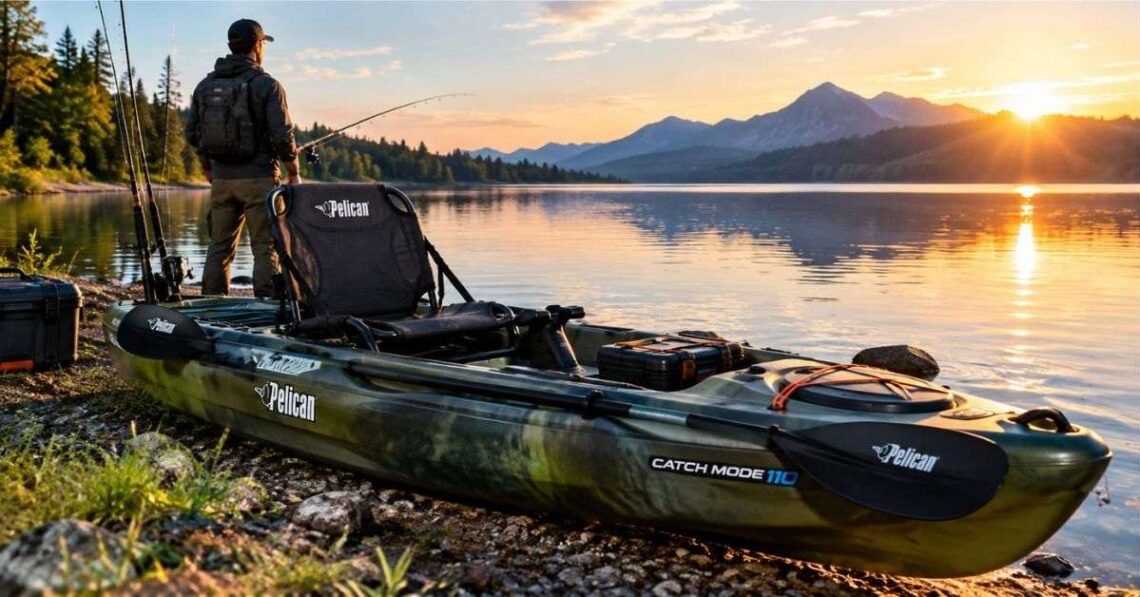
If you’re shopping for a stable, beginner-friendly fishing kayak, chances are you’ve come across the pelican catch mode 110 in your search. It’s one of the most talked-about sit-on-top kayaks in its price range, and for good reason. It’s light, it’s roomy, and it’s built with anglers in mind rather than being a generic kayak with a rod holder bolted on.
In this guide, we’ll walk through everything you need to know in plain, simple language — no confusing jargon, no fluff. You’ll learn about its size and weight capacity, how stable it really is, what it feels like to sit in for a full day of fishing, and whether it’s a smart buy for your needs in 2026. We’ve also pulled together two easy-to-scan tables so you can compare the numbers at a glance, based on real specifications, verified retailer data, and honest owner feedback rather than marketing copy.
What Is the Catch Mode 110?
The Pelican Catch Mode 110 is a sit-on-top fishing kayak made by Pelican International, a Canadian company that has built paddle craft for more than 50 years. It’s designed for anglers who fish lakes, ponds, slow rivers, and calm bays rather than open ocean swells. Think of it as a floating fishing platform: wide, steady, and easy to move around on.
Unlike a basic recreational kayak, this model is built specifically around fishing. It has rod holders, gear tracks, a raised seat, and a flat deck you can actually stand on to cast or net a fish — something plenty of budget kayaks can’t handle without wobbling.
The name “Catch Mode” belongs to a small family of Pelican fishing kayaks, and the “110” refers to its approximate length in inches, rounded from its actual 10-foot-8-inch hull. It sits in the middle of the lineup — not the smallest, not the biggest — which is part of why it appeals to such a wide range of paddlers, from teenagers on their first solo trip to retirees who want something light enough to load without help.
In short, this model was built to solve one common problem: most anglers want a kayak that feels steady enough to trust, without needing a truck-sized vehicle or a second person to carry it.
Key Specifications at a Glance
Numbers matter when you’re choosing a fishing kayak, because length, width, and weight capacity directly affect how the boat handles and how much gear you can bring. Here’s a clear look at what the pelican catch mode 110 offers, based on verified data from Pelican and major outdoor retailers.
| Specification | Details |
|---|---|
| Length | 10 ft 8 in (3.25 m) |
| Width (beam) | 34.5 in (87.6 cm) |
| Hull weight | Approximately 63–67 lb |
| Maximum weight capacity | Around 375 lb (gear + paddler) |
| Hull material | High-molecular-weight polyethylene (Ram-X) |
| Hull design | Tunnel hull |
| Seating system | ERGOBOOST adjustable seat |
| Rod holders | 3 (2 flush-mount, 1 adjustable swivel) |
| Storage | Front dry hatch, rear tank well, under-seat storage |
| Rigging tracks | Two 4-inch accessory tracks |
| Tracking aid | Retractable skeg |
| Approximate price (2026) | $600–$750, depending on retailer and sales |
Some retailer listings round the weight capacity slightly differently, but 375 pounds is the figure most commonly published by authorized sellers — enough for an average adult angler plus a cooler and tackle bag, though it’s smart to leave a safety buffer rather than loading right to the limit.
Stability: Why the Tunnel Hull Matters
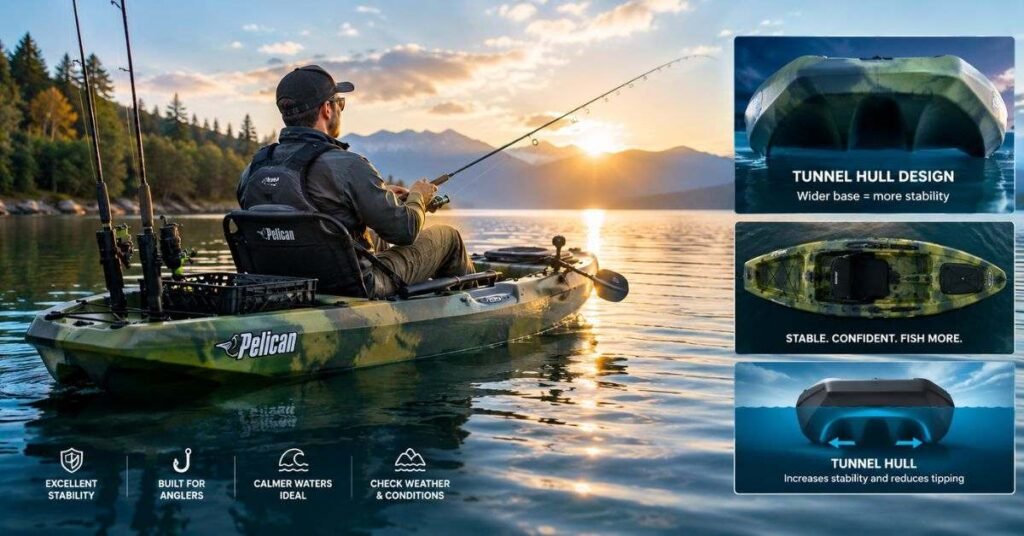
Stability is usually the number one concern for new kayak anglers, and it’s the area where this kayak genuinely shines. The hull uses what’s called a tunnel design — instead of a simple rounded or flat bottom, there’s a channel running underneath that widens the effective base of the kayak.
In plain terms, this design makes it much harder to tip over sideways. That extra “primary stability” is exactly what you want when leaning to cast, reaching for a rod, or reeling in a fish that’s putting up a fight. Independent reviewers who tested the pelican catch mode 110 on calm water noted it felt secure even when they stood up on the deck, a task that makes many other kayaks feel shaky.
That said, stability comes with a trade-off. A wider, tunnel-hulled kayak isn’t built for speed or long-distance paddling races. It’s designed for anglers who value confidence over quickness — people who want to focus on fishing, not on constantly correcting their balance.
If you’re planning to fish in open water with waves or strong currents, it’s worth checking conditions ahead of time through the National Weather Service marine forecasts, since this kayak suits calmer, protected water better than rough coastal conditions.
Comfort and Seating for Long Days
A kayak can look great on paper and still be miserable to sit in for six hours. This is where the ERGOBOOST seating system earns its reputation. It’s a suspended, adjustable seat that sets at three heights — low for paddling efficiency, elevated for better visibility, and a semi-standing position for casting.
The seat uses a cushioned EVA foam pad, and because it’s raised off the deck rather than sitting flush against it, air circulates underneath. That’s a small detail, but anyone who has sat in a hot, sweaty kayak seat for an afternoon knows it makes a real difference on warm days.
Owners also note that the higher seating position improves your sightline across the water, useful for spotting fish, structure, or shallow spots before paddling into them. The trade-off is minor lateral wobble a few users notice during active paddling, since a suspended seat naturally gives a bit more than a fixed bench seat. For anglers fishing at a relaxed pace, this isn’t a dealbreaker.
Storage Space and Fishing Features
Good storage is what separates a real fishing kayak from a kayak with a fishing rod stuck to it. This model includes a front dry-storage hatch for items like a phone or wallet, plus a rear tank well that’s open and easy to access for a cooler, tackle box, or bucket.
Under the seat, there’s additional storage handy for smaller items you want within arm’s reach. The deck also includes bungee cord tie-downs, so loose gear doesn’t slide around every time you turn or hit a small wake.
For rigging your own accessories, two 4-inch gear tracks let you mount extras like a rod holder, phone mount, or a small electronics unit without drilling new holes — a feature many budget kayaks skip entirely.
Three rod holders come standard: two flush-mounted behind the seat and one adjustable swivel holder within easy reach in front. That setup lets you troll with one line while keeping a second rod ready to go.
On-Water Performance: Speed and Tracking
Every kayak design involves compromise, and this one trades top speed for stability and comfort. Because of its shorter length and wide beam, it won’t out-paddle a longer, narrower touring kayak — if you’re racing friends across a lake, this isn’t the boat for that.
What it does offer is decent tracking — holding a straight line without constant zigzagging — thanks to its retractable skeg. Drop the skeg down in open water for straighter paddling, then pull it up to turn sharply around docks, weed beds, or fallen trees.
Turning radius is another strong point. Shorter kayaks pivot more easily than longer ones, so maneuvering around obstacles or repositioning for a better casting angle feels intuitive, which helps in tight coves, narrow creeks, or vegetated ponds.
Most anglers describe the paddling feel as smooth and predictable on calm water, with a bit more effort needed when wind pushes against the wide hull. That’s simple physics — a wider, stable boat catches more wind than a slim one — so it helps to plan trips around calmer weather windows.
Portability: Weight and Transport
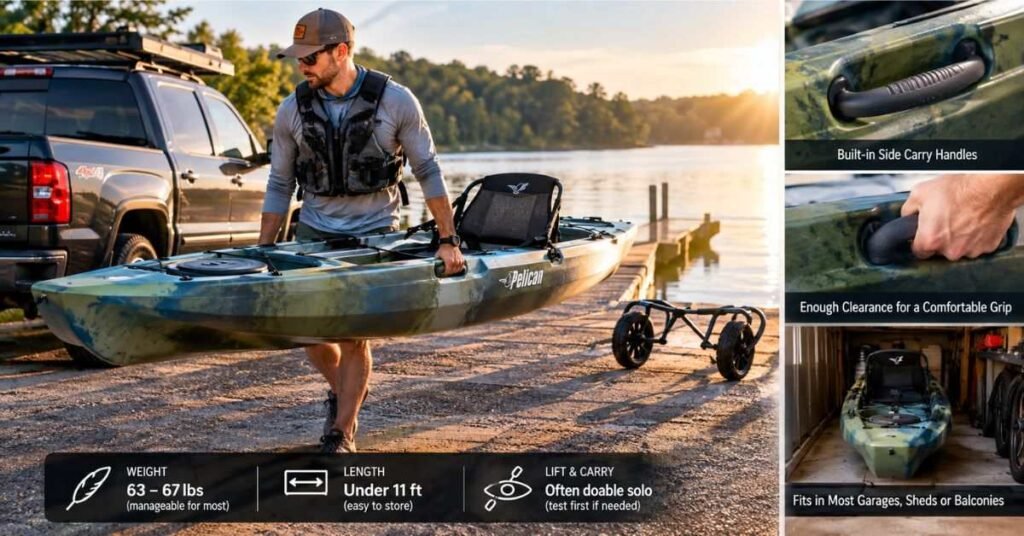
At roughly 63 to 67 pounds, this kayak sits in a manageable middle ground — heavier than an ultralight recreational kayak, but noticeably lighter than many tandem or pedal-drive fishing kayaks, some of which weigh well over 100 pounds.
Large side carry handles are built into the hull with enough clearance for a suitcase-style grip without pinching your fingers. Many solo anglers report loading it onto a roof rack or into a truck bed without help, though a kayak cart makes longer carries easier.
Its sub-11-foot length also helps with everyday storage, fitting into most garages, sheds, or balconies without the awkward overhang of a 13- or 14-foot kayak. If you’re a smaller or older paddler, it’s worth testing the lift-and-carry motion at a dealer before buying, since “manageable” depends on your own strength and technique.
Build Quality and Durability
The hull is built from a high-molecular-weight polyethylene material Pelican markets as Ram-X — a tough, impact-resistant plastic that handles bumps against rocks, docks, and trailers without cracking, exactly what you need from something dragged in and out of the water regularly.
Some versions use a thermoforming process, where two hull pieces are shaped separately and welded together. This tends to produce a lighter result than older rotomolded designs, while still holding up to years of use when cared for properly.
The seams, rigging tracks, and rod holder mounts are integrated into the hull rather than bolted on, reducing failure points over time. Owners who’ve had the boat a full season or more generally report it holds its shape and color well, provided it isn’t left baking in direct sunlight for months. UV exposure, more than rough handling, is the biggest long-term enemy of any polyethylene kayak, so storing it in shade pays off.
Pros and Cons: Who Is It Best For?
To make your decision easier, here’s a simple breakdown of the strengths and weaknesses based on specifications, owner feedback, and side-by-side comparisons with similar kayaks in this class.
| Pros | Cons |
|---|---|
| Excellent stability from the tunnel hull, great for standing to cast | Not built for speed or long-distance paddling |
| Lightweight for its size, easier solo loading | Heavier than ultralight recreational kayaks |
| Comfortable, adjustable ERGOBOOST seat | Suspended seat can feel slightly loose during active paddling |
| Ample storage with dry hatch and tank well | No rear carry handle on some versions, awkward for tie-down straps |
| Solid rod holder and rigging setup out of the box | Best suited to calm water, not rough coastal conditions |
| Compact size fits most storage spaces | Wider hull catches more wind resistance |
The pelican catch mode 110 is best suited for beginner and intermediate anglers who fish calm lakes, ponds, and slow rivers and want a kayak they can trust without a steep learning curve. It’s also a strong option for anyone upgrading from a basic recreational kayak into their first dedicated fishing setup. If you’re an experienced paddler chasing speed, covering long distances, or fishing exposed coastal water regularly, a longer touring-style fishing kayak may suit you better. Our guide to choosing the right fishing kayak for your local waters breaks down how hull shape and length affect performance if you want to compare options side by side.
Price, Value, and Maintenance Tips
As of 2026, the Catch Mode 110 typically sells in the $600 to $750 range, though prices shift with seasonal sales at outdoor retailers. Compared to pedal-drive kayaks that often start above $1,200, it offers strong value for paddle-powered fishing.
Maintenance is refreshingly simple. Rinse the hull with fresh water after every trip, especially after saltwater or brackish-water use, to prevent salt buildup around the seat rails and rigging tracks. Wipe down the seat fabric occasionally to prevent mildew, and check the skeg and rod holder mounts periodically for wear.
Storage matters just as much as cleaning. Keep the kayak out of direct sunlight when it’s not in use, ideally under a tarp, in a garage, or using a wall-mounted kayak rack. UV rays gradually weaken polyethylene over years of exposure, so a few minutes of covering it up after each trip pays off in the long run.
For gear pairing, many owners add a small fish finder, an anchor trolley, or a paddle leash to round out the setup. If you’re building your first tackle and accessory kit, our beginner’s checklist for kayak fishing gear is a useful next stop, and it’s always smart to review basic on-water safety guidance from the U.S. Coast Guard’s recreational boating safety resources before your first solo trip, regardless of which kayak you choose.
Frequently Asked Questions
Is the Pelican Catch Mode 110 good for beginners
Yes, its tunnel hull and wide beam make it one of the more forgiving, stable options for new kayak anglers learning to fish from a boat.
How much weight can it carry
It has a published maximum capacity of around 375 pounds, covering the paddler plus gear, though it’s wise to stay comfortably under that limit.
Can you stand up in it to fish
Yes, the flat deck and tunnel hull design are built specifically to allow standing for casting and reeling, unlike most narrow recreational kayaks.
Is it suitable for ocean or open-water fishing
It performs best in calm lakes, ponds, and slow rivers; it’s not designed for rough surf or exposed offshore conditions.
How heavy is it to carry alone
At roughly 63 to 67 pounds, most adults can load it solo using the side carry handles, though a kayak cart helps over longer distances.
Conclusion
The pelican catch mode 110 earns its popularity honestly. It combines genuine stability, a comfortable adjustable seat, and practical fishing features in a package that’s light enough for one person to manage and priced reasonably for what you get in 2026. It won’t win any speed contests, and it’s not built for rough open water, but that was never its job. For calm lakes, quiet rivers, and everyday fishing trips, it does exactly what it promises: it lets you stand, cast, and fish with confidence instead of worrying about tipping over.
If you’re a beginner or intermediate angler looking for a dependable first fishing kayak — or an upgrade from a basic recreational boat — this model deserves a spot on your shortlist. Take some time to compare it against your local water conditions and storage space, check current prices at a few retailers, and if possible, test-sit one in person before you buy. A little research now saves you from an expensive regret later, and it puts you one step closer to your next great day on the water.