

Introduction
Picture a building where the paint is peeling, the walls look faded, and water stains run down the sides. Nobody likes living or working in a place like that. For apartment blocks, townhouse groups, and office complexes with shared walls, fixing this takes teamwork. That is where strata painting comes in.
In simple words, it means repainting the shared parts of a building that many owners look after together. This includes outer walls, hallways, stairwells, car parks, and fences. Because many people own the building, many people must agree on the plan, the cost, and the contractor.
This guide explains everything in easy words. You will learn what the job includes, who pays for it, how much it may cost in 2026, and how the process works from start to finish. You will also find tables, safety tips, and a short FAQ.
Whether you sit on a building committee or just own one unit, this guide will help you ask better questions and avoid costly mistakes.
What Is Strata Painting and How Does It Work
A strata building is one where each person owns their own unit but everyone shares the common areas. Think of apartment towers, villa complexes, and mixed-use buildings. Strata painting is the repainting of those shared areas. It is different from painting inside your own home, because the whole group makes the decisions.
A typical job starts with a building inspection. A painter checks the walls, balconies, railings, and roofs. They look for cracks, mould, rust, and loose paint. Next, they write a quote that lists every task and every cost.
The committee then reviews the quote and shares it with all owners. Many places require a vote before work begins. After approval, the crew sets up safe access, prepares the surfaces, and applies primer and paint. A final walk-through makes sure everything looks right.
The goal is simple: protect the building and keep it looking good. Paint is not just for looks. It acts like a raincoat for the walls, keeping water and sun damage out.
Who Pays and Who Makes the Decisions
Money is often the first worry. In most strata buildings, owners pay into a shared fund every year or every quarter. This fund covers repairs and big projects, including repainting. The size of each owner’s share usually depends on the size or value of their unit.
Decisions are made by a committee, sometimes called an owners corporation or body corporate. The committee gathers quotes, studies the building’s needs, and brings a plan to a general meeting. Owners then vote. The exact voting rules differ by country and state, so always check your local law.
Good planning helps everyone. A building with a healthy savings fund can pay for painting without sudden extra bills. A building with low savings may need a special payment from each owner.
Here are three smart habits for any committee:
- Make a long-term maintenance plan that covers at least ten years.
- Set aside a little money each year for future painting.
- Share clear updates with all owners so there are no surprises.
Open talk builds trust, and trust makes votes easier.
Why Regular Repainting Matters
Many people think paint is only about colour. In truth, it is a shield. Rain, sun, wind, salt air, and pollution slowly wear a building down. Good paint blocks water from soaking into concrete, brick, and wood. Once water gets inside, it can cause rust, rot, and cracks that cost far more to fix than a fresh coat.
Fresh paint also helps property value. Buyers and renters notice a clean, well-kept building. Research and real estate advice often show that curb appeal can help units sell faster and attract better tenants.
There is a safety side too. Peeling paint can hide damage underneath. A regular repaint gives experts a reason to inspect the walls closely and find hidden problems early.
Finally, there is the pride factor. People feel better when they come home to a neat, bright building.
A common rule is to repaint outer walls every 7 to 10 years, though harsh weather may shorten this. Planning ahead and choosing strata painting at the right time can save a building thousands of dollars in repairs later.
Signs Your Building Needs a Fresh Coat
You do not need to be an expert to spot trouble. Walk around your building and look closely at the walls. These warning signs tell you it may be time to act:
- Peeling or flaking paint: This means the coating is no longer sticking well.
- Chalky surface: If white powder rubs off on your hand, the paint is breaking down from sun damage.
- Fading colour: Bright shades turn dull when the sun wears them out.
- Cracks in the walls: Small cracks let water in, and big ones may point to deeper issues.
- Mould or green stains: These grow where moisture stays on walls.
- Rust marks: Metal railings, gates, and window frames can rust and stain the paint below.
- Bubbles or blisters: Trapped water or heat under the paint makes it puff up.
Take photos of any problems and share them with your committee. Photos make it easy to show owners why the work matters. If you see cracks or bubbles, ask a professional to check them before painting. Paint over a damaged wall will not last, and the problem will return.
Which Areas Get Painted
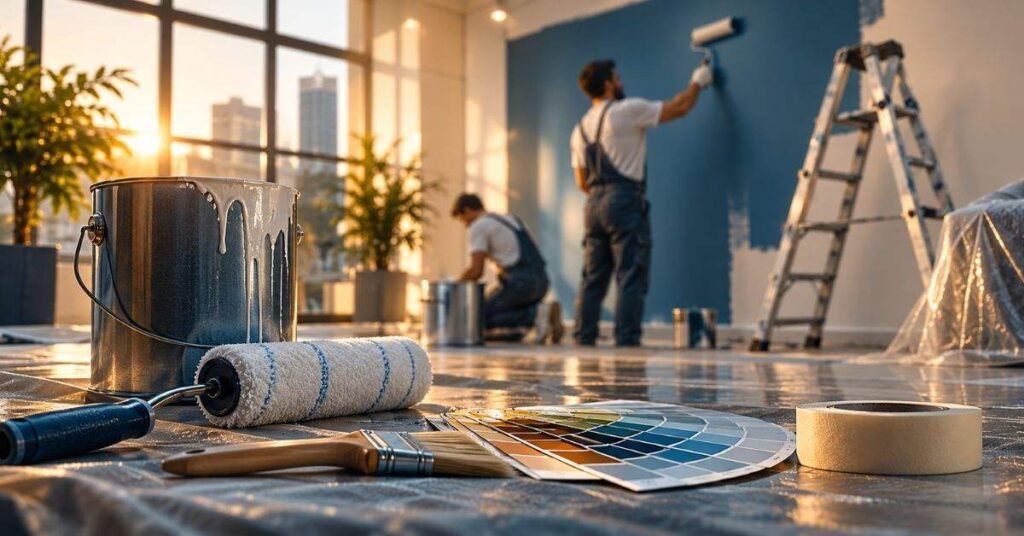
A building has many shared surfaces, and each one needs different care. Here is what a full job usually covers:
Outside areas: Main walls, balconies, balcony railings, eaves, fascia boards, gutters, and rooftop structures.
Inside shared areas: Lobbies, hallways, stairwells, lift lobbies, laundry rooms, and bin rooms.
Ground-level spaces: Car parks, fences, gates, letterboxes, garden walls, and pool areas.
Metal and wood parts: Handrails, security doors, garage doors, and timber decks.
Each area needs a suitable paint. For example, a car park floor needs tough paint that handles tyres and oil. A wet area like a pool wall needs paint that fights moisture. Hallways need paint that can be wiped clean.
The inside of private units is not part of the job. Owners handle their own interiors.
Before work starts, the committee should list every area in writing. A clear scope stops arguments later about what was or was not included in the price.
The Step-by-Step Painting Process
Knowing the steps helps you judge whether a contractor is doing a good job. Here is the usual order:
- Inspection and quote: The painter checks the building and gives a written price.
- Owner approval: The committee shares the plan and gets a vote if needed.
- Notice to residents: Everyone gets dates, times, and safety rules.
- Setting up access: Crews use scaffolds, swing stages, lifts, or ropes.
- Cleaning: Walls are washed with water or a soft chemical wash to remove dirt, mould, and chalk.
- Repairs: Cracks are filled, rust is treated, and loose paint is scraped away.
- Priming: A primer helps new paint stick and last longer.
- Painting: Two coats are common for the best finish.
- Final check: The committee and painter walk the site and note any touch-ups.
- Clean-up and warranty: Crews remove equipment and hand over warranty papers.
Skipping the prep steps is the biggest mistake. Most paint failures happen because walls were not cleaned or repaired well. Ask your contractor to explain how they will handle steps five to seven.
Costs in 2026: What to Expect
Prices change by country, city, building height, and condition. The numbers below are rough examples in US dollars, meant to help you plan. Always get written quotes from local painters.
| Building Type | Rough Cost Range (2026) | Typical Time |
|---|---|---|
| Small block (4–8 units) | $15,000 – $40,000 | 2–4 weeks |
| Medium complex (20–50 units) | $50,000 – $150,000 | 1–3 months |
| High-rise (10+ floors) | $200,000 and above | 3–6 months |
Several things push the price up or down:
| Cost Factor | Effect on Price |
|---|---|
| Height and access type | High buildings need ropes or lifts, which cost more |
| Wall repairs needed | More cracks and rust mean more labour |
| Paint quality | Premium paint costs more but lasts longer |
| Weather and season | Busy seasons may raise rates |
| Number of coats | Extra coats add labour and material |
Cheap quotes can be risky. A very low price may mean thin coats, weak prep, or low-grade paint. In the end, a strata painting project that is done right once costs less than one that must be redone in three years. Compare quotes line by line, not just by the final number.
Choosing the Right Paint and Colours
The paint you choose decides how long the job lasts. Outdoor walls need weather-resistant paint, and inside halls need paint that is easy to clean. Here is a simple guide:
| Surface | Best Paint Type | Why It Works |
|---|---|---|
| Outer walls | 100% acrylic exterior paint | Flexible, fade-resistant, blocks water |
| Hallways and stairwells | Washable low-sheen acrylic | Easy to wipe and hides marks |
| Metal railings | Rust-blocking enamel | Stops rust and handles weather |
| Timber decks and doors | Oil-based or hybrid stain | Soaks in and protects wood |
| Car park floors | Epoxy or heavy-duty floor paint | Handles weight and oil spills |
Colour matters too. Light colours reflect heat and keep walls cooler. Dark colours look bold but can fade faster in strong sun. Many buildings must match an approved colour scheme, so check your rules or local council before choosing.
Ask the committee to view small sample patches on a real wall. Colours look different in sunlight, shade, and evening light. Paint with low VOCs, which are chemicals that give off strong smells, is a healthier choice for residents, children, and pets.
Safety, Rules, and Access Methods
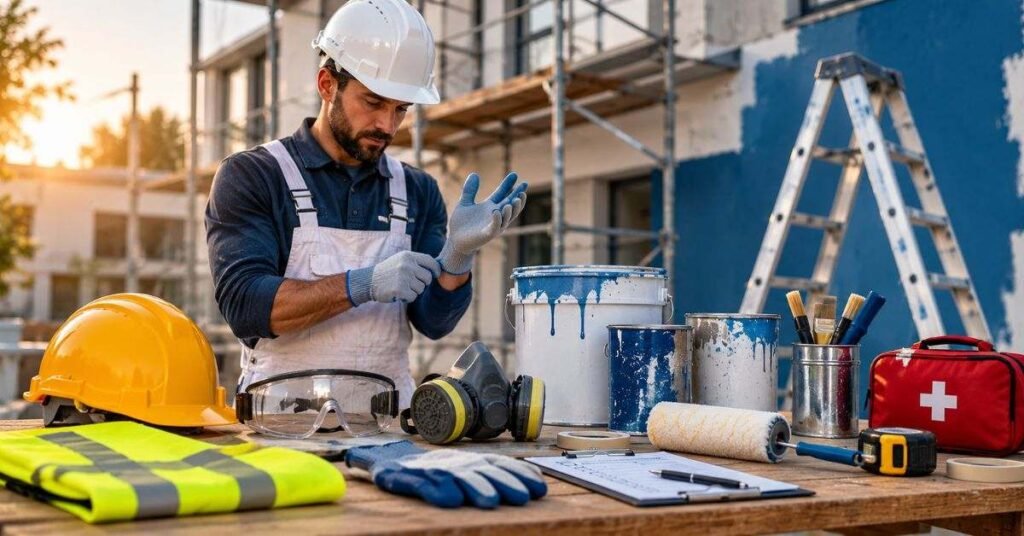
Safety must come first. Painters often work at great heights, near power lines, and around people. A good contractor follows work safety laws and proves it with paperwork.
Key safety points include:
- Fall protection: Workers need harnesses, rope systems, or safe platforms. You can read general guidance from OSHA in the United States or Safe Work Australia.
- Lead paint: Older buildings may have lead in old paint. Sanding it can spread harmful dust. The US Environmental Protection Agency explains how to handle it safely.
- Insurance: Ask for public liability and workers’ compensation proof.
- Resident safety: Keep walkways clear, mark wet paint, and warn people about balcony access.
Common access methods are scaffolding, swing stages, elevated work platforms, and rope access. Scaffolding is steady and good for long jobs. Rope access is faster and cheaper for tall, narrow buildings, but it needs trained experts.
Also check local rules. Some places need permits for scaffolds or street closures. A professional strata painting team should handle permits and tell the committee what is needed.
How to Choose a Contractor and Plan the Timeline
The right painter makes the whole project smooth. Start by collecting at least three written quotes. Then check each company for these signs of quality:
- Years of experience with apartment and commercial buildings
- Licences, insurance, and safety records
- Photos and references from similar jobs
- A clear written scope, schedule, and warranty
- Good talk and quick replies to questions
Visit a past project if you can. Seeing the work in person tells you more than any brochure. You can also read our guides on exterior painting services and commercial painting to learn what a professional offer should include.
Here is a sample timeline for a medium building:
| Stage | Time Needed |
|---|---|
| Planning and quotes | 4–8 weeks |
| Owner vote and contract | 2–4 weeks |
| Preparation and repairs | 2–3 weeks |
| Painting | 3–6 weeks |
| Final checks and handover | 1 week |
Aim to paint in dry, mild weather. Rain and extreme heat can ruin fresh coats. Finally, ask for a written warranty. Good painters often offer 5 to 10 years on outside work. Our paint colour guide can also help your committee choose shades before the quote stage.
Frequently Asked Questions
How often should a shared building be repainted
Outer walls usually need new paint every 7 to 10 years, and indoor halls every 5 to 8 years.
Can I stay in my unit while the work happens
Yes, most owners and tenants stay home, though balcony access may be blocked for a few days.
What does strata painting include
It covers shared areas like outer walls, hallways, stairs, car parks, fences, and railings, but not the inside of private units.
How long does the work take
Small blocks take a few weeks, while large towers can take several months.
How can owners cut costs without lowering quality
Plan early, save money each year, compare detailed quotes, and combine repairs with the repaint to avoid extra visits.
Conclusion
A well-painted building is safer, stronger, and more valuable. As you have seen, the job is more than a new colour. It protects walls from water, shows hidden damage early, and gives owners and tenants a place they can be proud of. Good strata painting depends on three things: clear planning, honest quotes, and a skilled contractor who prepares the surface properly.
Start today with simple steps. Walk around your building and note any peeling paint, cracks, or stains. Take photos and share them with your committee. Check your savings fund and ask whether a maintenance plan is in place. Then request at least three detailed quotes and compare them line by line.
Do not wait until small problems become big bills. Acting early saves money, time, and stress.
Ready to begin? Contact a trusted local painting team, book a free building inspection, and ask for a written plan for your property. A fresh, protected building is closer than you think.