Look at the wall in front of you right now. Is it plain, dull, or full of random things? You spend many hours at work, so your walls shape how you feel more than you may think. A bare wall can feel cold. A crowded wall can feel loud. The right mix can make you feel calm, proud, and ready to work.
This guide shares simple, practical office wall decor ideas for 2026 that anyone can use, whether you work at home, in a small office, or in a large company space. You will learn how to plan your space, pick colors, choose art, use plants and lighting, and save money. You will also find easy tables, answers to common questions, and mistakes to avoid.
No design degree is needed. Every tip uses plain steps and everyday items. By the end, you will know how to turn a blank wall into a space that looks neat, feels good, and helps you focus.
Why Your Office Walls Matter in 2026
Walls fill most of what you see all day. Your eyes rest on them during phone calls, video meetings, and short thinking breaks. That is why they can change your mood.
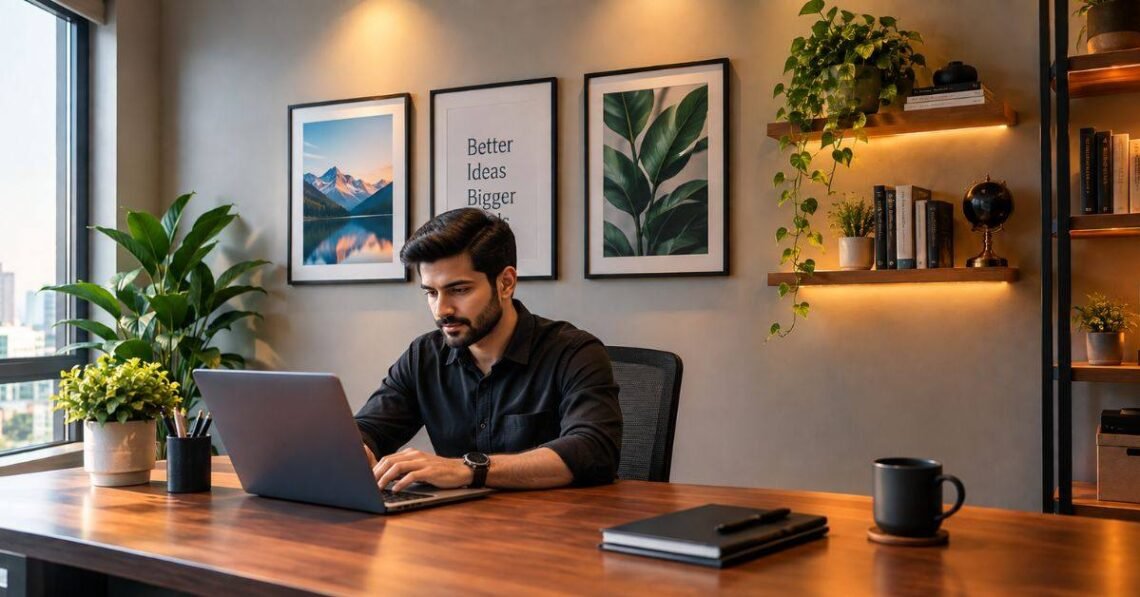
Work habits have changed too. Many people now split time between home and the office. Because of this, a workspace needs to look good on camera and feel good in person. A tidy, well-styled wall behind your desk makes video calls look more professional.
Good wall styling also sends a message. Clients and visitors form an opinion in seconds. Framed art, a clean color, and a few personal items say, “We care about details.” Team members also feel more welcome in a space that looks cared for.
Studies on workplaces often point to a link between pleasant surroundings and better mood, though results differ from one office to another. So treat decorating as a helpful boost, not a magic fix. Pair it with good lighting, a comfortable chair, and a tidy desk for the best result. In simple words, your walls do more than fill space. They set the tone for the whole day.
Start With a Simple Plan
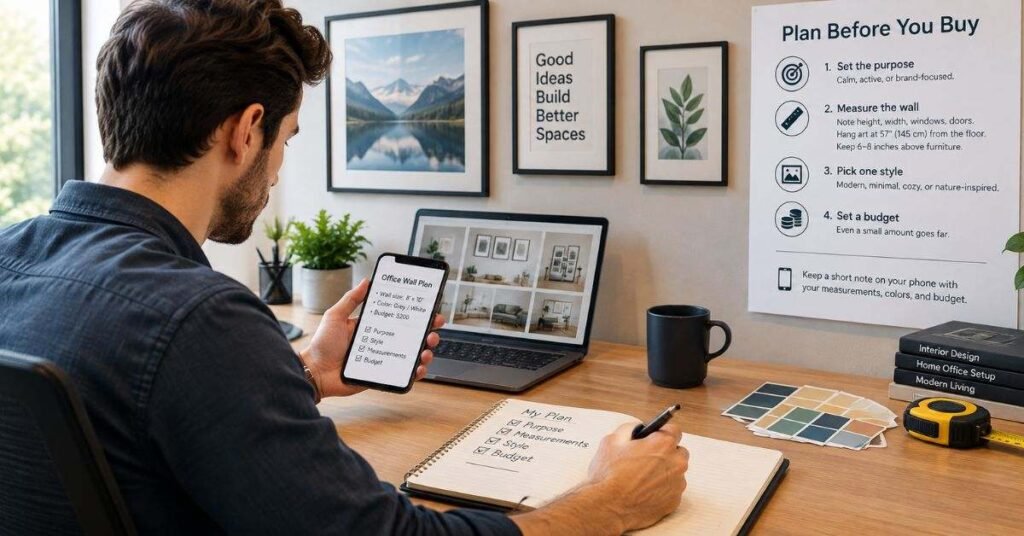
Before you buy anything, take ten minutes to plan. A clear plan keeps your office wall decor simple and stress-free, and it stops you from buying pieces that do not fit. Follow these four steps:
Set the purpose. A quiet study needs calm images. A busy sales team may enjoy bright, active art. A reception area should show your brand.
Measure the wall. Write down the height and width, and note windows, doors, and switches. Hang art so its center sits about 57 inches (145 cm) from the floor, which is close to eye level. Over a desk or shelf, leave 6 to 8 inches between the furniture and the frame.
Pick one style. Modern, minimal, cozy, and nature-inspired are all popular. Sticking to one makes the room feel united.
Set a budget. Even a small amount goes far when you plan ahead.
Keep a short note on your phone with your measurements, colors, and budget. It will save you many trips to the store. If your desk area also needs work, our home office desk setup guide can help you plan both together.
Choose Colors That Help You Focus
Color changes how a room feels, so choose with care. Blue and soft green are often linked with calm and focus. Warm yellow feels cheerful. Gray and white look clean and modern, but too much can feel cold. Warm neutrals such as beige, cream, and light clay are popular in 2026 because they feel soft and welcoming.
A simple rule helps: use three colors. Pick one main color for the walls, a second color for furniture or large art, and one bold accent for small items like frames or a cushion. This is called the 60-30-10 rule, and it keeps a room balanced.
Think about light, too. A room with little sunlight looks darker, so lighter shades help. A sunny room can handle deeper colors like navy or forest green.
If you plan to repaint, look for low-VOC paint on the label. The U.S. Environmental Protection Agency explains that some paints release chemicals into indoor air, so good airflow while painting is important. Always test a small patch first and look at it at different times of day. For more help, see our tips on choosing paint colors for small rooms.
Pick Wall Art That Fits Your Work
Art is the heart of any workplace wall. The best pieces match the mood you want. Here are popular kinds of office art:
- Abstract prints add color without a clear story, so they suit almost any style.
- Nature photos of forests, hills, and oceans help a room feel calm.
- Black-and-white photography looks sharp and professional.
- Line drawings and simple shapes fit modern spaces.
- Local or handmade art adds character and supports small artists.
Words on walls can work, but be careful. One short, meaningful line looks better than five loud posters. Choose words you truly believe in, and use clean fonts.
Think about size, too. Small frames on a big wall look lost. As a guide, art should cover about two-thirds of the width of the furniture below it. Match your frame colors so the wall looks neat. Black, white, and natural wood are safe picks.
Finally, pick art you like. Good office wall decor should make you feel glad, not tired, when you look up. If the space is shared, ask coworkers for input so everyone feels included.
Gallery Wall or One Big Piece
This is a common question. Both choices work, so pick the one that fits your room.
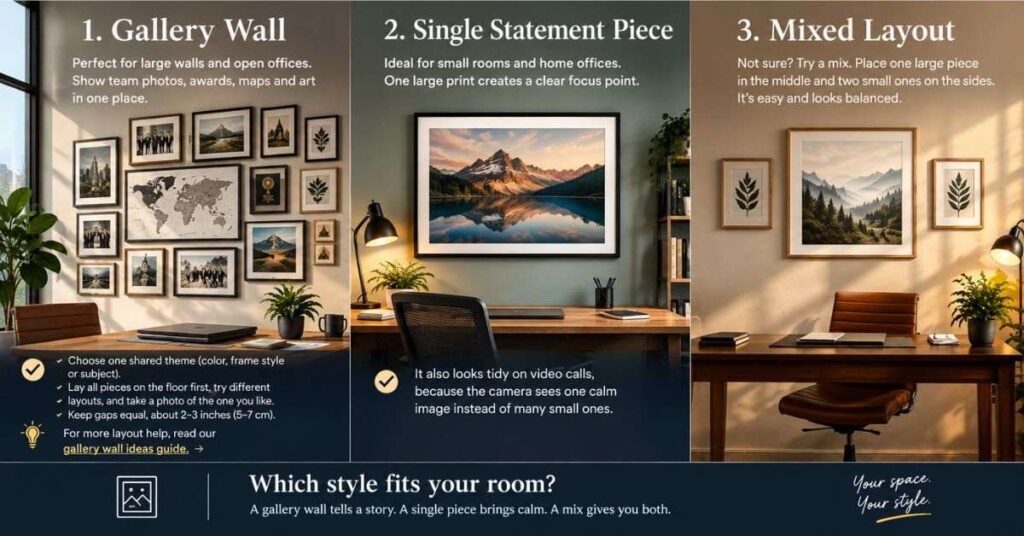
A gallery wall uses many frames together. It suits large walls and open offices, and it can show team photos, awards, maps, and art in one place. To keep it neat, choose one shared theme such as color, frame style, or subject. Lay all pieces on the floor first, try different layouts, and take a photo of the one you like. Keep gaps equal, about 2 to 3 inches (5 to 7 cm). For more layout help, read our gallery wall ideas guide.
A single statement piece suits small rooms and home offices. One large print behind your desk creates a clear focus point. It also looks tidy on video calls, because the camera sees one calm image instead of many small ones.
Still unsure? Ask yourself this: do you want to show a story with many parts, or a calm, clean look? Choose a gallery for the first and one big piece for the second. You can also mix them by placing one large piece in the middle and two small ones on the sides. That layout is easy and looks balanced.
Bring In Plants and Natural Touches
Nature-inspired design, often called biophilic design, remains a strong trend in 2026. It simply means adding natural things to your space. Plants, wood, stone, and nature photos all help.
You do not need a huge garden. A few hanging planters, a wall-mounted shelf with small pots, or a framed leaf print can bring life to a wall. Easy plants for beginners include pothos, snake plant, and spider plant. They handle low light and missed watering better than most.
If real plants are hard to keep, try good-quality faux plants or botanical art. Wooden shelves, woven wall baskets, and cork boards add warm texture too.
Wall-mounted plants look great, but check that shelves and hooks can hold the weight, and keep water away from electronics. Place plants where they get some light, and keep them away from heaters and cold drafts.
Adding green makes office wall decor feel fresh and friendly, and it gives your eyes a soft place to rest during long hours at a screen. Even a small touch of nature can make a plain room feel alive.
Use Lighting to Make Walls Shine
Good art can look dull in bad light. Lighting also affects your comfort while you work.
Use layers of light. Start with soft overhead light, add a desk lamp for tasks, and finish with a small accent light for your art. Picture lights, track lights, and slim wall washers are all good choices. Warm white bulbs, around 2700K to 3000K, feel cozy. Cooler bulbs near 4000K feel crisp and are often used in work areas.
Avoid glare. Shiny glass frames can reflect windows and screens. If your art faces a bright window, try matte frames or non-glare glass. Keep screens from facing windows or bright lights directly. The Occupational Safety and Health Administration (OSHA) offers helpful advice on setting up a computer workstation, including screen position and glare.
Also protect your art. Direct sunlight can fade prints over time, so avoid spots where strong sun lands all day. LED lights give off little heat, which makes them a safer choice for framed items. If you can, add a dimmer. Changing the light level lets your walls look good in the morning, at noon, and during late meetings.
Add Useful Wall Items and Save Money
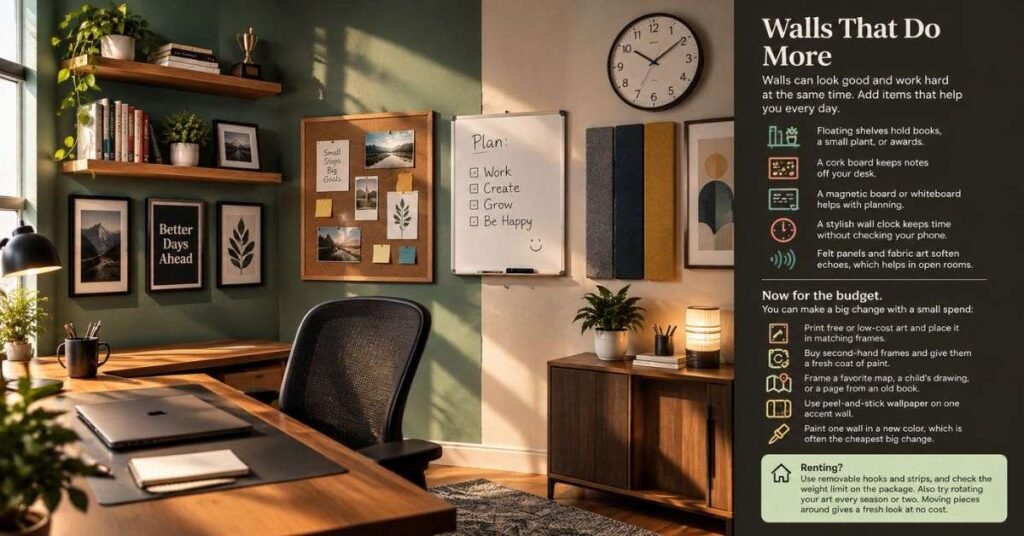
Walls can look good and work hard at the same time. Add items that help you every day.
Floating shelves hold books, a small plant, or awards. A cork board keeps notes off your desk. A magnetic board or whiteboard helps with planning. A stylish wall clock keeps time without checking your phone. Felt panels and fabric art soften echoes, which helps in open rooms.
Now for the budget. You can make a big change with a small spend:
- Print free or low-cost art and place it in matching frames.
- Buy second-hand frames and give them a fresh coat of paint.
- Frame a favorite map, a child’s drawing, or a page from an old book.
- Use peel-and-stick wallpaper on one accent wall.
- Paint one wall in a new color, which is often the cheapest big change.
Renting? Use removable hooks and strips, and check the weight limit on the package. Also try rotating your art every season or two. Moving pieces around gives a fresh look at no cost.
Common Office Wall Decor Mistakes to Avoid
Even good ideas can go wrong. Watch for these problems:
- Hanging art too high. Many people hang pieces near the ceiling. Keep the center near eye level.
- Crowding the wall. Too many items look messy and distract you. Leave empty space so your eyes can rest.
- Ignoring size. A tiny frame on a huge wall looks lost, and a giant frame in a tiny room feels heavy.
- Mixing too many styles. Three or four different themes make a room feel confusing.
- Using loud or upsetting images. In shared spaces, pick art that most people find calm and respectful.
- Forgetting safety. Heavy frames need strong anchors or wall studs. Keep shelves and cords away from walkways and exits.
- Never updating. Dusty or faded art makes a room look old. Wipe frames monthly and refresh the look once a year.
Try this quick check: stand at the door and look at your wall for ten seconds. If it feels calm and clear, you are on track. If your eyes jump around, remove one or two things.
Quick Visual Guide: Colors and Wall Layouts
Use these tables as a cheat sheet. Save or print them before you shop.
Wall Colors and How They Feel
| Color | Feeling | Best Place to Use |
|---|---|---|
| Soft blue | Calm and steady | Focus rooms, study areas |
| Sage green | Fresh and relaxed | Home offices, creative desks |
| Warm beige | Cozy and welcoming | Reception, shared rooms |
| Light gray | Clean and modern | Meeting rooms |
| Navy | Strong and serious | One accent wall |
| Soft yellow | Cheerful | Small accents, break areas |
Best Wall Layout for Each Space
| Space | Best Choice | Simple Tip |
|---|---|---|
| Small home office | One large print | Center it above your desk |
| Big open office | Gallery wall | Stick to one theme |
| Reception area | Logo sign plus art | Hang at eye level |
| Meeting room | Calm abstract art or map | Avoid busy images |
| Video call wall | Neat art plus one shelf | Keep it uncluttered |
Frequently Asked Questions
What is the best art for an office wall
Abstract prints, nature photos, and simple black-and-white pieces work well. Choose calm colors that match your room.
How high should I hang art in an office
Hang it so the center is about 57 inches (145 cm) from the floor. This is close to eye level for most people.
What colors are best for a workspace
Soft blue, sage green, and warm neutrals are popular. They feel calm and help many people focus.
How can I decorate office walls on a small budget
Use matching frames, free prints, and one painted accent wall. Second-hand frames and rotating your art also save money.
Can I decorate an office wall without damaging it
Yes. Use removable hooks and adhesive strips, and follow the weight limit on the package.
Conclusion
A great workspace does not need a big budget or a design degree. It needs a plan, a few smart choices, and a little patience. Start with your goal, pick a simple color plan, choose art you enjoy, add some green, and light it well. Then keep things tidy and refresh them now and then.
Remember, the best office wall decor fits your work, your space, and your personality. It should help you feel calm, focused, and proud when you look up from your screen. In 2026, that means warm colors, natural touches, and clean layouts that look good both in person and on camera.
Now it is your turn. Pick one wall today. Measure it, choose one idea from this guide, and take the first step this week. Small changes add up fast. If this guide helped you, share it with a coworker or friend who is tired of a blank wall, and bookmark it for your next update. Your walls are waiting, so start decorating and enjoy the difference.