
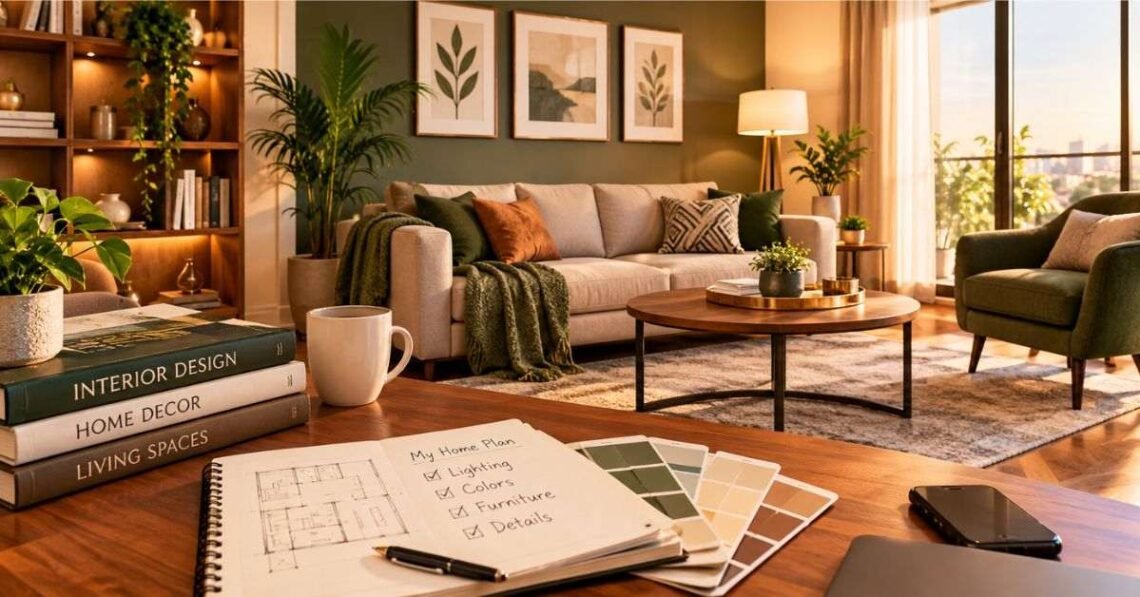
Walking into a room that feels calm, warm, and put-together isn’t luck. It’s the result of a few smart choices repeated on purpose — the right light, the right colors, and furniture that actually fits. Most people think good design needs a big budget or a professional eye. It doesn’t. It needs a plan.
This guide breaks down real, practical interior decoration tips mintpaldecor style — simple, budget-friendly, and easy to follow even if you’ve never decorated a room before. You won’t find confusing jargon here, just clear steps for lighting, color, furniture, and the small details that make a home feel finished.
Whether you’re decorating your first apartment, refreshing a family living room, or just tired of a space that never feels right, this article walks you through the process step by step, with common mistakes to avoid and answers to the questions people ask most. By the end, you’ll have a clear plan to make your home look and feel better without spending more than you need to.
Start With a Plan, Not a Shopping Cart
The biggest decorating mistake is buying things before deciding what the room is actually for. A living room for movie nights needs a different layout than one for hosting guests. Before you buy anything, answer three questions: What will this room be used for? Who uses it most? What should it feel like — cozy, bright, quiet, energetic? Write the answers down; they become your filter. If a rug, chair, or lamp doesn’t fit them, skip it, no matter how nice it looks in the store.
A simple way to plan is to build a small mood board — a phone folder with photos of rooms you like, paint swatches, and fabric samples. Look for patterns in what you save; most people are drawn to the same two or three colors without realizing it, and that pattern is your starting point.
Also measure your room before you plan anything. Note the wall lengths, window and door positions, and outlet locations. This prevents the classic problem of falling for a sofa that’s six inches too long for the space.
A clear plan also saves money. Instead of buying five small pieces that don’t relate to each other, you’ll buy two or three that actually work together and last for years. This habit — plan first, shop second — is the foundation almost every other tip in this guide builds on.
Fix the Lighting Before Anything Else
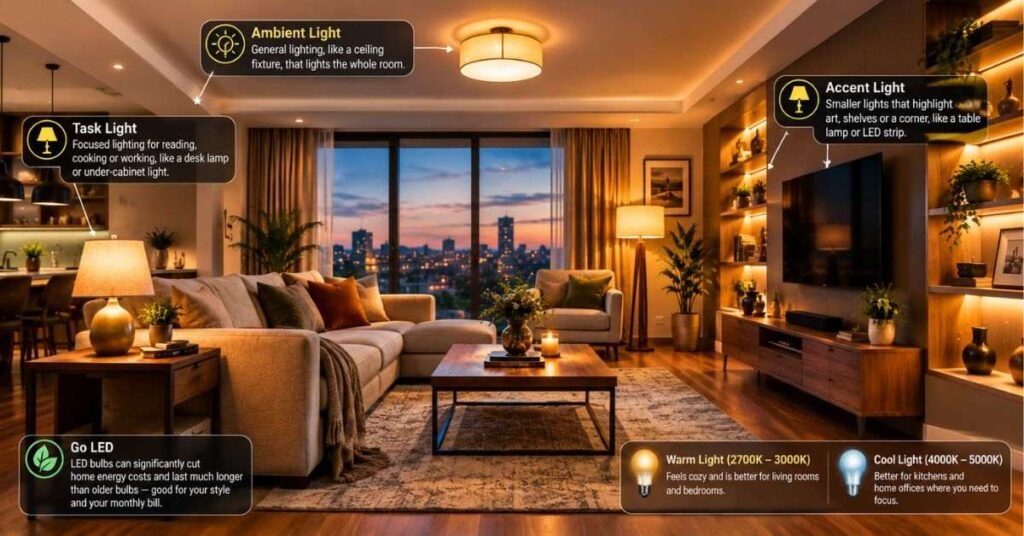
Lighting changes a room more than any other single factor, yet it’s usually the last thing people think about. A room with only one overhead light almost always looks flat, no matter how nice the furniture is. The fix is layering three types of light in every main room:
- Ambient light – general lighting, like a ceiling fixture or overhead light, that lights the whole room.
- Task light – focused lighting for reading, cooking, or working, like a desk lamp or under-cabinet light.
- Accent light – smaller lights that highlight art, shelves, or a corner, like a small table lamp or LED strip.
Adding just a floor lamp and a table lamp to a living room can make it feel warmer within minutes, often for under the cost of a nice dinner out. Warm-toned bulbs (measured in Kelvin, usually 2700K–3000K) feel cozy and are better for living rooms and bedrooms, while cooler, brighter bulbs work better in kitchens and home offices where you need to focus.
The U.S. Department of Energy also notes that switching to LED bulbs can meaningfully cut home energy costs while lasting far longer than older bulbs, which makes better lighting a smart move for both style and your monthly bill. Of all the interior decoration tips mintpaldecor readers ask about first, lighting is consistently the one with the fastest payoff.
Choose a Color Palette You Won’t Get Tired Of
Color sets the mood of a room faster than furniture does. Too many colors, or the wrong balance of them, can make a space feel chaotic instead of calm. A reliable method used by many decorators is the 60-30-10 rule:
| Rule | Where It’s Used | Example |
|---|---|---|
| 60% dominant color | Walls, large furniture, flooring | Warm white, soft beige, light gray |
| 30% secondary color | Curtains, rugs, accent chairs | Navy blue, sage green, terracotta |
| 10% accent color | Pillows, art, small decor | Mustard yellow, deep red, black |
This ratio keeps a room balanced — not boring, not overwhelming. Start with a neutral base for the 60%, since neutrals are easiest to update later. Then pick one secondary color you genuinely love, and use a bold accent color sparingly.
If you’re unsure where to start, test paint samples directly on your wall and look at them at different times of day. A color that looks great under store lighting can look completely different under your home’s natural light. Many of the interior decoration tips mintpaldecor followers rely on come back to this same idea: fewer colors, used more intentionally, almost always beat a busy palette.
Scale Furniture to Fit the Room, Not the Showroom
Furniture that looks great in a spacious showroom can feel wrong once it’s in a smaller home. A common mistake, especially in apartments, is buying smaller furniture thinking it will “open up” the space — in most cases, several small, mismatched pieces just make a room look cluttered.
Properly scaled furniture actually anchors a room. One medium sofa, correctly sized, usually works better in a small living room than two undersized loveseats squeezed into the same footprint.
Before buying anything large, measure the space and mark it out with painter’s tape on the floor — this gives you a real sense of scale that photos online can’t show. Leave at least 30 inches of walking space around major furniture pieces so the room doesn’t feel cramped.
Dual-purpose furniture helps too — a storage ottoman, a bed frame with drawers, a console table that doubles as a desk — reducing clutter while still looking intentional.
Use Mirrors and Reflective Surfaces to Open Up a Space
Mirrors do more than let you check your outfit — they’re one of the simplest tools for making a room feel larger and brighter without any construction work. A well-placed mirror reflects natural light deeper into a room, especially useful in spaces with only one window.
Position a mirror across from or beside a window, never directly opposite a wall you want to hide. A large mirror leaning against a wall, rather than mounted high, gives a room a relaxed, designer feel.
Mirrored furniture, glass tabletops, and glossy tile finishes work the same way on a smaller scale — reflective kitchen and bathroom backsplashes are a popular 2026 choice for exactly this reason. Just don’t overdo it: one or two well-placed mirrors beat mirrors on every wall, which can make a room feel busy instead of bright.
Add Texture and Layers So the Room Doesn’t Feel Flat
A room painted in beautiful colors can still feel cold if every surface has the same texture. Mix materials on purpose: a wool rug against a wood floor, a linen throw on a leather sofa, a woven basket beside a smooth ceramic vase. These small contrasts separate a “decorated” room from one that simply has furniture in it.
Layering applies to soft furnishings too. A bed with just a comforter looks flat next to one with a folded throw and two or three pillows in different textures — the same idea works on a sofa or armchair.
Don’t forget the floor. Rugs anchor a seating area and add warmth, especially over hard flooring. As a simple guide, a living room rug should be large enough that at least the front legs of your sofa and chairs sit on it.
Bring in Plants and Natural Elements — With Realistic Expectations
Indoor plants genuinely make a room feel calmer and more alive. They soften hard edges and fill awkward empty corners better than almost any decor object.
It’s worth knowing that plants aren’t a substitute for real ventilation. University extension research has found no solid evidence that a normal number of houseplants removes meaningful pollutants from a home, despite an older lab study suggesting otherwise. Enjoy plants for how they look and feel, not as an air-cleaning system.
For beginners, start with low-maintenance options like snake plants, pothos, or ZZ plants, which tolerate lower light and irregular watering. Group plants of different heights together for a more natural, layered look rather than scattering single pots evenly around the room.
Other natural elements — a wood coffee table, a woven jute rug, rattan baskets — add the same grounded feeling without needing any care at all, and are one of the easiest ways to make a modern room feel warmer instead of sterile.
Declutter First — It’s the Cheapest Decorating Tool You Have
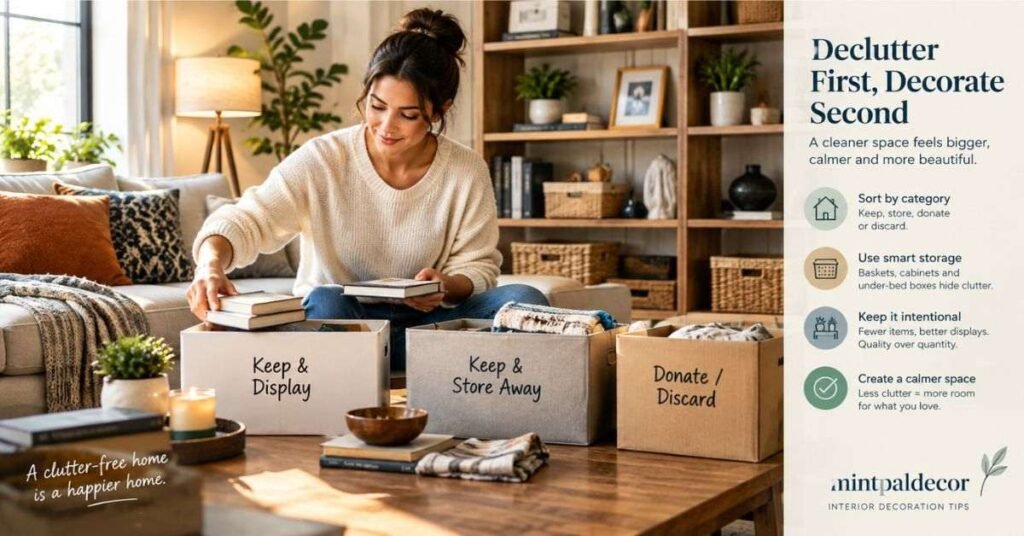
Before buying anything new, clear out what isn’t working. A cluttered room, no matter how nicely it’s decorated, will always feel smaller and more stressful than an organized one. This step costs nothing and often has the biggest visible impact of the entire process.
Go through each room and sort items into three groups: keep and display, keep but store away, and donate or discard. Surfaces like coffee tables, kitchen counters, and dressers look far better with a few chosen items than with everything you own on display.
Storage doesn’t have to be boring. Baskets, closed cabinets, and under-bed boxes hide everyday clutter while still looking intentional. Open shelving works too, but only if what’s on it is chosen carefully — a shelf with ten random items looks cluttered, while the same shelf with three or four grouped items looks styled.
This step matters because even the best lighting, color palette, and furniture choices will look chaotic in a cluttered room. Among the interior decoration tips mintpaldecor readers rate as most underrated, decluttering first comes up again and again — decorate second, not first.
Add Personal Touches That Make a House Feel Like Home
A home decorated purely from a store catalog can look nice but feel a little empty. What makes a space feel truly yours is a mix of personal items woven in — travel photos in matching frames, a handmade item from family, books you’ve actually read on a shelf.
The trick is curating, not collecting. Choose a smaller number of meaningful items and give them room to stand out — a single piece of art with a story behind it has more impact than five generic prints bought just to fill wall space.
Gallery walls are a popular way to combine personal photos with art in one organized display. Keep frame colors consistent, even if the photos vary, so the wall reads as one cohesive piece rather than a random mix.
Personal touches extend to scent and sound too: a candle you love, or a favorite playlist ready for when guests come over. These details cost little but are often what people remember most about a space.
Learn From Common Mistakes People Repeat
Even with good intentions, a few habits quietly work against a well-decorated home.
Pushing all furniture against the walls. This is a common instinct in small rooms, but it often makes a space feel less cozy. Pulling a sofa slightly away from the wall and grouping seating together usually creates a more inviting layout.
Buying matching furniture sets. A room where every piece comes from the same set can look like a showroom rather than a home. Mixing pieces tied together by color or material feels more personal.
Skipping the finishing layer. Curtains, a rug, and a few accessories are often treated as optional, but they’re what make a room feel complete rather than half-done.
Ignoring scale and proportion. Oversized art in a small hallway or a tiny rug under a large sectional throws off a room’s balance. When in doubt, go slightly bigger — undersized pieces are the more common mistake.
Avoiding these four habits alone puts a home noticeably ahead of the average decorating attempt.
Quick Visual Reference: Room-by-Room Priorities
Different rooms need different priorities. Use this table as a quick checklist before you shop.
| Room | Top Priority | Budget-Friendly Fix | Common Mistake to Avoid |
|---|---|---|---|
| Living Room | Lighting layers | Add a floor lamp + table lamp | Furniture too small for the space |
| Bedroom | Warm, soft textures | Layered bedding, warm bulbs | Overhead light as the only light source |
| Kitchen | Task lighting | Under-cabinet LED strip lights | Cluttered countertops |
| Bathroom | Mirrors and light | Add a well-lit mirror | Ignoring humidity-safe materials |
| Home Office | Task lighting + color | A focused desk lamp | No boundary between work and rest zones |
| Entryway | First impression | A mirror, hooks, and a small rug | Leaving it empty or ignored |
Budget vs. Impact: Where to Spend First
Not every fix costs the same, or gives the same visual return. This table shows where your money goes furthest.
| Change | Typical Cost | Visual Impact | Effort Required |
|---|---|---|---|
| Better lighting (lamps, bulbs) | Low | High | Low |
| Fresh paint on one wall | Low–Medium | High | Medium |
| New area rug | Medium | High | Low |
| Full furniture replacement | High | High | High |
| Small decor accessories | Low | Medium | Low |
| Professional-grade renovation | Very High | High | Very High |
As you can see, lighting, paint, and a good rug give some of the highest visual impact for the lowest cost — which is exactly why they’re the first three steps most decorators recommend.
How to Build Your Own Simple Decorating Plan

Once you understand the individual pieces, put them together in order: start with the plan and measurements from Section 1, then fix lighting, then settle on your color palette, then furniture, and only after that move to texture, plants, and personal touches. Decluttering works best done first, then repeated monthly so a room doesn’t slide back into chaos.
This order matters more than people expect. Buying decor before fixing lighting or colors usually means re-buying things later. Following the steps in sequence, rather than jumping to accessories first, is one of the simplest interior decoration tips mintpaldecor followers use to avoid wasted money.
For a deeper dive, see our related guides on choosing paint colors for small rooms, home lighting layout, and furniture scale and measuring.
Frequently Asked Questions
What is the cheapest way to improve a room’s look
Fixing the lighting and decluttering the space are the two lowest-cost changes — a starting point most interior decoration tips mintpaldecor guides agree on.
How many colors should one room have
Stick to three main colors using the 60-30-10 rule: one dominant, one secondary, and one accent color.
Do houseplants really clean indoor air
Not meaningfully in normal homes — they add warmth and style, but proper ventilation is what actually improves air quality.
How do I make a small room look bigger
Use mirrors, keep furniture properly scaled, choose lighter colors, and avoid overcrowding the space with too many small items.
Should I decorate room by room or the whole house at once
Room by room is easier on both budget and decision-making, and it lets you learn what works before repeating it elsewhere.
Final Thoughts
Decorating a home doesn’t require a big budget, a design degree, or perfect taste from day one. It requires a plan and a willingness to fix the basics — lighting, color, scale, and clutter — before chasing trends. Every section here builds on the one before it, which is exactly how real, lasting interior decoration tips mintpaldecor style come together: step by step, not all at once.
Start small. Pick one room, fix the lighting first, then work through color, furniture, and personal touches at your own pace. You don’t need to finish your whole home this weekend — just start with the change that gives the most visible result for the least effort.
If this guide helped you see your space differently, bookmark it and come back to it room by room. Small, consistent changes, done in the right order, add up to a home that finally feels finished.